Best Hanfu Styles For Tai Chi And Qigong Practice 2026
The Intersection of Hanfu and Traditional Chinese Wellness
The practice of Tai Chi and Qigong is deeply rooted in the philosophy of harmonizing the mind, body, and breath. As these ancient wellness practices continue to gain global recognition for their profound health benefits, practitioners are increasingly seeking attire that reflects the cultural origins of the movements while supporting physical biomechanics. According to Harvard Medical School, Tai Chi is often described as 'meditation in motion,' requiring clothing that allows for unrestricted joint rotation, deep diaphragmatic breathing, and a seamless flow of energy, or Qi.
For modern practitioners in 2026, wearing traditional Chinese garments is not merely an aesthetic choice; it is a way to embody the philosophy of the practice. However, not all historical Hanfu silhouettes are suited for the deep stances and sweeping arm movements required in forms like the 24-form Yang style or the Ba Duan Jin (Eight Brocades). Selecting the right mobility-focused Hanfu cuts is essential for a safe, comfortable, and spiritually aligned practice.
The 2026 Xin Zhongshi Wellness Movement
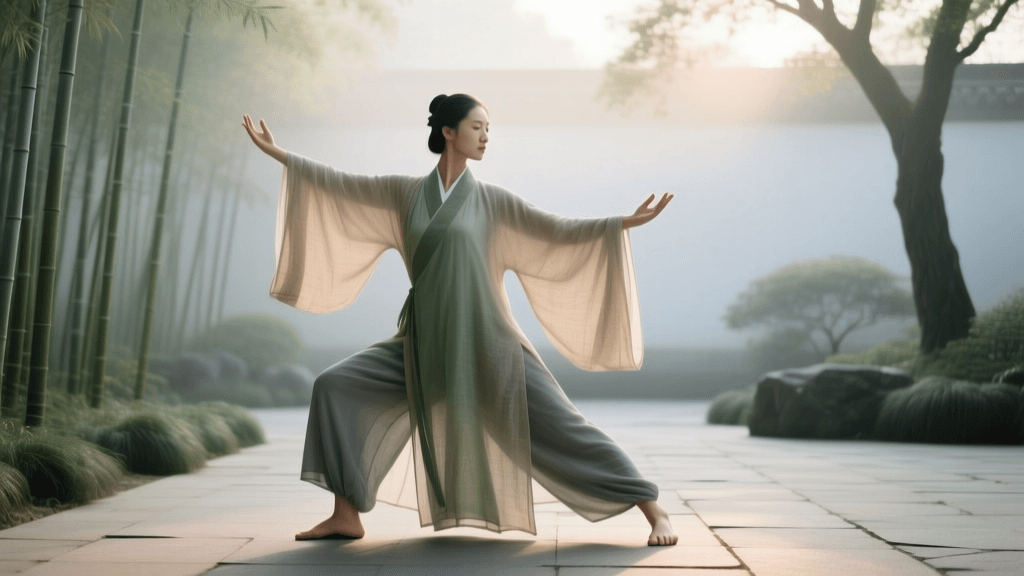
In 2026, the Xin Zhongshi (New Chinese Style) movement has fully matured into the wellness and activewear sector. Designers are no longer just adapting historical garments for streetwear; they are engineering them specifically for somatic practices. Modern wellness Hanfu integrates traditional motifs—such as the Ruyi cloud collar or Pan扣 (knot buttons)—with ergonomic tailoring. Hidden stretch gussets at the underarms and crotch, magnetic closures that mimic traditional crossed collars, and four-way stretch natural fibers are now standard in high-end practice wear, ensuring that the garment moves as an extension of the body rather than a restriction.
Optimal Fabrics for Qigong and Tai Chi
The fabric of your practice wear dictates how your body regulates temperature during the slow, deliberate, and often sweat-inducing movements of Qigong. In 2026, textile innovation has merged ancient weaving techniques with modern moisture-management properties.
Bamboo-Charcoal Infused Linen
Traditional linen is highly breathable but can sometimes feel too crisp or stiff for the fluid movements of Tai Chi. The 2026 standard for wellness wear is a bamboo-charcoal infused linen blend (typically weighing around 150 GSM). This fabric offers the structural drape of historical Hanfu while providing natural antibacterial properties and superior temperature regulation, keeping the practitioner cool during summer morning sessions in the park.
Cupro-Blend Peace Silk
For indoor Qigong or Yin-focused practices, Cupro-blend peace silk (Ahimsa silk) is the premier choice. Cupro, a regenerated cellulose fiber derived from cotton linter, mimics the luxurious, water-like drape of traditional mulberry silk but is far more durable and machine-washable. The fluid drape of this fabric visually accentuates the circular flow of Qi during movements like Yunshou (Cloud Hands).
Organic Ramie
Ramie has been used in Chinese textiles for millennia. Modern organic ramie weaves are incredibly lightweight and hold their shape beautifully, preventing the fabric from clinging to the skin during humid outdoor practices. It provides a crisp, elegant silhouette that honors the historical accuracy of Hanfu while serving the practical needs of the modern athlete.
Choosing the Right Silhouette: Sleeves, Hems, and Stances
The biomechanics of Tai Chi require a wide base and deep knee flexion. The traditional Mamianqun (horse-face skirt), while stunning, can restrict the outward bow of the knees during a deep Mabu (horse stance) or cause tripping hazards during Xubu (empty stance) transitions. Therefore, mobility-focused Hanfu cuts heavily favor trousers and modified bindings.
Sleeve Dynamics: While Guangxiu (wide, flowing sleeves) are iconic to Hanfu, they can obscure hand forms and catch the wind during outdoor practice. For Tai Chi, Zhaixiu (narrow sleeves) or Hufu-style (nomadic/martial) cuts are vastly superior. In 2026, many wellness brands offer a hybrid sleeve: a wide, traditional drape at the shoulder that tapers into a subtle, elasticized inner cuff at the wrist, allowing for dramatic visual flair without sacrificing martial precision.
Bottoms and Waistbands: The Songku (wide-leg trousers) are the gold standard for Qigong. Modern adaptations feature a wide, flat elastic waistband that sits comfortably below the navel (the Dantian), ensuring that deep breathing is never constricted by tight sashes or rigid historical waistbands.
Comparison Chart: Hanfu Styles for Movement
| Garment Component | Traditional Historical Style | 2026 Wellness Adaptation | Mobility Rating |
|---|---|---|---|
| Sleeves | Guangxiu (Wide) | Zhaixiu with hidden stretch gussets | High |
| Bottoms | Mamianqun (Pleated Skirt) | Songku (Wide-leg trousers) with elastic waist | Very High |
| Collar | Jiaoling Youren (Crossed) | Jiaoling with hidden magnetic snaps | Moderate |
| Outerwear | Pifeng (Long Cape) | Sleeveless Bijia (Vest) with mesh lining | High |
Footwear: Grounding and Balance in 2026
Proper grounding is essential in Tai Chi. The traditional Lao Beijing cloth shoe (Bu Xie), featuring a thousand-layer cotton sole, offers excellent tactile feedback with the earth. However, practicing on modern concrete or paved park surfaces requires more shock absorption than historical cotton soles can provide.
The 2026 solution is the minimalist zero-drop wellness shoe. These shoes feature traditional cotton or hemp uppers, often embroidered with subtle auspicious motifs, paired with a modern, ultra-thin ergonomic rubber sole. This design maintains the crucial zero-drop heel-to-toe ratio necessary for proper spinal alignment and balance, while protecting the joints from hard surfaces. The Mayo Clinic notes that the gentle, weight-bearing nature of Tai Chi improves balance and reduces fall risk, making proper, stable footwear a critical component of the practice, especially for older adults.
Layering for Outdoor Morning Practice
Many dedicated practitioners engage in Qigong at dawn, when temperatures are still cool. Layering is essential to maintain muscle warmth without overheating as the practice progresses. The traditional Bijia (sleeveless vest) is perfectly suited for this. Modern wellness Bijia are crafted from quilted organic cotton or lightweight merino wool blends, featuring deep armholes that allow for complete shoulder rotation during overhead stretches. For winter practice, a lined, short-sleeved Banbi (half-sleeve jacket) provides core warmth while leaving the wrists and elbows free for intricate meridian-opening movements.
Care and Maintenance of Wellness Hanfu
Because Tai Chi and Qigong induce a deep, detoxifying sweat, proper garment care is vital to maintain the integrity of natural fibers. Bamboo-linen and Cupro-silk blends should be washed in cold water using a pH-neutral, enzyme-free detergent. Avoid tumble drying; instead, reshape the garments and lay them flat or hang them on wide, padded hangers in the shade. This preserves the natural drape and prevents the fibers from becoming brittle. For garments with magnetic closures or hidden elastic gussets, using a mesh laundry bag will protect the structural modifications during the wash cycle.
Conclusion
As the global wellness community continues to embrace the profound benefits of Tai Chi and Qigong, the attire we wear becomes an integral part of the ritual. By selecting mobility-focused Hanfu cuts, breathable 2026 textiles, and ergonomic traditional footwear, practitioners can honor the rich cultural heritage of these arts while optimizing their physical performance. The modern Xin Zhongshi wellness movement proves that traditional Chinese garments are not relics of the past, but living, breathing tools for holistic health in the modern era.