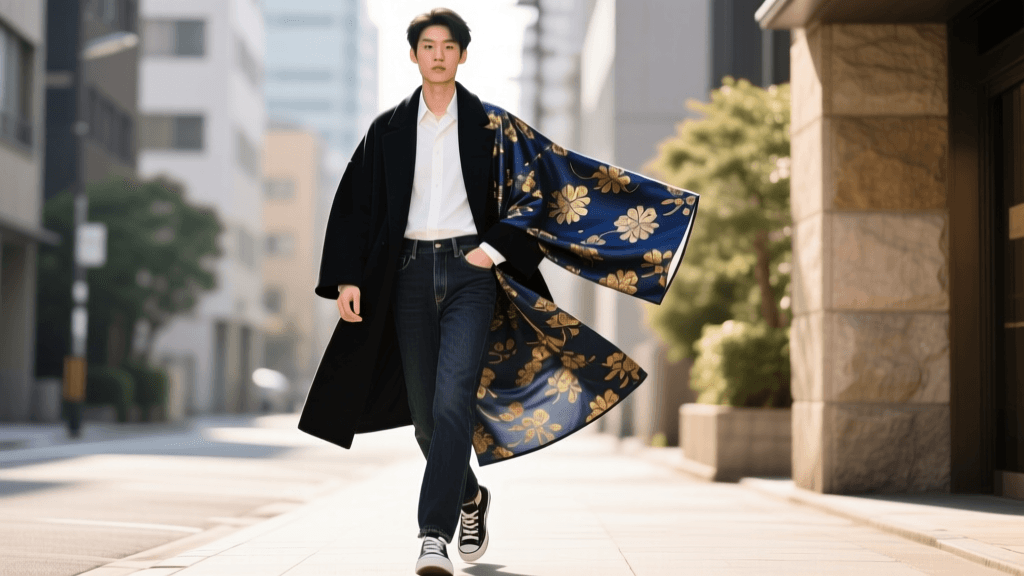
Chinese Fashion History Academic Research Tools for 2026

The Evolution of Chinese Fashion History Education in 2026
The academic study of Chinese fashion history has undergone a radical transformation by 2026. No longer confined to dusty physical archives and fragile, light-sensitive textile fragments, the discipline now thrives at the intersection of historical rigor and advanced digital technology. For educators, graduate students, and independent researchers, understanding the sartorial traditions of the Ming and Song dynasties requires a new toolkit. The surge in global interest surrounding the Xin Zhongshi (New Chinese Style) movement has further accelerated the demand for academically verified, historically accurate garment construction data. Today, leading institutions are leveraging high-resolution photogrammetry, AI-driven fabric drape analysis, and comprehensive digital databases to preserve and teach the intricate nuances of ancient weaving techniques, such as kesi (silk tapestry) and complex damask weaves.
Leading Digital Archives and Academic Databases
Access to primary sources is the bedrock of any historical research. In 2026, the most prestigious academic institutions and museums have fully integrated their physical collections into immersive, open-access digital environments. These platforms allow researchers to examine thread counts, dye compositions, and structural seams without risking damage to the original artifacts.
One of the most vital resources for scholars is the Victoria and Albert Museum's Asian Collections, which offers high-definition, 360-degree imaging of historic Chinese court robes and everyday garments. Their 2026 database update includes multispectral imaging data, allowing researchers to see beneath the surface layer of textiles to identify faded underdrawings, structural repairs, and original dye pathways that are invisible to the naked eye. Similarly, the Metropolitan Museum of Art's Asian Art Department provides extensive open-access metadata, enabling scholars to cross-reference regional variations in garment silhouettes and textile patterns across different Chinese provinces and historical periods.
For educators designing syllabi, integrating these digital archives into coursework allows students to conduct primary source analysis remotely. Assignments now frequently involve measuring digital pattern pieces and analyzing the structural geometry of a Ming dynasty mamianqun (horse-face skirt) using browser-based 3D viewers.
3D Scanning and AI Fabric Drape Analysis
The physical reconstruction of historical garments has always been hindered by the degradation of natural fibers. Silk, in particular, loses its structural integrity and drape over centuries. To solve this, academic researchers in 2026 rely heavily on AI fabric drape analysis and 3D scanning technologies. By scanning surviving fragments and cross-referencing them with historical treatises and portraiture, scholars can digitally reconstruct the exact weight, bias, and fluid dynamics of ancient textiles.
Essential Software for Historic Garment Reconstruction
Software suites like CLO 3D and Marvelous Designer have introduced specialized historical textile engines in their 2026 releases. These engines include pre-calibrated physics profiles for traditional Chinese fabrics, such as raw silk, hemp, and brocade. Researchers can input specific weave structures and thread tensions, and the AI will simulate how the fabric would have draped on a human body in motion. This is particularly crucial for studying the layering systems of Song dynasty literati clothing, where the interaction between the inner zhongyi and the outer beizi creates a specific silhouette that defines the era's aesthetic.
Furthermore, handheld 3D scanners, such as the latest Artec Leo models, are now standard equipment in university textile labs. These devices allow researchers to capture the micro-topography of embroidery and woven patterns in the field, creating sub-millimeter accurate digital twins of garments housed in remote regional museums across China.
Comparative Analysis: 2026 Academic Research Tools
Selecting the right combination of hardware and software is critical for a well-funded academic lab or an independent researcher. Below is a comparison of the premier tools utilized in Chinese fashion history research this year.
| Tool / Equipment | Primary Academic Use | Estimated Cost / Access (2026) | Best Suited For |
|---|---|---|---|
| Artec Leo 2026 | High-res 3D scanning of physical garments and embroidery topography | $32,000 (Institutional) | University labs, museum archiving teams |
| CLO 3D (Historical Engine) | AI fabric drape simulation and digital pattern reconstruction | $1,800 / year (Academic License) | Pattern makers, fashion historians, educators |
| Multispectral Imaging Rigs | Identifying faded dyes, underdrawings, and chemical degradation | $45,000+ (Grant Funded) | Textile conservators, material scientists |
| Browser-based 3D Archive Viewers | Remote measurement and structural analysis of museum pieces | Free (Open Access) | Students, independent scholars, curriculum design |
Bridging Ancient Weaving with the Xin Zhongshi Movement
The academic research conducted in these digital labs does not exist in a vacuum; it directly informs the booming Xin Zhongshi (New Chinese Style) fashion movement. As modern designers seek to move beyond superficial motifs and incorporate authentic structural elements into contemporary wear, they rely on the empirical data published by fashion historians. For instance, academic papers detailing the exact warp-and-weft ratios of Song dynasty luo (gauze) weaves have enabled modern textile mills to recreate breathable, historically accurate fabrics using upgraded, eco-friendly Jacquard looms.
Educators are now tasked with teaching students how to translate this rigorous historical data into viable modern design. Coursework in 2026 frequently involves "translation projects," where students must use digital archives to study a specific historical garment, reconstruct its pattern using 3D software, and then adapt the silhouette for modern, sustainable manufacturing without losing its cultural essence. This pedagogical approach ensures that the Xin Zhongshi movement remains deeply rooted in authentic Chinese fashion history rather than relying on pastiche or orientalist tropes.
Actionable Steps for Emerging Scholars
For graduate students and early-career researchers looking to specialize in Chinese fashion history, navigating the technological and academic landscape of 2026 requires a strategic approach. Here are actionable steps to build a robust research foundation:
- Master Digital Pattern Drafting: Familiarity with historical flat-pattern drafting is no longer sufficient. You must achieve proficiency in 3D garment simulation software to test your historical hypotheses regarding fabric drape and volume.
- Leverage Open-Access Metadata: Before applying for expensive travel grants, exhaust the open-access digital archives of global institutions. Use their API endpoints to gather comprehensive datasets on garment dimensions and material compositions.
- Join Professional Networks: Engage with specialized organizations like the Textile Society of America, which frequently hosts symposia and publishes peer-reviewed papers on Asian textile conservation, digital archiving methodologies, and historical weave structures.
- Collaborate Across Disciplines: The most groundbreaking research in 2026 happens at the intersection of departments. Partner with computer science students for AI-driven pattern recognition or with chemistry departments for non-invasive dye analysis using portable XRF (X-ray fluorescence) spectrometers.
By embracing these advanced tools and methodologies, the next generation of scholars will ensure that the rich, complex tapestry of Chinese fashion history is not only preserved with unprecedented accuracy but also dynamically integrated into the future of global design education.