Decoding Chinese Rank Badges and Hanfu Color Systems
The Sartorial Hierarchy of Imperial China
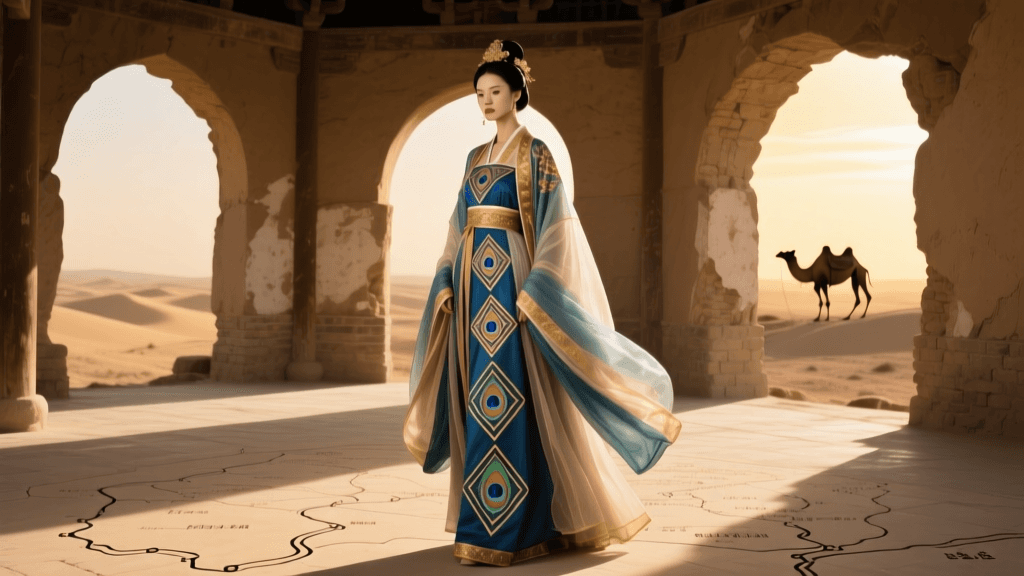
In the rich tapestry of Asian traditions, traditional Chinese clothing was never merely about aesthetics or protection from the elements. For centuries, garments served as a highly regulated visual resume, instantly communicating the wearer's social status, political rank, and cosmic alignment. From the sweeping sleeves of Ming Dynasty Hanfu to the structured surcoats of the Qing Dynasty, every thread, color, and motif was governed by strict sumptuary laws. Understanding these sartorial codes offers a fascinating glimpse into the philosophical and bureaucratic foundations of imperial China.
Today, as the Hanfu revival movement gains global momentum and antique textile collecting surges in popularity, deciphering these historical codes is more relevant than ever. Whether you are a collector seeking authentic Mandarin squares or a modern enthusiast aiming to wear traditional colors with historical accuracy, mastering the language of silk is essential.
Buzi (Mandarin Squares): Reading the Ranks
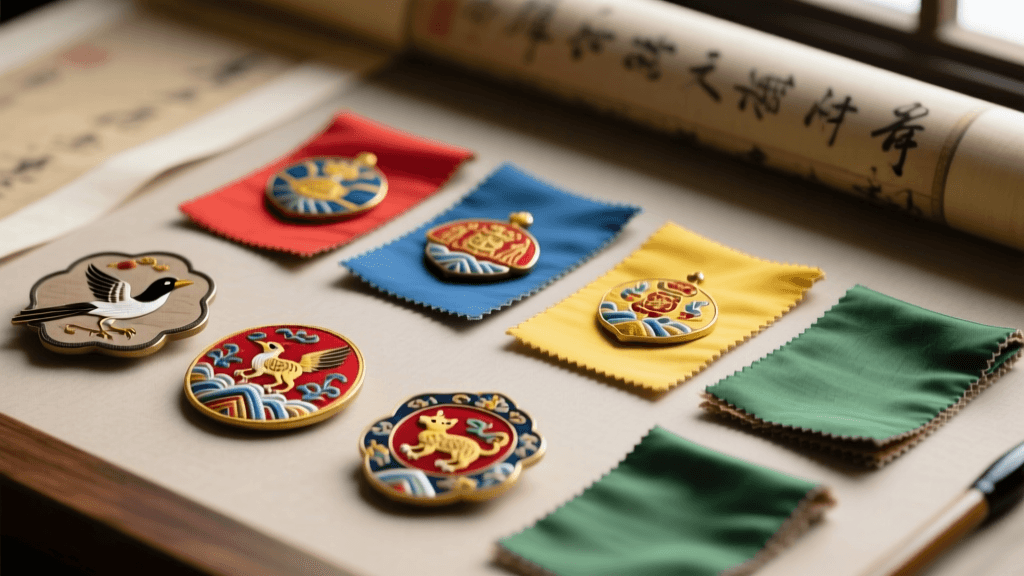
Perhaps the most iconic symbols of Chinese bureaucratic rank are the buzi, commonly known in the West as Mandarin squares. These intricately embroidered badges were affixed to the front and back of official surcoats during the Ming (1368–1644) and Qing (1644–1911) dynasties. As noted by Britannica's comprehensive guide on Buzi, these squares utilized specific birds for civil officials and mythical or real beasts for military officers, creating a standardized visual lexicon across the empire.
The civil birds represented elegance, literary refinement, and moral integrity, while the military beasts symbolized courage, ferocity, and strategic prowess. The highest ranks were reserved for mythical creatures or apex predators, while lower ranks featured more common fauna.
Rank Insignia Chart: Ming and Qing Dynasties
| Rank | Civil Official (Bird) | Military Official (Beast) | Symbolic Meaning |
|---|---|---|---|
| 1st | Crane | Qilin (Mythical Chimera) | Longevity, supreme wisdom, and benevolent power |
| 2nd | Golden Pheasant | Lion | Refinement, bravery, and unyielding strength |
| 3rd | Peacock | Leopard | Beauty, dignity, and swift martial agility |
| 4th | Wild Goose | Tiger | Loyalty, marital fidelity, and fierce protection |
| 5th | Silver Pheasant | Bear | Righteousness, resilience, and raw physical power |
| 6th | Egret | Panther | Purity, patience, and stealthy precision |
| 7th | Mandarin Duck | Rhinoceros | Devotion, harmony, and impenetrable defense |
| 8th | Quail | Rhinoceros / Bear | Bravery in adversity, groundedness, and survival |
| 9th | Paradise Flycatcher | Sea Horse (Mythical) | Agility, reach, and command over the waters |
The Five Orthodox Colors (Wuse) and Cosmic Harmony
Beyond rank badges, the foundational color palette of traditional Chinese garments was dictated by the Theory of the Five Elements (Wuxing) and the principles of Yin and Yang. The five orthodox colors (wuse) were not arbitrary; they were intrinsically linked to the cardinal directions, seasons, and elemental phases of the universe. According to historical analyses of Chinese textile traditions, such as those detailed by the Smithsonian Magazine, wearing the correct color was believed to maintain cosmic balance and attract auspicious energy.
- Qing (Blue/Green) - Wood / East / Spring: Representing growth, vitality, and renewal. Often worn by scholars and lower-ranking officials.
- Chi (Red) - Fire / South / Summer: Symbolizing joy, prosperity, and good fortune. Red remains the quintessential color for weddings and lunar new year celebrations.
- Huang (Yellow) - Earth / Center / Late Summer: The color of the emperor. It represents the center of the universe, ultimate authority, and the nurturing earth.
- Bai (White) - Metal / West / Autumn: Associated with purity, but also mourning and the setting sun. Traditionally reserved for funerary garments.
- Hei (Black) - Water / North / Winter: Symbolizing depth, wisdom, and the heavens. In the Qin and early Han dynasties, black was actually the supreme imperial color.
Imperial Monopolies: The Power of Yellow and Red
While the Five Elements provided the philosophical baseline, political realities often shifted color supremacy. During the Ming Dynasty, red was heavily favored and associated with imperial authority, as the ruling Zhu family's surname translates to 'vermilion.' However, the subsequent Manchu-led Qing Dynasty strictly monopolized bright yellow (minghuang) for the Emperor, the Empress, and the Empress Dowager. China Highlights' guide to traditional Hanfu notes that lesser royals were restricted to apricot yellow or golden yellow, while commoners caught wearing bright yellow faced severe, sometimes fatal, penalties.
Practical Guide: Collecting and Authenticating Antique Buzi
For textile collectors and museum curators, acquiring authentic Ming and Qing Mandarin squares requires a keen eye and an understanding of historical manufacturing techniques. Here is actionable advice for sourcing and authenticating antique buzi:
Measurements and Structural Differences
Ming Dynasty squares are generally larger, measuring between 35 cm to 40 cm, and often feature distinct woven borders. They were typically woven as a single piece and then cut down the center to accommodate the front opening of the robe. Qing Dynasty squares are smaller, averaging 28 cm to 30 cm, and were usually made in two separate halves without borders, designed to be sewn directly onto the bufu (surcoat).
Authentication Markers and Cost Expectations
- Metallic Threads: Authentic 18th and 19th-century squares utilize 'couching' techniques where gold leaf is applied to paper or animal membrane, then wrapped around a silk core. Under magnification, antique gold thread will show micro-cracking and a matte, organic luster. Modern fakes use synthetic metallic yarns that appear overly shiny and uniform.
- Dyes: Look for natural dye degradation. Antique indigo blues will fade to a soft, dusty gray-blue at the folds, whereas synthetic aniline dyes (introduced in the late 19th century) fade to a harsh, unnatural greenish tint.
- Market Costs: A standard, authentic 19th-century Qing civil official square (e.g., 4th rank Wild Goose) in good condition typically costs between $300 and $800 USD. First-rank Crane squares or those featuring rare imperial dragons can command $2,500 to over $10,000 at auction.
Archival Mounting and Display
If you acquire an antique Buzi, proper preservation is critical. Never glue the textile to a backing board. Instead, use a professional textile conservator to hand-stitch the square to an acid-free, unbleached cotton mount using reversible conservation stitching. Frame the piece using UV-filtering museum glass to prevent the natural dyes from bleaching out under ambient light. Expect to pay $150 to $300 for professional archival framing.
Modern Hanfu Revival: Wearing Color Codes Today
The modern Hanfu movement has beautifully resurrected these ancient traditions, adapting them for contemporary life. While modern wearers are no longer bound by imperial sumptuary laws, understanding color symbolism adds profound depth to the garments. When commissioning or purchasing modern Hanfu, consider the following actionable styling advice based on traditional color codes:
- Formal and Grounding Events: Opt for deep blacks or navy blues (Water element) paired with subtle silver embroidery. This conveys wisdom, authority, and groundedness, making it ideal for academic ceremonies or formal evening gatherings.
- Celebrations and Weddings: Embrace the Fire element with vermilion reds and golds. For a historically accurate Ming-style wedding ensemble (fengguan xiapei), look for authentic Song Brocade (Songjin) fabrics. A high-quality, custom-tailored Ming-style wedding jacket using genuine silk brocade will cost between $250 and $600 USD and requires 4 to 8 weeks for artisanal weaving and embroidery.
- Spring Festivals and Tea Ceremonies: Channel the Wood element with celadon greens, soft teals, and bamboo motifs. These colors promote a sense of calm, growth, and harmony, perfectly suiting outdoor spring festivals or intimate tea ceremonies.
Conclusion
The garments of imperial China were far more than mere fabric; they were a canvas upon which the cosmic order and social hierarchy were painted in silk and gold. Whether you are examining the intricate couching on a 19th-century military leopard badge or selecting the perfect celadon Hanfu for a spring tea ceremony, understanding the profound symbolism of rank and color codes transforms the way we interact with Asian traditions. By respecting and reviving these sartorial languages, we keep the intricate history of Chinese craftsmanship alive for future generations.