Ming Dynasty Mamianqun: Court Evolution & Modern Buyer's Guide
The Origins and Court Ascension of the Mamianqun
The Mamianqun (马面裙), literally translated as the "horse-face skirt," stands as one of the most iconic and enduring garments in the history of Chinese fashion. While it is widely recognized today as a staple of the Ming Dynasty (1368–1644) court and elite wardrobe, its evolutionary roots stretch back to the nomadic tribes of the Liao (916–1125) and Jin (1115–1234) dynasties. Originally designed for ease of movement and horseback riding, the skirt's overlapping panels allowed for modesty and mobility simultaneously.
During the Song Dynasty (960–1279), the skirt was adopted by Han Chinese women, evolving from a practical equestrian garment into a refined staple of elite women's fashion. However, it was during the Ming Dynasty that the Mamianqun reached its zenith in court fashion. Codified by strict sumptuary laws, the skirt became an essential component of the formal attire for Ming empresses, concubines, and the wives of high-ranking officials. The Metropolitan Museum of Art's Heilbrunn Timeline of Art History notes that Ming court dress was characterized by its structural rigidity, voluminous silhouettes, and heavy use of symbolic brocades, all of which were perfectly showcased by the wide, flat panels of the Mamianqun.
Anatomy of the Ming Court Horse-Face Skirt
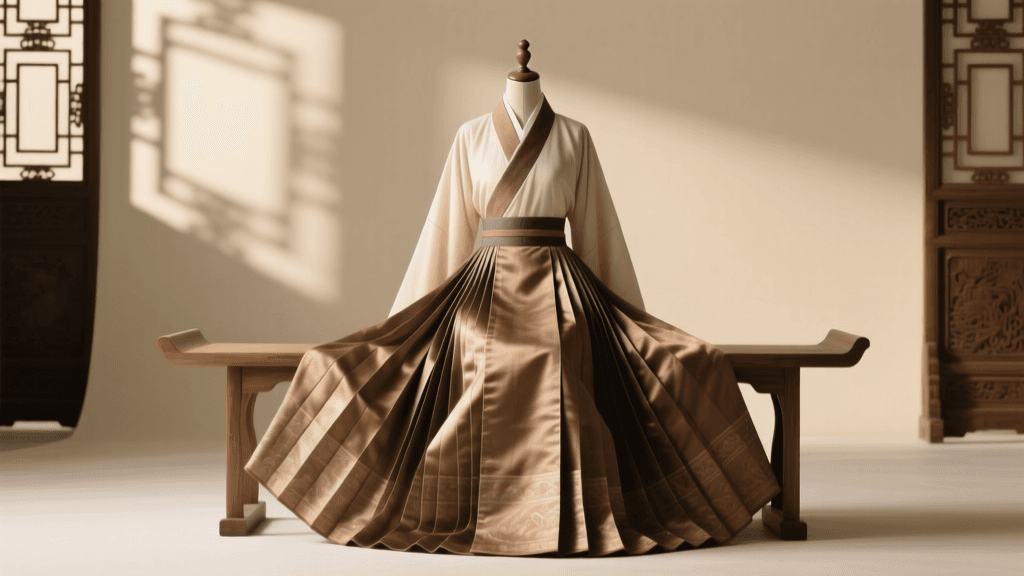
To understand the Mamianqun is to understand its unique architectural construction. The skirt is composed of two main elements:
- The Mamian (Horse-Face Panels): Two flat, unpleated panels at the front and back. In Ming court fashion, these panels were heavily embroidered with auspicious motifs such as phoenixes, dragons, or floral scrolls, serving as the primary canvas for displaying rank and wealth.
- The Zhe (Pleats): The sides of the skirt feature deep, structured pleats that remain hidden when standing still but fan out dramatically during movement.
- The Yaolan (Waistband): A wide band of white or contrasting fabric that wraps around the waist, secured with ties rather than buttons or clasps.
"The brilliance of the Mamianqun lies in its duality. The static front projects imperial dignity and rigid hierarchy, while the hidden side pleats afford the wearer the grace of fluid motion." — Historical Textile Analysis, Victoria and Albert Museum.
Table: Evolution of Skirt Proportions Across Dynasties
| Dynasty | Primary Context | Pleat Structure | Panel Width & Drape | Typical Court Fabrics |
|---|---|---|---|---|
| Song (960–1279) | Elite & Common | Wide, sparse pleats (2-4 pairs) | Narrower flat panels, lighter drape | Lightweight silks, gauze |
| Ming (1368–1644) | Court & Formal Elite | Deep, structured pleats (6-10 pairs) | Wide panels, heavy & voluminous | Zhuanghua brocade, heavy satin |
| Qing (1636–1912) | Han Women (Folk & Elite) | Dense, narrow pleats (up to 20+ pairs) | Elaborate side-embroidery, stiff | Silk damask, appliqued borders |
| Modern Revival | Daily & Formal Hanfu | Standardized (6-8 pairs for daily) | Adapted for modern proportions | Jacquard, organza, wool blends |
The Qing Dynasty Survival and Modern Revival
When the Manchu-led Qing Dynasty conquered the Ming, they enforced the "Tifa Yifu" (shaving hair and changing clothes) edict. However, a cultural compromise known as "men submit, women do not" allowed Han Chinese women to continue wearing Ming-style garments. The Mamianqun survived, though its aesthetic shifted. Qing-era skirts featured dense pleating and elaborate embroidered borders (the "hundred-pleat" or "thousand-pleat" skirts), moving the decorative focus from the flat front panels to the side pleats and hem. Today, the modern Hanfu movement has largely bypassed the Qing variations, favoring the Ming Dynasty silhouette for its elegance and structural purity. As documented by Sixth Tone's coverage on the Hanfu revival, the Mamianqun has recently exploded in popularity, transitioning from a niche historical replica to a mainstream fashion item worn in corporate offices and international runways.
Actionable Buyer’s Guide: Sourcing Authentic Mamianqun
For modern enthusiasts, collectors, and practitioners of traditional dress, purchasing a historically accurate and well-constructed Mamianqun requires an understanding of metrics, fabrics, and tailoring. Below is a comprehensive guide to sourcing the perfect skirt.
1. Sizing and Measurement Formulas
Unlike Western wrap skirts, the Mamianqun relies on a specific overlap to maintain modesty and structural integrity. When ordering or tailoring, use these formulas:
- Waistband Length: Your natural waist circumference + 15 to 20 cm (for the overlap). If your waist is 70 cm, your skirt's total waistband should be 85–90 cm.
- Skirt Length: Measure from your natural waist to the desired hem. For historical accuracy with traditional cloud shoes (yunjian xie), the hem should sit 3–5 cm above the ground. For modern wear with heels or flats, an ankle-grazing length (typically 95–105 cm depending on height) is most practical.
- Skirt Circumference: A proper Ming-style skirt should have a total hem circumference of at least 1.5 to 2 times your waist measurement to ensure the pleats fan out correctly without exposing the undergarments.
2. Fabric Weight and Drape Metrics
The drape of the Mamianqun is entirely dependent on the fabric's GSM (grams per square meter) and weave. Selecting the wrong fabric will result in pleats that refuse to hold their shape or panels that cling awkwardly to the legs.
- Winter / Formal Court Replicas (200–350 GSM): Look for Zhuanghua (woven brocade) or heavy silk satin. These fabrics provide the stiff, bell-like silhouette seen in Ming imperial portraits. Modern alternatives include high-density polyester jacquards or wool-blend tartans for a winter-appropriate, structured drape.
- Spring / Autumn Daily Wear (120–180 GSM): Medium-weight crepe, tencel, or copper-ammonia fabrics. These offer a fluid drape while maintaining enough weight to keep the pleats sharp when walking.
- Summer Wear (60–100 GSM): Silk organza, sheer gauze, or lightweight linen. Note that fabrics under 80 GSM require a lining or a slip skirt, as the overlapping panels will become translucent in direct sunlight.
3. Pleat Count and Construction Standards
When evaluating a Mamianqun for purchase, inspect the pleat construction. High-quality manufacturers use high-temperature heat setting and specialized stitching at the waistband to lock the pleats in place.
- 6 Pairs of Pleats (12 total): The standard for modern daily wear. Offers a balance of volume and ease of care.
- 8 to 10 Pairs of Pleats: Ideal for formal events, photography, and historical accuracy. Creates a luxurious, heavy swing.
- Knife Pleats vs. Box Pleats: Ming Dynasty skirts predominantly utilized structured knife pleats that face backward. Avoid skirts with messy, unidirectional accordion pleats, as they lack the architectural "horse-face" geometry.
4. Pricing Tiers and What to Expect
The market for Hanfu is vast, and prices reflect the complexity of the weave and the authenticity of the loom techniques.
- Entry-Level ($45 – $85 USD): Mass-produced polyester jacquards. The patterns are printed or machine-woven with metallic threads that can snag easily. Suitable for casual wear and beginners. Pleats may require frequent re-ironing.
- Boutique / Mid-Tier ($120 – $250 USD): Features authentic woven patterns (not printed), high-quality viscose or silk blends, and reinforced waistbands. Brands in this tier often collaborate with museums to replicate specific Ming dynasty textile fragments.
- Heritage / Custom Loom ($400 – $1,500+ USD): Hand-woven silk, genuine gold-leaf thread wrapping, and traditional wooden loom brocade (such as Nanjing Yunjin). These are investment pieces meant for serious collectors and formal ceremonial wear.
Styling the Mamianqun for Modern Formal Wear
While traditionally paired with a Ao (a lined, structured jacket) or a Pifeng (cloak), the Mamianqun is incredibly versatile in a modern wardrobe. For a contemporary formal look, pair a solid-colored, heavy brocade Mamianqun with a tailored silk blouse or a structured velvet blazer. Tuck the top into the skirt to highlight the waistband and the flat front panels. If wearing a traditional Ming-style Shan (unlined shirt), ensure the sleeves feature the iconic "pipa" (lute) shape, which tapers at the wrist, allowing for elegant hand gestures without drowning the hands in fabric.
Care and Maintenance
Preserving the sharp pleats of a Mamianqun requires specific care. Never machine-wash a brocade or silk Mamianqun; dry cleaning is mandatory. For daily-wear synthetic blends, hand wash in cold water with a pH-neutral silk detergent. To dry, hang the skirt on a clip hanger, ensuring the weight of the wet fabric pulls the pleats straight down. If the pleats begin to loosen over time, use a steam iron on a low setting, folding the pleats manually and pressing them with a Teflon guard cloth to reset the heat-bonded creases.