Ming Dynasty Hanfu Wedding Attire: A Modern Bride's Guide
The Allure of Ming Dynasty Ceremonial Wear
The modern Chinese wedding landscape is undergoing a magnificent transformation. While the Western white wedding gown and the traditional Cantonese Qungua (Kwa) remain popular, a growing number of brides are turning to the historical elegance of Ming Dynasty Hanfu for their ceremonial attire. Driven by a passionate cultural revival movement, modern couples are looking to the 14th through 17th centuries for inspiration. The Ming Dynasty represents a pinnacle of Chinese textile artistry, characterized by structured silhouettes, intricate brocades, and profound symbolic motifs. According to cultural analysts at RadiiChina, the Hanfu movement has evolved from a niche hobby into a mainstream cultural force, deeply influencing modern ceremonial and wedding fashion. For the modern bride, choosing a Ming Dynasty ensemble is not merely a fashion statement; it is a meticulous journey into historical craftsmanship, requiring careful planning, precise measurements, and an understanding of traditional layering.
Anatomy of a Ming Dynasty Bridal Ensemble
The Fengguan (Phoenix Crown)
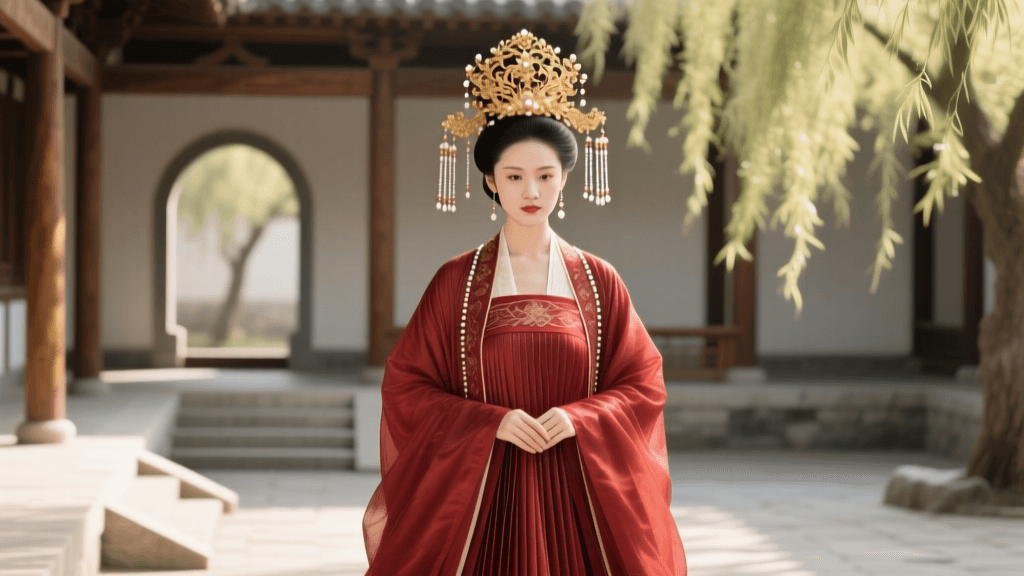
The centerpiece of any Ming bridal ensemble is the Fengguan, or Phoenix Crown. Historically reserved for empresses and noblewomen, the Fengguan was eventually adopted by commoners for their wedding day through special imperial dispensation, a tradition that cemented its status as the ultimate bridal headpiece. Authentic historical crowns were adorned with kingfisher feather inlay, known as diancui. Because kingfisher feathers are now protected, modern artisans use dyed silk ribbons, goose feathers, or synthetic alternatives to replicate the iridescent blue-green hue. A fully assembled Fengguan is a marvel of metalwork and embroidery, often featuring dragons, phoenixes, and dangling pearl tassels. Brides must be prepared for the physical reality of the crown: a high-quality, historically accurate Fengguan can weigh between 1.5 and 3 kilograms (3.3 to 6.6 pounds). To support this weight, the hair must be expertly structured with padding and reinforced pins, a process that requires a specialized Hanfu hairstylist.
The Xiapei and Da Ao
Beneath the crown lies the Xiapei, a ceremonial V-shaped sash that drapes over the shoulders and hangs down the front, weighted at the bottom by a jade or gold pendant to maintain its elegant drape. The Xiapei is heavily embroidered with auspicious motifs like peonies, bats, and cloud collars. The primary upper garment is the Da Ao (large jacket) or Mang Ao (python jacket). The Mang Ao features the iconic python motif—a five-clawed dragon-like creature that signifies supreme honor and protection. These jackets are typically crafted from heavy silk brocade, zhuanghua (woven gold), or velvet, featuring wide sleeves and a high, stiff collar that frames the face beautifully. The structural rigidity of the Da Ao provides a regal, commanding silhouette that photographs exceptionally well in grand architectural settings.
The Mamianqun (Horse-Face Skirt)
The lower half of the ensemble is anchored by the Mamianqun, or horse-face skirt. This iconic skirt features flat front and back panels flanked by deeply pleated sides. For a wedding, the Mamianqun is typically woven from luxurious silk jacquard or brocade, featuring continuous patterns of lotus flowers, phoenixes, or the "hundred boys" motif to symbolize fertility and marital bliss. A standard ceremonial Mamianqun requires 3 to 4 meters of heavy fabric and is secured with a wide, structured waistband. The pleats must be meticulously ironed and sometimes lightly stitched at the top to prevent them from flaring out awkwardly when the bride walks or sits.
Qungua vs. Ming Hanfu: A Practical Comparison
When planning a traditional Chinese wedding, brides often debate between the Cantonese Qungua and the Ming Dynasty Hanfu. Both offer deep cultural resonance, but they differ significantly in aesthetics, logistics, and budget. The Qungua is a two-piece jacket and skirt set heavily embroidered with gold and silver dragon-phoenix motifs, popularized in Southern China and widely rented in modern bridal salons. The Ming Hanfu, conversely, offers a more layered, voluminous, and historically grounded aesthetic. Below is a practical comparison to help brides make an informed decision.
| Feature | Cantonese Qungua (Kwa) | Ming Dynasty Hanfu |
|---|---|---|
| Primary Material | Silk satin with dense metallic embroidery | Silk brocade, jacquard, woven gold (zhuanghua) |
| Silhouette | Fitted, structured, A-line skirt | Voluminous, layered, wide sleeves, pleated skirt |
| Average Weight | 1.5 to 2.5 kg | 3 to 5 kg (including crown and sash) |
| Dressing Time | 15 to 20 minutes | 45 to 90 minutes |
| Rental Availability | Widely available in standard bridal salons | Rare; usually requires specialized Hanfu studios |
| Average Cost (Purchase) | $800 to $3,000+ USD | $300 (off-rack) to $4,000+ USD (bespoke) |
Sourcing, Tailoring, and Budgeting
Sourcing a Ming Dynasty wedding ensemble requires navigating a mix of historical reproduction studios and modern Hanfu brands. For brides on a budget, off-the-rack sets from established Taobao or Tmall brands like Shisan Yu or Ming Huatang range from $300 to $800 USD. However, these require standard sizing and may use synthetic blends. For a truly bespoke experience, brides commission independent artisans or specialized studios. A custom-woven Mang Ao and Mamianqun set, utilizing genuine silk brocade and hand-embroidered Xiapei, will cost between $1,500 and $4,000 USD. The Metropolitan Museum of Art's extensive archives on Ming Dynasty textiles highlight the immense complexity of historical weaving techniques like kesi (silk tapestry), which modern bespoke studios strive to replicate. Brides must allow 6 to 9 months for custom tailoring, as the weaving of the brocade fabric alone can take several months.
Wedding Day Logistics: Dressing and Movement
The logistics of wearing Ming Hanfu on the wedding day demand rigorous preparation. Unlike a Western gown that can be slipped on with the help of one bridesmaid, a full Ming ceremonial ensemble requires 45 to 90 minutes to put on and necessitates two helpers. The layering process begins with inner garments (zhongyi), followed by the skirt, the sash, the heavy outer jacket, and finally the intricate securing of the Fengguan. Because the garments are heavy and the sleeves are voluminous, brides must practice the traditional "lotus step"—walking with small, measured strides to prevent tripping and to keep the pleats of the Mamianqun swaying rhythmically. Furthermore, the wide sleeves require the bride to adopt traditional postures, keeping her hands clasped in front or gently resting at her sides to maintain the dignity of the silhouette.
Specialized Hair and Makeup
Hair and makeup must complement the historical weight of the garments. Modern brides should seek out makeup artists who specialize in Hanfu styling. A traditional Ming bridal look emphasizes a porcelain base, sweeping willow-leaf eyebrows, and a bold, classic red lip. The hair is typically swept up into elaborate buns adorned with gold filigree combs and pearl hairpins. Budget an additional $150 to $300 USD for a specialized Hanfu hair and makeup trial and day-of service. As noted by BBC Culture, the revival of these ancient aesthetics is deeply tied to a modern desire for cultural continuity and personal expression, making the extra investment in specialized styling entirely worthwhile.
"Wearing the Fengguan Xiapei is not just about putting on a dress; it is about stepping into a lineage of resilience, artistry, and profound cultural memory."
Conclusion
Choosing Ming Dynasty Hanfu for your wedding is a commitment to preserving and celebrating Chinese sartorial heritage. By understanding the anatomy of the garments, budgeting for quality materials, and preparing for the unique logistical demands of the attire, modern brides can honor the past while creating breathtaking, deeply personal wedding memories. Whether you opt for a rented set to honor the tradition or invest in a bespoke silk brocade masterpiece, the Ming Dynasty bridal ensemble guarantees a regal and unforgettable entrance.