Guizhou Miao Folk Dress: Indigo and Silver Guide
The Heart of Miao Provincial Dress
Nestled in the misty, karst mountain ranges of southwestern China's Guizhou province, the Miao people (closely related to the Hmong diaspora) have cultivated one of the most visually striking and technically complex textile traditions in Asia. Unlike the silk-dominated sartorial history of the Han Chinese plains, Miao folk dress is a masterclass in provincial resilience, defined by deep, fermented indigo dyes, intricate geometric embroidery, and heavy, spiritually significant silver jewelry. According to Encyclopedia Britannica, the Miao's diverse subgroups utilize clothing as a primary identifier of lineage, marital status, and regional origin, making their provincial dress a living, wearable archive of Asian history.
For textile collectors, cultural historians, and conscious travelers, understanding the nuances of Miao attire requires looking beyond the vibrant tourist displays and into the painstaking village-level craftsmanship. This guide explores the alchemy of Miao indigo, the structural marvel of their pleated skirts, and provides actionable advice for sourcing and experiencing authentic provincial garments.
The Alchemy of Indigo Dyeing and Finishing
The foundation of traditional Miao clothing is not the color itself, but the chemistry of its creation. Miao indigo is derived from the leaves of the Strobilanthes cusia plant, locally known as 'ban lan gen'. The dyeing process is an exercise in extreme patience and microbial management.
The Fermentation Vat
Villagers harvest the indigo leaves in late summer, soaking them in wooden vats with water and slaked lime to encourage fermentation. This reduces the indigo to a water-soluble, yellowish-green state. When cotton yarn or woven cloth is submerged and then pulled into the oxygen-rich air, it oxidizes, slowly turning from green to a deep, midnight blue. A single garment may require up to 30 separate dips over the course of a month to achieve the requisite depth of color.
The Metallic Sheen: Egg White and Buffalo Blood
What separates authentic Guizhou Miao indigo from commercial imitations is the finishing process. To create a stiff, weather-resistant, and metallic-shiny surface, Miao artisans repeatedly rub the dyed fabric with egg whites, ox blood, or pig's blood, and then beat it with wooden mallets for hours. This process, known as 'calendering', seals the fibers.
- Actionable Tip for Buyers: To identify authentic, traditionally finished Miao indigo, rub the fabric vigorously with your thumb. Genuine calendered indigo will leave a faint, dark blue residue on your skin and emit a subtle, earthy, fermented scent. Mass-produced, chemically dyed tourist garments will smell of synthetic aniline and will not transfer color when dry.
The Pleated Skirt: A Masterclass in Patience
The quintessential garment of the Miao woman in regions like Xijiang and Leishan is the pleated indigo skirt. Creating one of these skirts is a monumental task that dictates the rhythm of village life.
Measurements and Construction
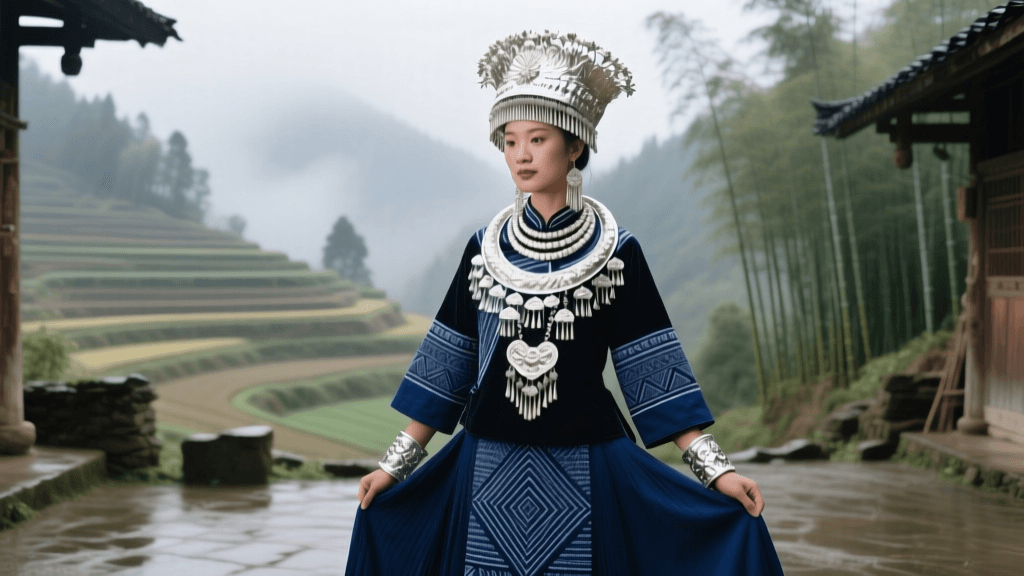
A traditional Miao pleated skirt requires between 15 to 20 meters of hand-woven cotton fabric. The pleating process does not use heat or modern presses. Instead, artisans use a specialized wooden pleating board. The damp, indigo-dyed cloth is meticulously folded into hundreds of tiny, uniform accordion pleats, bound tightly with cotton thread, and left to set for several weeks. When unbound, the skirt holds its shape permanently, flaring out dramatically during the energetic movements of the traditional Lusheng (bamboo pipe) dances.
'The Miao pleated skirt is not merely a garment; it is a geographical map and a historical record. The number of pleats and the specific embroidered bands at the hem often denote the wearer's specific village and the migration routes of her ancestors.' — Regional Textile Anthropologist
The Weight of Heritage: Miao Silver Jewelry
If indigo represents the earth and the ancestors, silver represents light, purity, and spiritual protection. As noted by UNESCO's Intangible Cultural Heritage registry, which recognizes several Miao craftsmanship traditions, Miao silversmithing is a highly specialized provincial trade, with villages like Shidong in Taijiang County serving as historic hubs for master artisans.
Silver is believed to ward off evil spirits and illness. A Miao woman's festival ensemble can include a horned headdress, neck rings, chest plaques, and bracelets weighing anywhere from 5 to 15 kilograms in total. The silversmiths utilize complex techniques including repoussé, chasing, and filigree, often incorporating motifs of dragons, water buffalo, and the legendary butterfly mother from Miao creation myths.
Comparison Chart: Miao Silver Headdress Styles
| Headdress Style | Primary Region | Average Weight | Cultural Motif | Estimated Artisan Cost (USD) |
|---|---|---|---|---|
| Water Buffalo Horns | Leishan / Xijiang | 3.0 - 5.0 kg | Agricultural reverence, strength | $800 - $1,500 |
| Silver Crown / Tiara | Taijiang / Shidong | 1.5 - 2.5 kg | Butterfly Mother, dragons | $400 - $900 |
| Silver Comb & Pins | Kaili / Danzhai | 0.5 - 1.0 kg | Birds, floral geometry | $150 - $350 |
Actionable Guide: Sourcing Authentic Miao Garments
Acquiring genuine Miao folk dress requires navigating a market flooded with synthetic, machine-made replicas designed for the domestic tourism boom. Here is how to source authentic pieces, complete with costs and care instructions.
1. The 'Hundred-Bird Jacket' (Bai Niao Yi)
- Product Details: A highly ceremonial jacket embroidered with hundreds of tiny, stylized bird motifs using silk thread and couched metallic yarns.
- Cost: Authentic, vintage, or newly hand-embroidered jackets range from $400 to $1,200 USD. Machine-embroidered tourist versions sell for $30 to $60 USD.
- Sourcing: Avoid the main commercial streets of Xijiang Miao Village. Instead, visit the smaller, surrounding hamlets or specialized antique textile dealers in Guiyang or Beijing's Panjiayuan market.
2. Indigo Garment Care and Maintenance
- Washing: Never use hot water or alkaline detergents, which will strip the natural indigo and the calendered finish. Wash gently in cold water with a pH-neutral soap.
- Drying: Air dry exclusively in the shade. Direct sunlight will rapidly fade natural plant-based indigo.
- Storage: Store unwashed indigo garments in a breathable cotton bag with cedar blocks to prevent moth damage without introducing chemical odors that clash with the indigo's natural scent.
3. Commissioning Custom Silver
If you wish to commission a piece of Miao silver jewelry, understand that authentic artisans price their work by weight plus a craftsmanship fee. Expect to pay a base rate of $15 to $25 USD per gram of silver, plus a 30% to 50% premium for the labor of complex filigree work. A standard, solid silver Miao neck ring (weighing roughly 300 grams) will cost approximately $6,000 to $7,500 USD when commissioned directly from a master smith in Shidong.
Experiencing Miao Dress in Context
To truly appreciate the scale and movement of Miao provincial dress, one must see it in its intended environment: the village festival. Smithsonian Magazine highlights Guizhou's mountainous frontier as one of the most culturally dense regions in Asia, where isolation has preserved traditions that have vanished elsewhere.
Optimal Timing for Travelers
- The Sisters' Meal Festival (Mid-April): Held in Taijiang County, this festival is essentially a Miao Valentine's Day. Women don their most elaborate silver headdresses and pleated skirts to dance in the village squares. It is the best time to photograph the kinetic movement of the pleated skirts.
- Miao New Year (November - December): Following the lunar harvest calendar, this is the most significant family and ancestral gathering. The dress worn during this time is often more subdued but heavily layered, featuring the finest indigo-dyed winter coats and intricate, dark-toned embroidery.
Preserving the Provincial Thread
The traditional garments of the Guizhou Miao are under pressure from modernization, as younger generations migrate to coastal cities for work, leaving fewer hands to tend the indigo vats and operate the wooden looms. However, a growing movement of ethical fashion cooperatives and cultural NGOs are working to connect village artisans directly with international textile collectors and museums. By understanding the immense labor, precise measurements, and deep cultural symbolism embedded in every pleat and silver filigree, enthusiasts can support the continuation of one of Asia's most profound regional folk dress traditions.