Crafting a Ming Hanfu Ensemble With Authentic Jade Hairpins
The Resurgence of Ming Dynasty Elegance
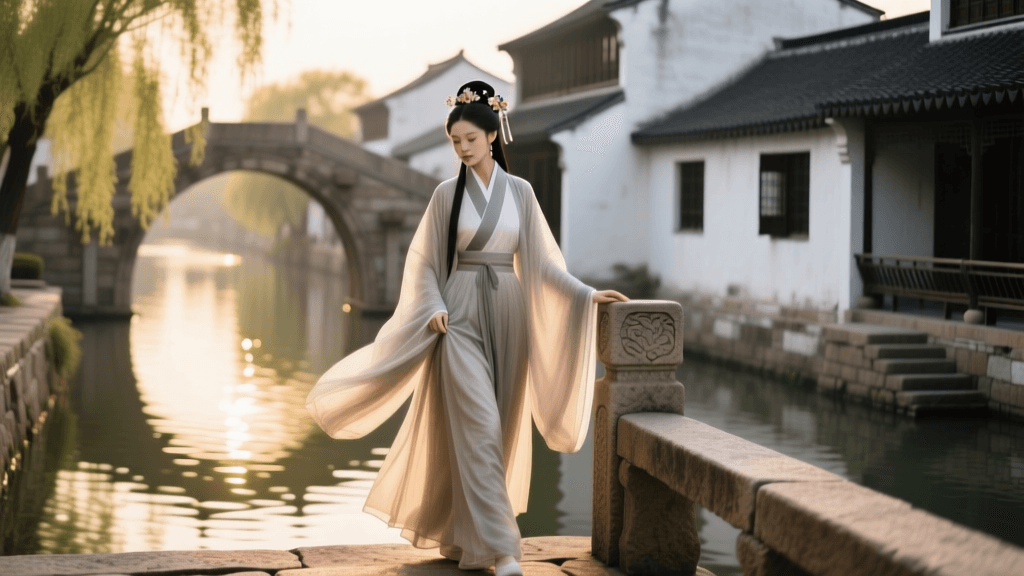
The modern Hanfu movement has evolved from a niche internet subculture into a global phenomenon, with millions embracing the sartorial heritage of China's past. As noted by BBC Culture's exploration of the modern Hanfu movement, this revival is not merely about wearing historical costumes; it is a meticulous pursuit of cultural authenticity, material accuracy, and traditional aesthetics. Among the most highly regarded eras for Hanfu enthusiasts is the Ming Dynasty (1368–1644), celebrated for its structured silhouettes, luxurious brocades, and sophisticated accessory pairings.
Creating a complete Ming Dynasty ensemble requires more than just purchasing a matching jacket and skirt. The true hallmark of Ming elegance lies in the crowning details: the intricate traditional updos secured by authentic jade hair accessories. This guide will walk you through the precise anatomy of a Ming ensemble, how to source genuine jade hairpins, and the step-by-step process of styling a historically grounded updo.
Anatomy of a Complete Ming Hanfu Ensemble
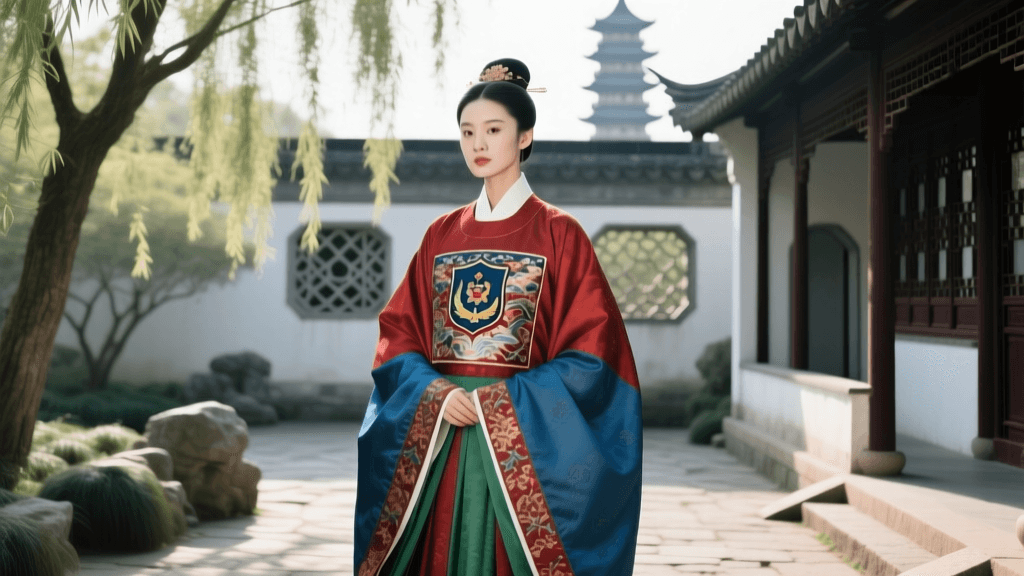
The foundational garment of the Ming Dynasty wardrobe for women is the Aoqun (袄裙), a two-piece outfit consisting of a lined or unlined jacket (Ao) and a skirt (Qun). To achieve an authentic silhouette, you must pay close attention to tailoring and measurements.
The Ao (Jacket)
The Ming Ao is characterized by its structured collars and distinct sleeve shapes. The most iconic sleeve style is the Pipa (lute) sleeve, which curves outward at the armhole and tapers gently at the wrist, allowing for ease of movement while maintaining a voluminous drape. Collars typically feature the Lijiao (standing collar) fastened with metallic sub-buttons, or the Yuanling (round collar). For a complete winter or formal ensemble, look for jackets made from silk jacquard or woven brocade with subtle metallic threads. The jacket should fall below the hips, typically measuring 70cm to 85cm in length, completely covering the waistband of the skirt.
The Mamianqun (Horse-Face Skirt)
No Ming ensemble is complete without the Mamianqun. This wrap-around skirt features flat front and back panels flanked by heavily pleated sides. A high-quality reproduction will feature 12 to 24 knife pleats on each side. The skirt length should be tailored to your height, ideally resting 2cm to 5cm above the ankle bone (usually 95cm to 105cm). The waistband is traditionally made of white cotton or linen, designed to provide friction against the jacket to prevent slipping, while remaining hidden from view.
The Crown Jewel: Selecting Jade Hair Accessories
In traditional Chinese culture, jade is far more than a decorative stone; it is a symbol of moral integrity, spiritual protection, and social status. According to The Metropolitan Museum of Art's Heilbrunn Timeline of Art History, jade has held a supreme position in Chinese material culture for millennia, often valued above gold or silver. During the Ming Dynasty, the use of jade in hair ornaments was heavily regulated by sumptuary laws, reserved primarily for the nobility and wealthy elite.
When sourcing jade hair accessories for your Hanfu ensemble, it is crucial to understand the difference between the two primary types of jade:
- Nephrite (Hetian Jade): This is the historically accurate jade used in ancient China. It possesses a soft, greasy luster and is highly prized in its 'mutton-fat' white variety. Nephrite is incredibly tough, making it ideal for carving intricate, delicate hairpins that will not easily snap.
- Jadeite (Feicui): Although highly popular in modern Chinese jewelry, jadeite was not widely used in China until the late Qing Dynasty. It has a glassier luster and comes in vivid greens and lavenders. While beautiful, it is less historically accurate for a strict Ming Dynasty recreation.
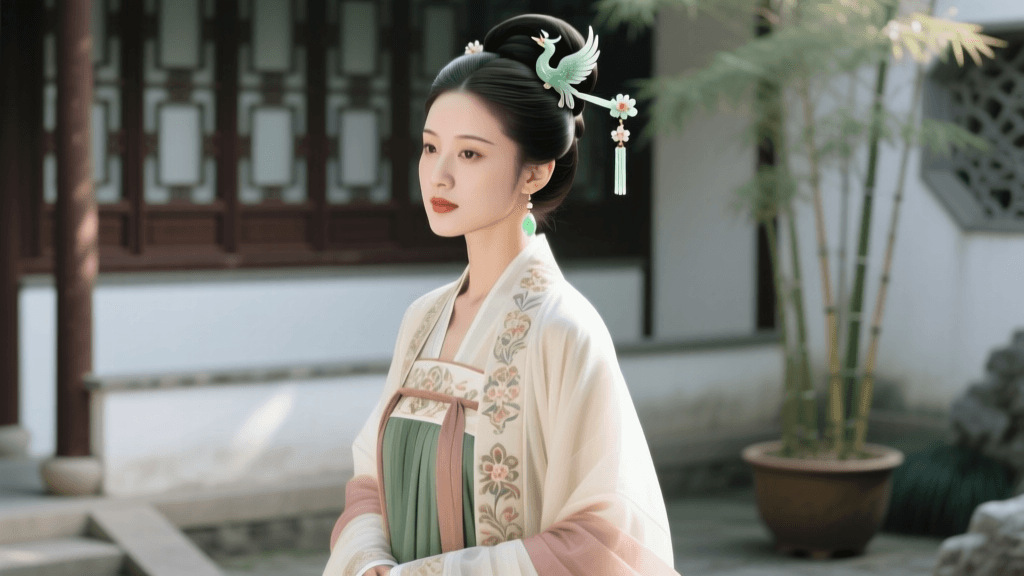
As highlighted by the Smithsonian National Museum of Asian Art, the spiritual significance of jade means it was often carved with auspicious motifs. When shopping for a Ming-style jade Zan (single-pronged pin), look for carved heads featuring lotus flowers, ruyi clouds, or phoenixes. A standard, functional jade hairpin should measure between 12cm and 16cm in length, with a carving width of 3cm to 5cm. Avoid cheap, glassy imitations; authentic nephrite will feel remarkably cold to the touch and will not scratch easily with a steel blade.
Essential Hairpins and Their Placement
Building a complete hair accessory set requires understanding the structural and decorative roles of different pins. Below is a comparison chart of the essential accessories needed for a Ming Dynasty updo.
| Accessory Name | Pinyin | Function & Description | Typical Length | Placement in Updo |
|---|---|---|---|---|
| Zan | 簪 | Single-pronged structural pin. Often features a jade or gold carved head. | 12 - 18 cm | Inserted horizontally or diagonally through the center of the main bun for core support. |
| Chai | 钗 | Double-pronged pin. Provides superior grip and secures heavier sections of hair. | 10 - 15 cm | Flanking the main bun or securing the base of the hair cushion. |
| Buyao | 步摇 | 'Step-sway' pin with dangling metallic or jade pendants that move with the wearer. | 15 - 20 cm | Placed at the front or sides of the updo to frame the face and add dynamic movement. |
| Shu | 梳 | Decorative comb, often made of jade, wood, or lacquer, featuring an ornate top ridge. | 8 - 12 cm | Pushed into the front or crown of the bun, acting as a focal decorative piece. |
Step-by-Step: Styling the Traditional Ming Updo
The most iconic Ming hairstyle is the Di-ji (topknot) or the Bao-ji style, which relies on a hair cushion to create a voluminous, structured silhouette. Styling this updo takes approximately 30 to 45 minutes and requires patience, a rat-tail comb, U-shaped hairpins, and your jade accessories.
Step 1: Preparation and Base
Begin with brushed, slightly textured hair (day-old hair or hair with texturizing spray holds best). Part your hair cleanly down the center or slightly off-center, depending on your preferred aesthetic. Gather all your hair into a high, tight ponytail at the crown of your head, securing it with a strong elastic band.
Step 2: Attaching the Hair Cushion
Traditional Ming styles utilized real hair extensions or silk-wrapped sponges to add volume. Today, you can purchase a Bao-ji (hair cushion) made of nylon mesh and sponge. Place the cushion over your ponytail base. Use 4 to 6 U-shaped pins to anchor the cushion firmly to your natural hair, ensuring it does not wobble when touched.
Step 3: Wrapping and Concealing
Divide your ponytail into two or three sections. Wrap these sections smoothly over the hair cushion, tucking the ends underneath the base of the bun. Secure the wrapped hair with bobby pins, creating a smooth, rounded, or teardrop-shaped dome. For a highly authentic look, you can wrap a strand of faux braided hair around the base of the bun to conceal the elastics and pins.
Step 4: Inserting the Jade Accessories
This is where your ensemble comes to life. Take your primary jade Zan and insert it horizontally through the right side of the cushion, pushing it deep into the center of the bun and out the left side. The single prong acts as a load-bearing beam, locking the cushion to your natural hair. Next, insert two Chai (double-pronged pins) at the base of the bun to secure any loose sections. Finally, place your Buyao (step-sway pins) on the left and right front edges of the cushion, and slide the jade Shu (comb) into the very top front of the bun. Adjust the dangling elements so they frame your cheekbones symmetrically.
Budgeting for Your Ensemble
Building a high-quality, historically inspired Ming Hanfu ensemble with authentic jade accessories is an investment. Below is a practical budget breakdown for a mid-tier enthusiast looking for durability and historical accuracy without venturing into antique collector pricing.
- Ming Aoqun Set (Silk Brocade/Jacquard): $120 - $280. Custom tailoring for the jacket will add roughly $40 to $60 but is highly recommended for the perfect Pipa sleeve drape.
- Mamianqun (Woven Pleats): $50 - $150. Look for skirts with woven metallic motifs rather than printed designs, as woven fabrics hold the sharp knife pleats much better over time.
- Authentic Nephrite Zan (Single Pin): $80 - $250. Price varies heavily based on the translucency and whiteness of the Hetian jade, as well as the intricacy of the carving.
- Brass or Silver-Alloy Chai and Buyao Set: $40 - $120. Hand-forged brass with pearl or jadeite inlays provides a beautiful, historically plausible contrast to the white nephrite.
- Styling Kit (Cushion, U-pins, Texturizing Spray): $15 - $30.
Conclusion
Assembling a complete Ming Dynasty Hanfu ensemble is a deeply rewarding journey into Chinese material culture. By understanding the precise tailoring of the Aoqun and Mamianqun, and by investing in authentic nephrite jade hair accessories, you elevate your practice from simple costuming to living history. The weight of a genuine jade Zan securing your hair is a tangible connection to the artisans, nobility, and women of the Ming era, allowing you to carry a piece of that enduring elegance into the modern world.