Ming Hanfu 3D Drape Analysis: 2026 Academic Research Methods
The Evolution of Chinese Fashion History Education in 2026
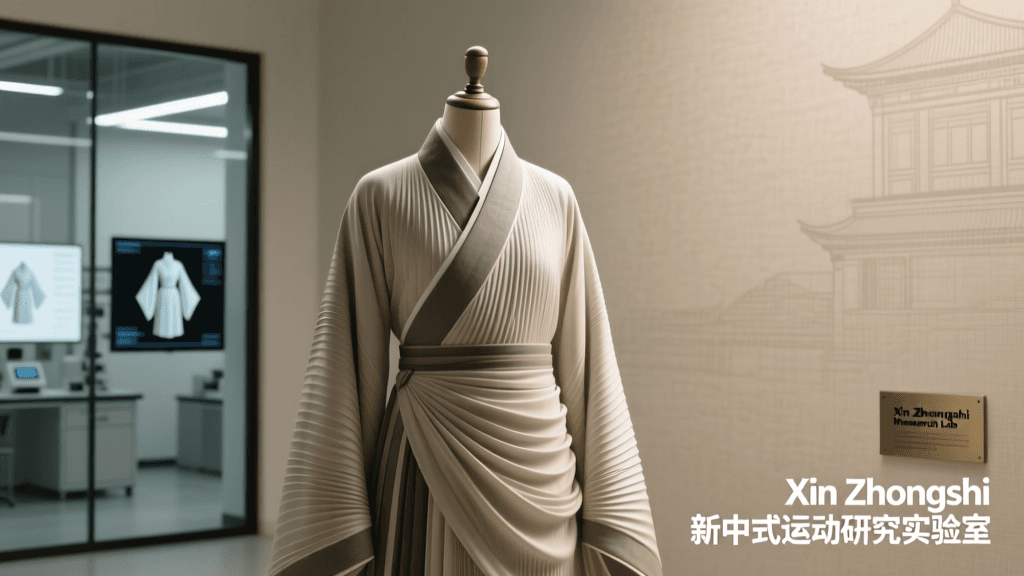
The intersection of traditional Chinese fashion history and modern academic research has undergone a radical transformation by 2026. No longer confined to static 2D pattern drafting and physical museum archives, universities and research institutions are now leveraging advanced 3D fabric drape analysis to decode the structural complexities of historical garments. This paradigm shift is particularly evident in the study of Ming Dynasty (1368–1644) Hanfu, where the intricate pleating of the Mamianqun (horse-face skirt) and the structured drape of the Ao (jacket) require precise physical and digital modeling. As the Xin Zhongshi (New Chinese Style) movement continues to dominate the commercial fashion sector in 2026, academic research has become the critical bridge ensuring that modern adaptations remain historically grounded and structurally authentic.
Institutions such as Donghua University and the Beijing Institute of Fashion Technology (BIFT) have fully integrated digital simulation into their 2026 graduate curricula. Students are now required to master both physical textile testing and virtual prototyping, ensuring a comprehensive understanding of how ancient garments behaved in motion. According to the Metropolitan Museum of Art's Ming Dynasty overview, the era was characterized by highly regulated sumptuary laws and distinct textile weaves, making the accurate digital recreation of these fabrics a rigorous academic pursuit.
Core Methodologies in 3D Drape Analysis
To accurately simulate historical garments, researchers in 2026 rely on a hybrid methodology that pairs physical textile testing with digital material mapping. The foundation of this research lies in the Kawabata Evaluation System for Fabrics (KES-FB) and the Fabric Assurance by Simple Testing (FAST) systems. These hardware suites measure the micro-mechanical properties of textiles, including bending stiffness, shear hysteresis, and surface friction.
Physical Testing of Historical Textile Analogues
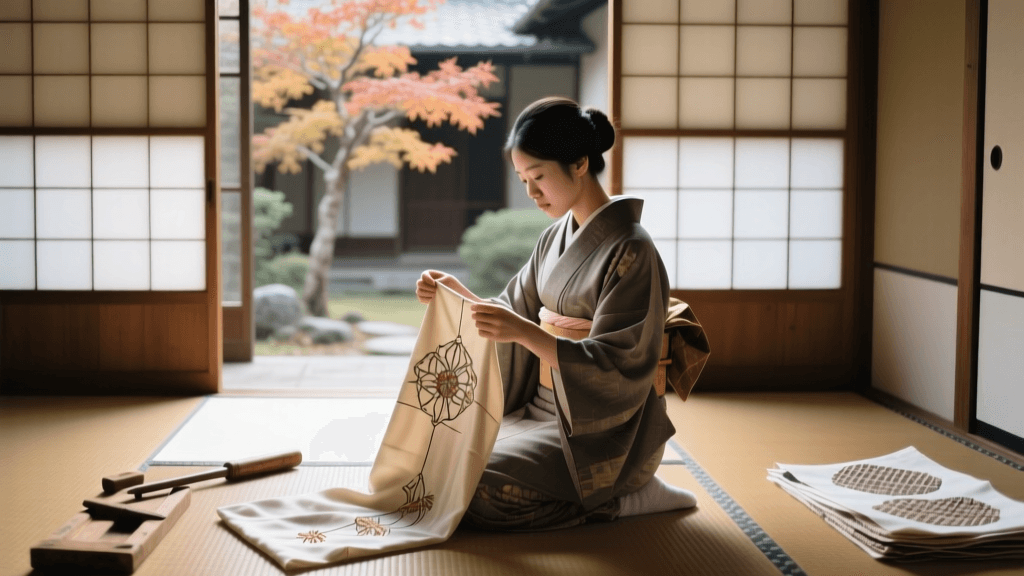
Because testing original 15th-century artifacts is often impossible due to their fragility, academic labs create historically accurate analogues. Using traditional wooden looms, researchers weave replicas of Ming-era Zhimang (python robe) brocades and lightweight Luo (gauze) silks. These analogues are then subjected to KES-FB testing to extract precise numerical data. For instance, the bending stiffness (B) and hysteresis (2HB) of a heavy silk brocade dictate how sharply a Mamianqun pleat will hold its shape when the wearer is in motion.
Digital Mapping in CLO3D and Marvelous Designer
Once physical data is collected, it is translated into the material editor of industry-standard software like CLO3D (Version 8.2, the standard for 2026 academic licensing). Researchers input the exact warp and weft density, thickness, and stretch parameters. The software's advanced physics engine then calculates the gravitational and kinetic drape of the garment on a parametric avatar. This allows scholars to analyze stress points at the seams and observe how the Pifeng (cape) cascades over the shoulders without the need for costly physical prototyping.
Digital Simulation Parameters: A 2026 Reference Table
The following table outlines the standard physical and digital parameters used in 2026 academic research to simulate three primary Ming Dynasty textiles within CLO3D. These values are derived from recent peer-reviewed studies published in the Journal of Cultural Heritage, which focuses on the digital preservation of historical artifacts.
| Textile Type (Ming Era) | Physical Weight (g/m²) | Bending Stiffness (KES-FB) | CLO3D Material Preset Base | Primary Garment Application |
|---|---|---|---|---|
| Zhimang Silk Brocade | 280 - 320 | High (Rigid) | Heavy Brocade / Tapestry | Formal Ao (Jackets), Outer Robes |
| Luo Silk Gauze | 45 - 60 | Low (Fluid) | Chiffon / Organza | Summer Undergarments, Veils |
| Ramie / Cotton Blend | 150 - 180 | Medium (Structured) | Medium-weight Linen | Everyday Mamianqun, Inner Layers |
Step-by-Step Academic Research Workflow
For graduate students and early-career researchers embarking on a thesis involving Chinese fashion history, adhering to a structured workflow is essential for producing defensible, peer-reviewed data. Below is the standard 2026 methodology for conducting a 3D drape analysis study.
- Step 1: Artifact Sourcing and Photogrammetry. Researchers begin by selecting a target garment from museum archives. Using high-resolution photogrammetry, they capture the garment's flat pattern dimensions, seam placements, and pleat depths. For a standard Ming Mamianqun, this involves mapping the exact width of the flat 'horse-face' panels versus the depth of the side pleats.
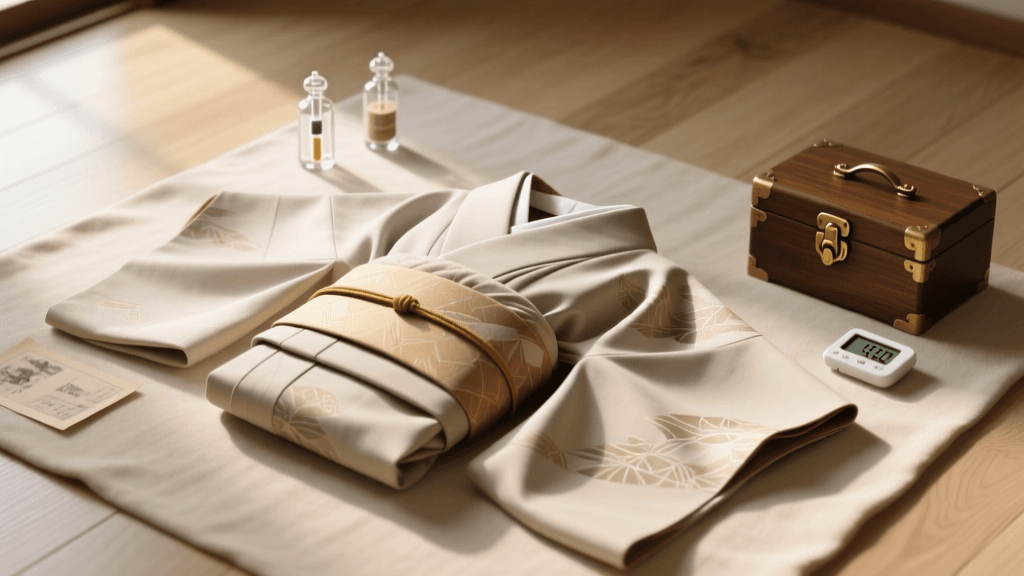
- Step 2: Textile Analogue Weaving and Testing. A textile specialist weaves a 2-meter sample of the target fabric. This sample is conditioned in a climate-controlled lab (20°C, 65% humidity) for 24 hours before undergoing KES-FB testing to extract the mechanical property matrix.
- Step 3: Digital Pattern Drafting. Using the photogrammetry data, the 2D patterns are drafted in CAD software and exported as DXF files. Accuracy here is paramount; even a 2mm deviation in the pleat drafting can drastically alter the digital drape.
- Step 4: Simulation and Stress Mapping. The patterns are imported into CLO Virtual Fashion. The researcher applies the custom material matrix and runs a dynamic simulation. The software generates a stress map, highlighting areas of high tension (usually at the waistband and underarm gussets) and evaluating the kinetic drape during a simulated walking cycle.
- Step 5: Comparative Analysis. The digital drape is compared against historical paintings and surviving artifacts to validate the simulation's accuracy. Discrepancies are resolved by tweaking the digital friction and shear parameters.
Bridging Academia and the Xin Zhongshi Market
The rigorous academic research conducted in university labs does not remain trapped in ivory towers; it directly fuels the multi-billion-dollar Xin Zhongshi (New Chinese Style) market. In 2026, consumers are highly educated and demand historical authenticity combined with modern wearability. Commercial brands frequently partner with academic institutions to license digital material libraries and validated 2D patterns.
For example, understanding the exact drape and weight distribution of a Ming Dynasty Mamianqun allows modern designers to substitute heavy, expensive traditional silks with modern, machine-washable technical fabrics that mimic the exact same kinetic behavior. By utilizing the 3D drape analysis data, brands can guarantee that a modernized skirt will still flare and settle with the same elegant gravity as its 15th-century predecessor, satisfying both the aesthetic demands of the Xin Zhongshi trend and the practical needs of contemporary urban life.
Essential Tools and Software for 2026 Researchers
To succeed in this specialized field, researchers must be proficient in a specific suite of hardware and software tools. The financial investment for a fully equipped university lab in 2026 is significant, but the output is invaluable.
- Hardware: KES-FB Automated Testing System (approximate cost: $85,000 USD), FAST testing rig, and high-resolution 3D body scanners for creating accurate historical avatars based on skeletal remains and historical anthropometric data.
- Software: CLO3D (Enterprise/Academic License), Marvelous Designer (for complex mesh topology), and Blender (for photogrammetry processing and advanced rendering of historical environments).
- Digital Archives: Access to the China National Silk Museum's digital database and the Palace Museum's high-resolution artifact portal, both of which have vastly expanded their open-access 3D asset libraries in 2026.
Conclusion
The academic study of Chinese fashion history has firmly entered the digital age. By utilizing 3D fabric drape analysis, researchers in 2026 are not merely preserving the past; they are decoding the physics of historical garments. This rigorous, data-driven approach ensures that the rich textile heritage of the Ming Dynasty is accurately understood, beautifully preserved, and thoughtfully integrated into the future of global fashion. As the Xin Zhongshi movement continues to evolve, the synergy between academic research and commercial design will remain the cornerstone of authentic cultural expression.