Recreating Ming Hanfu: Empress Xiaoduan's Phoenix Crown
The Legacy of Empress Xiaoduan's Iconic Court Attire
When discussing the zenith of traditional Chinese clothing, the Ming Dynasty (1368–1644) stands out as an era of unprecedented textile innovation, structured silhouettes, and rigid sumptuary laws. Among the most iconic figures of this period is Empress Xiaoduan (Wang Xijie), the consort of the Wanli Emperor. Her legacy is inextricably linked to the breathtaking artifacts unearthed from the Dingling Tomb in 1956, which revealed the staggering opulence of Ming court attire. Today, her ceremonial garments—specifically the Phoenix Crown (Fengguan) and the Pheasant Robe (Di Yi)—serve as the ultimate blueprint for modern Hanfu enthusiasts seeking to recreate historical Ming formalwear.
According to historical analyses from The Metropolitan Museum of Art, the Ming dynasty represented a cultural renaissance where court dress was meticulously codified to reflect cosmic order and imperial authority. Empress Xiaoduan’s excavated wardrobe provides a rare, perfectly preserved three-dimensional look into this codified world, offering modern tailors and historians exact measurements, weave structures, and color palettes to study.
Anatomy of the Fengguan (Phoenix Crown) and Di Yi
The Phoenix Crown (Fengguan)
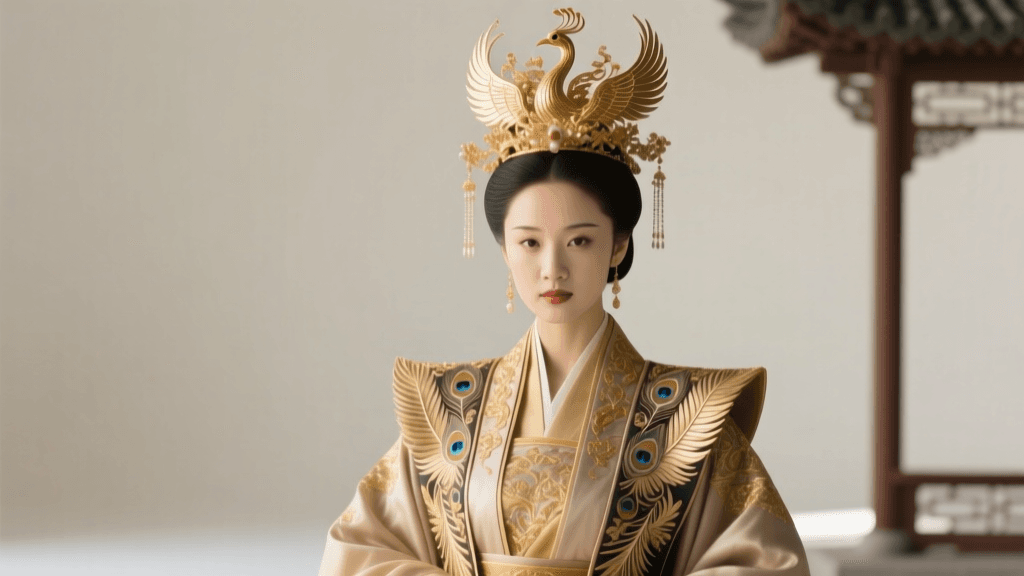
The Fengguan is arguably the most recognizable symbol of Ming imperial femininity. Empress Xiaoduan’s crown was a masterclass in metallurgy and point-blue (Tian-tsui) artistry. The original piece featured a bamboo and wire frame, adorned with over 5,000 pearls, hundreds of faceted gemstones, and intricate kingfisher feather inlays. The crown featured nine golden dragons and four golden phoenixes, signifying her supreme status. Because the harvesting of kingfisher feathers is now illegal and highly unethical, modern Hanfu artisans have brilliantly adapted the craft, utilizing dyed goose feathers, enamelwork, and silk threads to replicate the iridescent blue-green hue of the original Tian-tsui technique.
The Pheasant Robe (Di Yi) and Xiapei (Rosy Cape)
Beneath the crown, the Empress wore the Di Yi, a deep blue or green silk robe woven with twelve rows of pheasant motifs. The pheasant, representing literary refinement and fidelity, was reserved exclusively for the Empress and Crown Princess. This robe was layered with a Xiapei—a heavy, embroidered scarf-like stole that draped over the shoulders and hung down the front, weighted at the bottom by a carved jade or gold pendant to ensure it hung perfectly straight. The Victoria and Albert Museum's Asian Collections frequently highlight how these layered silk accessories were not merely decorative, but served to enforce a slow, dignified gait, physically manifesting the wearer's noble virtue.
Sourcing Modern Ming-Style Hanfu: A Buyer's Guide
Recreating Empress Xiaoduan’s look requires navigating the modern Hanfu market with a discerning eye. Whether you are preparing for a traditional wedding, a cultural exhibition, or a high-end photoshoot, understanding fabric weights, structural measurements, and pricing tiers is essential.
Essential Measurements and Fabric Specifications
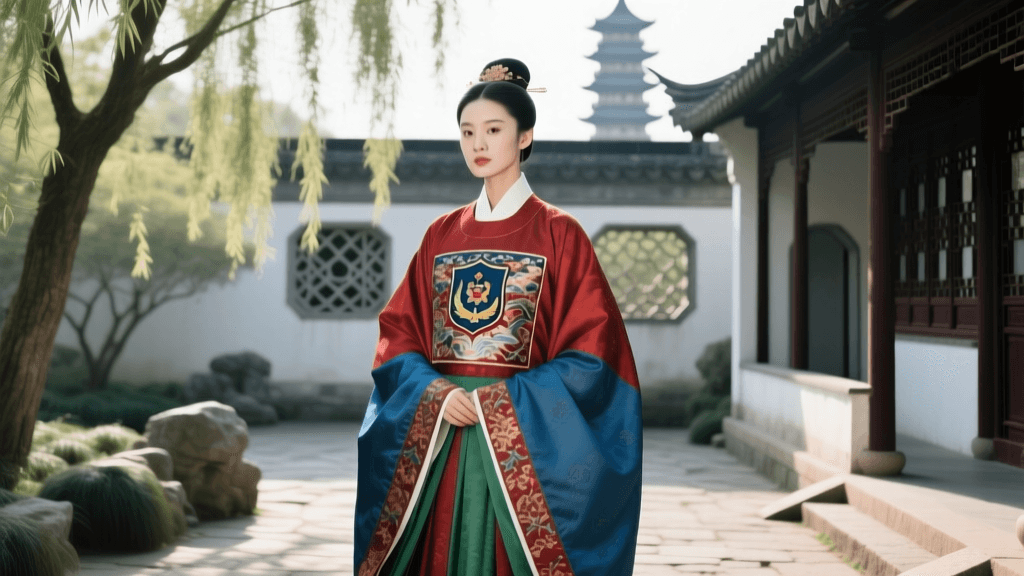
Ming Dynasty women’s upper garments (Ao) are characterized by their voluminous sleeves and structured collars. When ordering a custom or made-to-measure Ming Ao, pay strict attention to the following:
- The Standing Collar (Liling): Measure your neck base and add exactly 1.5cm to 2cm for ease. The collar height should be precisely 4cm to 5cm. Anything higher will restrict movement and choke the wearer; anything lower loses the iconic Ming silhouette.
- Sleeve Length and Width: Formal Ming sleeves (Pipa sleeves) should extend past the fingertips by at least 10cm to 15cm, allowing the fabric to drape elegantly over the hands. The sleeve root should be wide (approx. 40cm), tapering gently to a 25cm cuff.
- Fabric Weight and Drape: Avoid cheap, lightweight polyesters that cling to the body. For an authentic Di Yi or formal Ao, source 22-momme to 30-momme mulberry silk charmeuse, or heavy jacquard brocade with a minimum weight of 150g/m² to 200g/m². This weight ensures the garment holds its architectural shape.
- The Mamianqun (Horse-Face Skirt): Ensure the skirt features 4 to 6 pairs of knife pleats on each side, with flat front and back panels (Guangmian). The waistband should be made of white or contrasting cotton-linen to grip the undergarments and prevent slipping.
Cost Breakdown and Sourcing Timeline
The modern Hanfu market is vast, and prices vary wildly based on historical accuracy and material quality. Here is what you can expect to invest when building a Ming court wardrobe:
- Entry-Level (Everyday Wear): $45 to $85 USD for a polyester-blend Mamianqun and basic cotton Ao. Suitable for casual festivals, but lacks the drape of court attire.
- Mid-Tier (Enthusiast Grade): $150 to $350 USD for a silk-blend or pure wool Aoqun set from reputable brands like Shisanyu or Ming Huatang. These offer excellent historical silhouettes and durable jacquard weaves.
- Haute Couture (Bridal/Ceremonial): $800 to $2,500+ USD for a fully embroidered, custom-tailored Di Yi replica and a handcrafted enamel Fengguan.
Timing Advice: If you are commissioning a custom ceremonial set for a wedding or major cultural event, you must place your order at least 3 to 4 months in advance. Hand-embroidery and traditional loom weaving cannot be rushed.
Comparing Ming Dynasty Hanfu Styles for Modern Wear
To help you choose the right level of formality, refer to the comparison chart below:
| Garment Style | Historical Use | Modern Application | Estimated Cost (USD) |
|---|---|---|---|
| Everyday Aoqun (Cross-collar Ao + Mamianqun) | Daily wear for noblewomen and wealthy commoners. | Cultural festivals, museum visits, daily Hanfu wear. | $80 - $200 |
| Liling Aoqun (Standing collar Ao + Skirt) | Formal seasonal wear, late Ming daily formal. | Photoshoots, formal dinners, autumn/winter events. | $150 - $350 |
| Yuanlingshan (Round-collar robe with Buizi rank badges) | Official court uniform for female officials and nobility. | Graduation ceremonies, official cultural representations. | $250 - $500 |
| Di Yi & Fengguan (Pheasant Robe & Phoenix Crown) | Highest ceremonial wear for the Empress and Crown Princess. | Traditional Hanfu weddings, high-end exhibitions. | $1,200 - $3,000+ |
Styling, Etiquette, and Garment Care
Wearing Ming court attire requires an understanding of traditional etiquette and meticulous garment care. The sheer volume of fabric in a Pipa-sleeved Ao and a heavily pleated Mamianqun demands mindful movement. When walking, practice the traditional 'cloud step'—gliding smoothly without bobbing the shoulders, allowing the jade pendants on your Xiapei to sway gently rather than clank loudly. When seated, carefully gather the excess sleeve fabric and drape it over your wrists or lap to avoid crushing the embroidered cuffs.
Practical Maintenance Tips
- Steaming over Ironing: Never use a flat iron directly on silk brocade or gold-thread embroidery. Use a high-pressure garment steamer to remove wrinkles, hanging the garment in a steam-filled bathroom for 20 minutes prior to wearing.
- Storing the Fengguan: Replica crowns are highly susceptible to humidity and dust. Store your Fengguan in a rigid, acid-free archival box with silica gel packets to prevent the metal wires from tarnishing and the dyed feathers from molding.
- Skirt Pleat Maintenance: After washing your Mamianqun (dry clean only for silk), the pleats must be re-pressed. Use wooden skirt clips to hold the pleats in place while hanging, and lightly steam the sides to reset the knife pleats.
'The clothing of the Ming court was not merely fabric; it was an architectural manifestation of heaven and earth. To wear the Di Yi is to carry the weight of history, requiring both physical grace and profound respect for the artisans who wove the cosmos into silk.' — Curatorial notes from the British Museum's Asian Antiquities Department.
Recreating the iconic outfits of Empress Xiaoduan is a rewarding journey into the heart of Asian textile traditions. By prioritizing historical accuracy in your measurements, investing in ethical and high-quality materials, and adhering to the dignified etiquette of the Ming court, you do more than just wear a costume—you actively participate in the living preservation of Hanfu heritage.