Ming Dynasty Court Fashion: Evolution of the Mamianqun Skirt
The Restoration of Han Elegance in Ming Court Fashion
When Zhu Yuanzhang established the Ming Dynasty (1368–1644), one of his primary cultural objectives was the eradication of Mongol Yuan Dynasty influences and the restoration of traditional Han Chinese customs. This cultural renaissance was most visibly codified in the Da Ming Hui Dian (Collected Statutes of the Ming Dynasty), which established rigorous sumptuary laws governing court fashion. According to the Metropolitan Museum of Art's Heilbrunn Timeline, the Ming era represented a pinnacle of Chinese textile production, where court fashion became a highly structured visual language of power, hierarchy, and cosmic harmony.
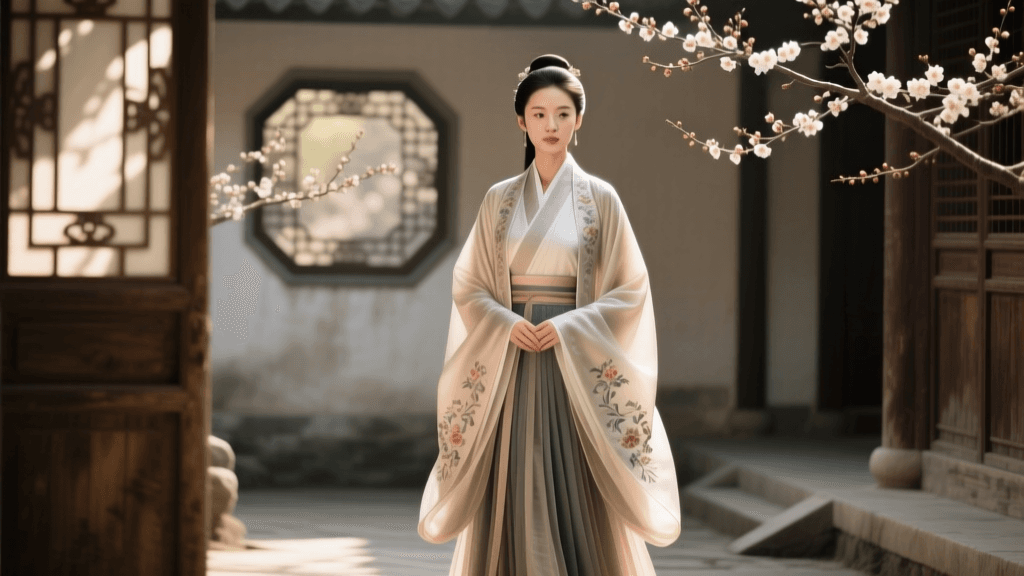
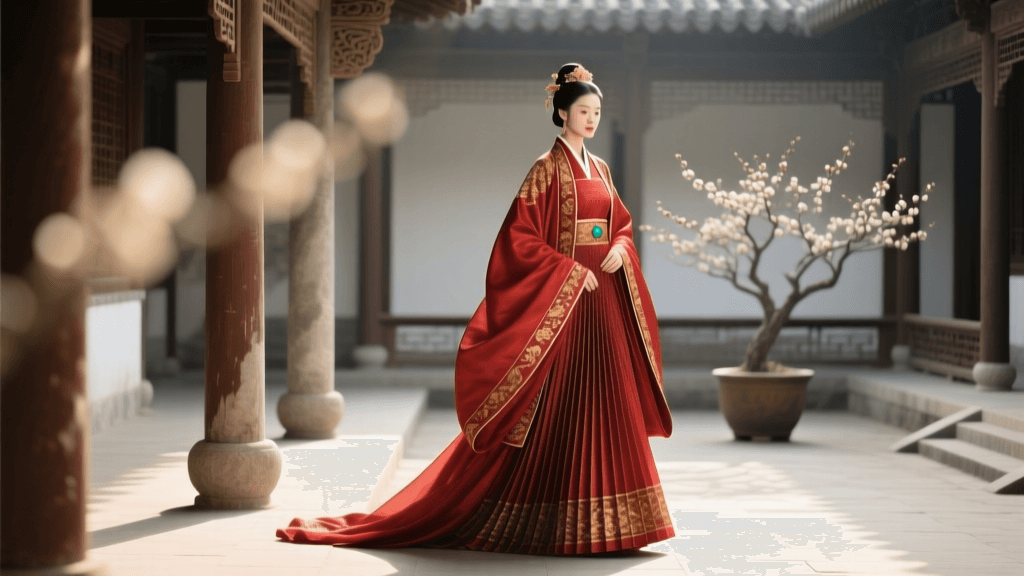
At the heart of elite women's fashion during this era was the Aoqun ensemble, consisting of a lined jacket (Ao) and a pleated skirt. The undisputed centerpiece of this ensemble was the Mamianqun, or 'horse-face skirt.' Far from being a mere garment, the Mamianqun was a canvas for extraordinary weaving techniques, reflecting the wearer's social standing and the technological zenith of Ming dynasty silk workshops.
Structural Anatomy of the Mamianqun
The term 'horse-face' (mamian) does not refer to the animal, but rather to ancient Chinese city wall defenses. The flat, unpleated front and back panels of the skirt resemble the protruding defensive watchtowers known as mamian, while the pleated sides mimic the receding walls. As detailed in the structural analysis by historical textile archives, the skirt is constructed from two identical trapezoidal pieces of fabric that overlap at the waist.
This ingenious design served both aesthetic and practical functions. The flat front and back panels provided a pristine, uninterrupted canvas for elaborate woven motifs, while the heavily pleated sides allowed for ease of movement and a dramatic, sweeping silhouette when walking. The waistband, traditionally made of a contrasting, durable fabric like cotton or linen, was tied securely with long silk ribbons, ensuring the heavy, brocaded skirt remained perfectly positioned.
Textile Hierarchy and Regulated Motifs
Ming court fashion was strictly regulated by sumptuary laws. The imperial workshops in Nanjing and Suzhou developed Zhuanghua (brocade with discontinuous wefts) and Kesi (silk tapestry) techniques to create garments of unparalleled luxury. The motifs woven into the flat panels of a court lady's Mamianqun were not merely decorative; they were legal indicators of rank.
- Mang (Python): A dragon-like creature with four claws. Reserved for high-ranking imperial consorts and wives of top officials.
- Feiyu (Flying Fish): A mythical creature featuring a python's body with fish-like fins and a tail. Awarded as a mark of extreme imperial favor.
- Douniu (Bull): A python-like beast with downward-curving horns, designated for mid-tier court officials and their families.
Wearing a motif above one's station was considered treason, making the Mamianqun a garment fraught with political significance. The Victoria and Albert Museum's Asian textile collections highlight how these intricate, gold-woven motifs required thousands of hours of labor, cementing the Ming dynasty's legacy in global textile history.
Comparative Evolution: Mamianqun Across Dynasties
While the Mamianqun reached its zenith in the Ming Dynasty, its structure evolved significantly over time. Below is a comparison of its evolution from the Song Dynasty origins to the modern Hanfu revival.
| Feature | Song Dynasty (960–1279) | Ming Dynasty (1368–1644) | Qing Dynasty (1644–1912) | Modern Hanfu Revival |
|---|---|---|---|---|
| Panel Width | Narrow, multiple panels | Wide, prominent flat panels | Wide, heavily decorated | Standardized 60-80cm panels |
| Pleat Style | Simple knife pleats | Deep, structured box/accordion pleats | Finer, numerous pleats with side embroidery | Heat-set synthetic or silk pleats |
| Waistband | Matching fabric, tied | Contrasting white/colored cotton or silk | Matching brocade, often with buttons | Elasticized or traditional tie options |
| Primary Motif Placement | Scattered or hem-focused | Large, centralized on flat panels | Elaborate borders and side pleat embroidery | Woven jacquard or digital printing |
The Modern Collector’s Guide: Sourcing and Measurements
For modern enthusiasts and collectors looking to acquire an authentic Ming-style Mamianqun, understanding the market, measurements, and production timelines is crucial. The contemporary Hanfu market offers a wide spectrum of options, from mass-produced polyester to museum-grade silk replicas.
Sizing and Measurements
Unlike modern Western skirts, the Mamianqun relies on an overlapping wrap design. To calculate your required skirt waist measurement:
- Measure your natural waist circumference.
- Divide this number by 2 (this represents the front panel width).
- Add 15cm to 20cm to allow for the inner overlapping panel (guangmian) to prevent gaping when walking.
- Length: For a historically accurate Ming silhouette, the skirt should graze the top of the foot. For a wearer who is 165cm (5'5") tall, a skirt length of 100cm to 105cm is ideal. Always measure from your natural waist to your desired hemline while wearing the shoes you intend to pair with the skirt.
Market Tiers, Costs, and Timing
- Entry-Level (Polyester/Jacquard): Brands like Shisanyu or Zhong Ling offer beautiful, durable polyester jacquard skirts. Cost: $40 – $90 USD. Timing: Ready to ship or 7-15 days delivery. Ideal for daily wear and beginners.
- Mid-Tier (Cotton-Silk Blends & Woven Brocade): Brands like Lianyi provide woven brocades with metallic threads. Cost: $120 – $250 USD. Timing: 30-45 days, as many are made-to-order.
- High-End / Museum Replica (Pure Silk Zhuanghua): The gold standard is Ming Hua Tang, which uses traditional wooden looms and authentic silk/zhuanghua techniques to replicate extant Ming artifacts. Cost: $600 – $1,500+ USD for a skirt alone. Timing: 6 to 12 months due to the painstaking weaving process and massive backlog of elite collectors.
Styling the Authentic Aoqun Ensemble
To properly style a Ming Dynasty Mamianqun, it must be paired with the correct upper garment. The most historically accurate pairing is the Pipa-sleeve Ao (a lined jacket with curved sleeves resembling a lute) or a Liling Shan (a standing-collar shirt fastened with metal or jade buttons).
For a formal court or banquet look, layer a Yunjian (cloud shoulder) over the jacket. The Yunjian is a detachable, heavily embroidered collar piece that drapes over the shoulders, featuring four or eight symmetrical lobes. Finish the ensemble with a Damao (traditional hat) or intricate gold and pearl hairpins (Zanzi), and a pair of cloud-toe silk shoes.
Garment Care and Pleat Maintenance
Maintaining the crisp, architectural pleats of a Mamianqun requires specific care, especially for silk variants.
- Washing: Never machine wash a silk or metallic-thread Mamianqun. Dry clean only. Polyester jacquard versions can be hand-washed in cold water with a pH-neutral silk detergent, but must never be wrung out.
- Drying: Hang the skirt on a specialized skirt hanger with multiple clips. The weight of the wet fabric will naturally pull the pleats straight as it air dries.
- Storage: Do not fold the skirt, as this will permanently crease the pleats and damage metallic threads. Always hang it in a breathable cotton garment bag. If the pleats begin to relax over time, use a steam iron on a low setting, carefully pinning the pleats flat on an ironing board before applying steam.
Conclusion
The Ming Dynasty Mamianqun is far more than a relic of the past; it is a masterclass in structural engineering, textile artistry, and cultural identity. From the strict sumptuary laws of the imperial court to its vibrant revival in modern global fashion, the horse-face skirt remains a testament to the enduring elegance of traditional Chinese garment design. Whether you are a historian studying the Zhuanghua weaving techniques or a modern enthusiast styling your first Aoqun set, the Mamianqun offers a profound connection to the sartorial majesty of the Ming era.