2026 Hanfu Resale Guide: Valuing Vintage Ming Garments
The 2026 Circular Hanfu Economy
As we move through 2026, the global fascination with traditional Chinese clothing has transitioned from a niche historical revival into a robust, multi-billion-dollar circular fashion economy. The Hanfu secondhand market, once limited to domestic Chinese forums, has exploded onto the global stage. Collectors, fashion historians, and sustainable style enthusiasts are now actively trading vintage and pre-owned Hanfu, with a particular emphasis on Ming Dynasty-inspired silhouettes. Unlike the fast-fashion Hanfu trends of the early 2020s, today's market prioritizes artisanal craftsmanship, historical accuracy, and premium textiles. For serious collectors, the secondary market offers access to retired designs, limited-edition artisan collaborations, and high-end garments that are no longer available at retail.
Navigating this space requires a keen eye for textile quality, an understanding of historical motifs, and familiarity with the platforms where these transactions occur. This comprehensive guide will walk you through the nuances of collecting, authenticating, and valuing secondhand Ming-style Hanfu in the current 2026 market landscape.
The Crown Jewels of the Resale Market: Ming Dynasty Silhouettes
The Ming Dynasty (1368–1644) represents a golden age for Chinese textile arts, and its silhouettes remain the most sought-after category in the 2026 resale market. When browsing secondhand listings, collectors primarily target three specific garment types:
1. The Mamianqun (Horse-Face Skirt)
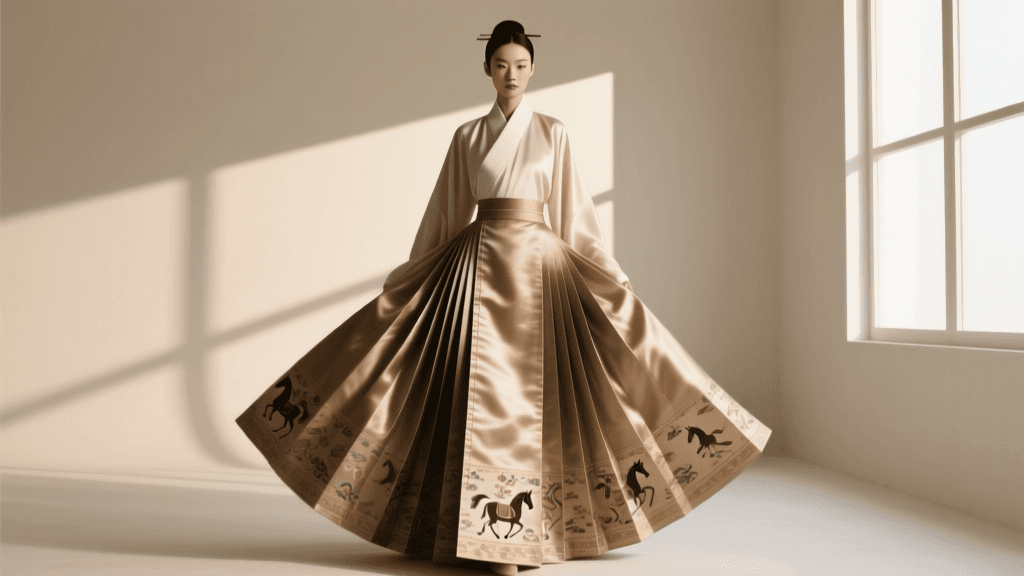
The Mamianqun is a wrap skirt characterized by flat front and back panels (the 'horse faces') and deeply pleated sides. In the secondhand market, the value of a Mamianqun is dictated by its motifs and weaving technique. Highly prized are skirts featuring the Feiyu (flying fish), Mang (python), or Zhuanghua (woven gold) patterns. Vintage pieces from prestigious studios that utilize real metal-wrapped threads hold their value exceptionally well, often appreciating after the original production run sells out.
2. The Ao (Standing Collar Jacket)
The Ming-style Ao typically features a standing collar, a central front closure, and side slits. Secondhand buyers look for jackets made from heavy brocades, velvets, or silk-satin blends. The hardware—specifically the metal buttons and clasps (often shaped like butterflies, flowers, or ruyi clouds)—is a major indicator of authenticity and quality. Mass-produced replicas use lightweight alloy, while premium vintage pieces feature solid copper, brass, or silver-plated hardware.
3. The Biju and Pifeng (Outerwear)
Translucent silk Pifeng (cape-like garments) and heavily embroidered Biju (vests) are essential layering pieces. In the resale market, intact embroidery without fraying or discoloration commands a premium, as these delicate items are highly susceptible to wear and improper washing.
Authentication: Distinguishing True Artisans from Mass Production
With the surge in Hanfu's global popularity, the market has been flooded with cheap, mass-produced imitations. Authenticating a secondhand Ming-style garment requires examining the textile construction and finishing details. According to historical textile analysis provided by the Metropolitan Museum of Art's Chinese Textiles overview, traditional Chinese weaving techniques rely on complex loom structures that create distinct structural differences compared to modern digital printing.
Woven vs. Printed Motifs
The most critical authentication step is determining whether the garment's patterns are woven into the fabric or printed on the surface. Premium Hanfu utilizes Zhuanghua (woven gold) or Zhijin (brocade) techniques. To test this, examine the reverse side of the fabric. If the pattern is woven, you will see the negative image of the design, and metallic threads will be physically integrated into the warp and weft. If the reverse side is blank or shows faint, muddy ink bleed, the garment is digitally printed—a hallmark of lower-tier fast fashion that holds virtually no resale value.
Selvedge and Seam Finishing
High-end Ming-style reproductions honor traditional construction methods. Look for flat-felled seams, hand-finished hems, and intact selvedge edges. Mass-market Hanfu often utilizes modern overlock (serger) stitching on the inside, which immediately flags the piece as a modern, budget-friendly reproduction rather than a collectible artisan garment.
Red Flags in Secondhand Listings
When shopping on resale platforms in 2026, be vigilant for the following warning signs:
- Stock Photography Only: Authentic sellers of vintage or pre-owned Hanfu will provide detailed, well-lit photos of the actual garment, including close-ups of the fabric weave, inner seams, and hardware.
- Vague Material Descriptions: Premium sellers list exact fabric compositions (e.g., '100% Mulberry Silk Brocade' or 'Cotton-Linen Blend'). Listings that simply say 'Polyester Silk' or 'Antique Fabric' are often drop-shippers masquerading as vintage sellers.
- Missing Brand Tags or Provenance: While some independent artisans do not use tags, established high-end brands (like Ming Huatang or Shisanyu) have distinct labeling. A missing tag on a supposedly 'premium' piece significantly lowers its value and authenticity.
2026 Resale Valuation Matrix: Ming-Style Hanfu
Pricing in the Hanfu secondhand market fluctuates based on brand prestige, material rarity, and condition. The table below outlines the average 2026 resale valuations for Ming-style garments in the global market.
| Garment Type | Brand / Artisan Tier | Condition | 2026 Avg. Resale Price (USD) |
|---|---|---|---|
| Mamianqun (Woven Brocade) | Premium (e.g., Ming Huatang) | Excellent / Unworn | $450 - $850+ |
| Mamianqun (Woven Brocade) | Mid-Tier Studio | Good / Light Wear | $120 - $250 |
| Ao (Standing Collar Jacket) | Premium Artisan | Excellent | $300 - $600 |
| Ao (Cotton/Linen Blend) | Commercial Brand | Good | $60 - $110 |
| Pifeng (Silk Outerwear) | Vintage / Discontinued | Fair (Minor Snags) | $150 - $350 |
Note: Limited-edition collaboration pieces or garments featuring genuine gold-leaf thread weaving can exceed $1,500 on the secondary market, functioning more as investment-grade art than wearable fashion.
Top Platforms for Hanfu Resale in 2026
Finding authentic secondhand Hanfu requires knowing where the community gathers. In 2026, the ecosystem is split between domestic Chinese apps and international luxury resale platforms.
Xianyu (Idle Fish)
Owned by Alibaba, Xianyu remains the undisputed king of the domestic Hanfu secondhand market. In 2026, the platform's AI-driven image search allows collectors to upload a photo of a retired design and instantly find resale listings. However, navigating Xianyu requires a proxy shopping agent for international buyers, and language barriers can complicate negotiations regarding garment condition and measurements.
Grailed and Vestiaire Collective
Recognizing the surge in traditional Asian garments, major international resale platforms have recently introduced dedicated 'Traditional & Heritage Asian Garments' categories. While the selection is smaller and prices are marked up for the Western market, these platforms offer buyer protection, authenticated shipping, and detailed English descriptions, making them ideal for international collectors seeking premium Ming-style pieces.
Specialized Discord and Reddit Communities
For the most dedicated collectors, private Discord servers and the r/Hanfu subreddit's monthly trading threads offer peer-to-peer exchanges. These communities often feature 'Warden' moderators who verify the authenticity of high-value listings before they are approved for sale, providing a safe haven for trading rare, discontinued artisan pieces.
Archival Care and Preservation
Investing in secondhand Hanfu is only half the journey; preserving these textiles is paramount. Ming-style brocades and silks are highly sensitive to environmental factors. Following the conservation principles outlined by the Victoria and Albert Museum's Asian Collections, collectors must prioritize climate control and proper storage materials.
Never hang heavy Mamianqun or brocade jackets on standard wire or wooden hangers, as the weight of the woven metal threads will distort the warp and cause shoulder tearing. Instead, store garments flat in archival-quality, acid-free boxes. Use unbuffered, acid-free tissue paper to stuff the pleats of the skirts, preventing sharp creases that can eventually snap the silk fibers. Keep your collection in a dark, climate-controlled environment with a relative humidity of around 50%, as excessive moisture invites mold, while extreme dryness makes historical silk reproductions brittle and prone to shattering.
By understanding the historical context, mastering authentication techniques, and practicing rigorous archival care, collectors can successfully navigate the 2026 Hanfu resale market, preserving these magnificent Ming-inspired garments for future generations.