Best Academic Tools for Ming Garment Reconstruction 2026
The Evolution of Chinese Fashion History Education in 2026
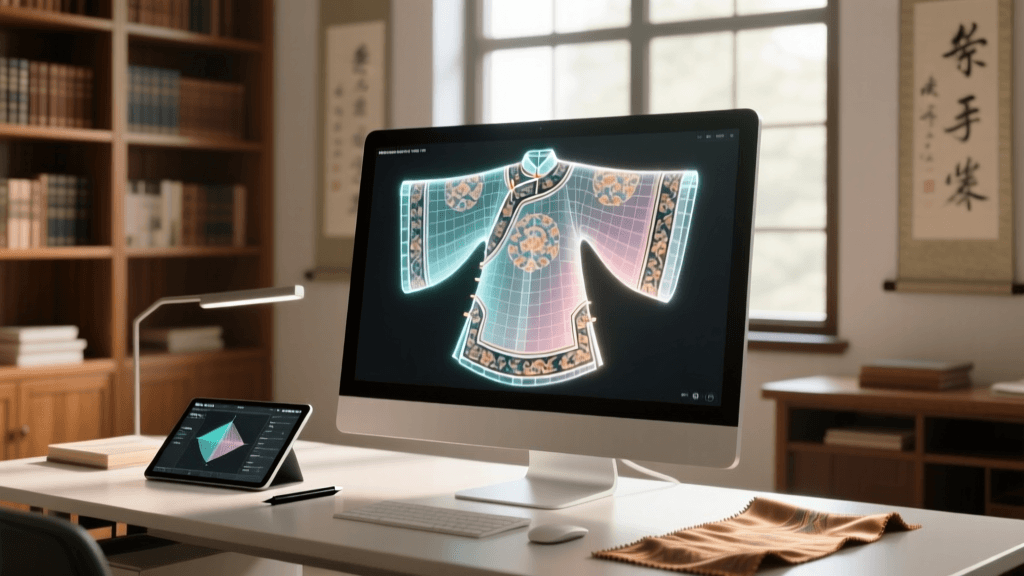
The academic study of Chinese fashion history has undergone a radical transformation by 2026. Driven by the global explosion of the Xin Zhongshi (新中式) movement and a renewed institutional focus on digital heritage preservation, universities and research institutes are moving beyond traditional archival sketching. Today, Chinese fashion history education relies heavily on digital reconstruction, utilizing advanced 3D draping software, artificial intelligence, and high-fidelity textile physics engines. For scholars focusing on the Ming era (1368–1644), the ability to accurately simulate complex garments like the mamianqun (horse-face skirt) and the layered mianfu (ceremonial robes) is now a core competency in graduate-level fashion history programs.
This shift is not merely aesthetic; it is a vital conservation methodology. With many excavated silk artifacts too fragile for physical display or handling, digital twins allow researchers to study the drape, volume, and structural mechanics of historical garments without risking damage to the originals. This guide explores the most effective academic tools, hardware configurations, and research methodologies for Ming dynasty garment reconstruction in 2026.
The Shift Toward Digital Conservation and Education
In the past, fashion historians relied on flat pattern drafting and physical muslin toiles to understand historical silhouettes. While physical prototyping remains valuable, it is incredibly resource-intensive and often fails to capture the unique fluidity of historical Chinese silks, such as luo (gauze) and zhijin (brocade). In 2026, academic programs prioritize digital conservation. Students and researchers now utilize virtual avatars calibrated to historical anthropometric data, allowing them to test hypotheses regarding how specific weaving structures influenced garment drape and movement in daily Ming dynasty life.
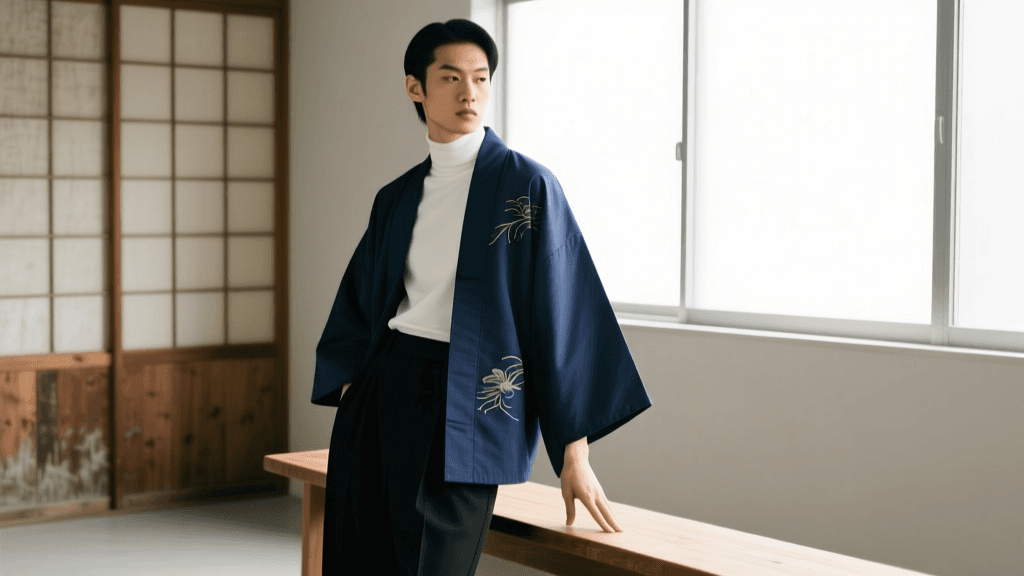
Furthermore, digital reconstruction bridges the gap between historical research and contemporary design. By understanding the precise structural mechanics of a Ming dynasty jiaoling youren (cross-collared robe with right lapel), modern designers participating in the Xin Zhongshi movement can create historically informed, structurally sound contemporary adaptations rather than relying on superficial visual pastiche.
Top Software for Historical Pattern Drafting and Draping
Selecting the right software is critical for academic rigor. The tools used in 2026 offer specialized physics engines capable of simulating the distinct behaviors of traditional Asian textiles.
1. CLO3D (2026 Academic Edition)
CLO3D remains the undisputed industry standard for digital garment reconstruction. The 2026 Academic Edition introduces enhanced anisotropic fabric physics, which is crucial for simulating the directional drape of traditional Chinese damasks and satins. Researchers can input specific warp and weft tension data derived from physical textile analysis, allowing the software to accurately predict how a heavy silk brocade buzi (rank badge) will pull and distort the underlying robe fabric. The CLO3D Educational Licensing Portal provides universities with multi-seat licenses that include access to specialized historical fabric libraries developed in partnership with global textile museums.
2. Marvelous Designer for Complex Layering
While CLO3D excels in fabric physics, Marvelous Designer is frequently utilized in academic labs for its superior pattern drafting interface, particularly when dealing with the extreme volume and complex pleating of the Ming dynasty mamianqun. The software's ability to handle hundreds of simultaneous pattern pieces and intricate pleat mapping makes it ideal for visualizing the structural underpinnings of multi-layered ceremonial attire.
3. AI-Driven Textile Analysis Modules
New in 2026 are specialized AI plugins that integrate directly with 3D environments. These tools use machine learning models trained on macro-photography of excavated textiles to predict the original weave structure and color of oxidized silks. By uploading high-resolution scans of a degraded Ming tomb artifact, the AI can generate a predictive 3D material map, allowing researchers to visualize the garment as it would have appeared when newly woven.
Comparison Table: 2026 Digital Reconstruction Software
| Software / Tool | Primary Academic Use | 2026 Campus License Cost | Silk Drape Fidelity |
|---|---|---|---|
| CLO3D Academic | High-fidelity fabric physics, anisotropic drape simulation | $450 / year per seat | Exceptional (Best for gauze and satin) |
| Marvelous Designer | Complex pattern drafting, heavy pleating, multi-layering | $399 / year per seat | High (Excellent for structured skirts) |
| TextileAI Weaver Plugin | Predictive weave mapping, oxidized color restoration | $1,200 / institutional lab | N/A (Material generation only) |
| Blender (with Cloth Sim) | High-res rendering, environmental lighting, open-source | Free (Open Source) | Moderate (Requires manual physics tuning) |
Hardware Requirements for University Labs in 2026
Running high-fidelity cloth simulations for multi-layered Ming garments requires substantial computational power. The intricate collision calculations required for a robe featuring wide sleeves, an inner layer, an outer layer, and a heavily pleated skirt will easily crash under-specified machines. For academic labs upgrading in 2026, the following hardware specifications are the recommended baseline:
- GPU: NVIDIA RTX 5080 or 5090 (24GB+ VRAM). The massive VRAM is essential for storing high-resolution 8K textile textures and complex collision meshes without memory bottlenecks.
- CPU: AMD Ryzen 9 9950X or Intel Core i9-14900K. Cloth simulation relies heavily on single-core performance for sequential physics calculations, making high clock speeds vital.
- RAM: 128GB DDR5. Complex historical garments with hundreds of pattern pieces and thousands of pleat vertices will quickly consume 64GB of RAM during the simulation baking process.
- Storage: 4TB NVMe Gen 5 SSD. High-speed read/write capabilities are necessary for saving massive simulation cache files and 8K material maps.
Sourcing Archival Data for Pattern Accuracy
The accuracy of a digital reconstruction is entirely dependent on the quality of the source data. Academic researchers must rely on verified museum archives to extract flat patterns and structural measurements. Institutions such as The Metropolitan Museum of Art's Asian Art Department provide invaluable open-access resources, including high-resolution imagery and detailed conservation reports that note seam placements, lining structures, and exact dimensions of surviving Ming textiles.
Similarly, the Victoria and Albert Museum's Asian Collections offers extensive documentation on the construction of Chinese court robes. When translating these physical artifacts into digital patterns, researchers must account for textile distortion over time. A garment that has been stored flat for centuries will have warped bias grains. Academic protocols in 2026 require researchers to use algorithmic pattern correction tools to mathematically reverse-engineer the original, unwarped cutting lines before importing them into CLO3D or Marvelous Designer.
Key Measurements to Extract from Archives
- Sleeve Span (Tongxiu): Crucial for determining the volume and drape of the characteristic Ming wide sleeves.
- Collar Angle and Overlap: Essential for accurately modeling the jiaoling youren structure and ensuring the correct historical proportion of the lapel.
- Pleat Depth and Spacing: For mamianqun reconstruction, measuring the exact ratio of the flat front/back panels to the pleated side sections is mandatory for accurate kinetic simulation.
Integrating Reconstruction into the 2026 Curriculum
Leading fashion history programs are now integrating these digital tools directly into their assessment frameworks. Instead of traditional thesis papers, graduate students in Chinese fashion history are increasingly required to submit 'Digital Monographs.' These monographs include a fully rigged, simulated 3D garment, a breakdown of the historical pattern drafting process, and a material science report detailing the simulated fabric physics.
This pedagogical shift ensures that the next generation of fashion historians is fluent in both traditional archival research and cutting-edge digital conservation. By mastering these tools, scholars are not only preserving the sartorial heritage of the Ming dynasty but also providing a scientifically accurate foundation for the continuing evolution of the Xin Zhongshi movement, ensuring that the future of Asian traditional fashion is built upon a rigorous, verifiable understanding of its past.