Ming Dynasty Court Robes: Evolution, Styles, and Sourcing Guide
The Zenith of Han Chinese Court Fashion
The Ming Dynasty (1368–1644) represents a golden era in the history of traditional Chinese clothing, marking a deliberate and magnificent restoration of Han Chinese cultural identity following the Mongol-led Yuan Dynasty. For modern enthusiasts, historians, and collectors of the Hanfu movement, Ming court fashion offers some of the most structured, opulent, and highly codified garments in Asian textile history. From the intricate weaving of Nanjing cloud brocade to the strict sumptuary laws dictating who could wear specific mythical motifs, Ming court robes are a masterclass in sartorial hierarchy. Today, the revival of these garments has transitioned from niche historical reenactment to a thriving bespoke industry. This guide explores the evolution of Ming Dynasty court fashion and provides actionable advice for sourcing, measuring, and commissioning authentic replicas in the modern market.
Dynasty Evolution: Restoring Han Identity
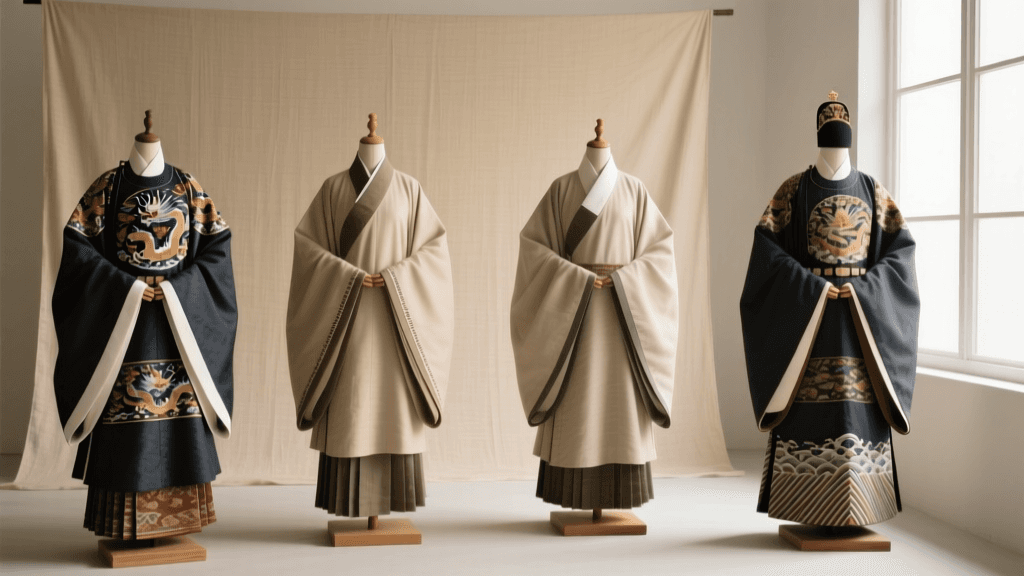
When Zhu Yuanzhang established the Ming Dynasty in 1368, one of his first cultural mandates was the eradication of Mongol dress codes and the restoration of traditional Han Chinese clothing systems, drawing heavy inspiration from the Tang and Song dynasties. However, the Ming court did not merely copy the past; it innovated. According to the Metropolitan Museum of Art's Heilbrunn Timeline of Art History, the Ming era saw unprecedented advancements in silk weaving technologies, particularly the integration of gold and silver threads into complex brocades. The imperial government established specialized weaving bureaus in Jiangnan (specifically Nanjing, Suzhou, and Hangzhou) to produce textiles exclusively for the court. These bureaus birthed the iconic 'Mang Pao' and 'Fei Yu Fu' robes, which utilized a flat-cutting tailoring system that prioritized the drape and flow of the fabric, contrasting sharply with the tailored, fitted garments of later Western and Qing Dynasty traditions.
The Hierarchy of Imperial Motifs
Ming court fashion was governed by draconian sumptuary laws. The emperor alone could wear the 'Long Pao' (Dragon Robe) featuring a five-clawed dragon. However, the emperor frequently bestowed slightly lesser, yet equally magnificent, robes upon meritorious officials, military generals, and favored courtiers. The Victoria and Albert Museum notes that these bestowed garments were meticulously designed to sit just below the emperor's five-clawed dragon in the visual hierarchy.
Mang Pao (Python Robe)
Despite the name, the 'Mang' is not a snake but a mythical, dragon-like creature featuring four claws instead of five. The Mang Pao was the highest honor an official could receive. These robes were typically round-collared (yuanling) or cross-collared (jiaoling), featuring side slits for ease of movement, and were heavily embroidered or woven with python motifs chasing flaming pearls amidst cloud and wave patterns.
Fei Yu Fu (Flying Fish Robe)
The 'Flying Fish' is a mythical chimera with the head of a dragon, the body of a fish, and a vibrant, feathered tail. The Fei Yu Fu was awarded to high-ranking military officers and imperial guards (the Jinyiwei). Its dynamic motifs symbolized agility, martial prowess, and imperial protection.
Dou Niu Fu (Dipper Ox Robe)
The 'Dou Niu' is a mythical ox with curved, snail-like horns and a serpentine body. Ranking below the Flying Fish, the Dou Niu Fu was granted to mid-level officials and civil servants. The motifs were often arranged in circular 'tuan' medallions across the chest, back, and shoulders.
Comparison Chart: Ming Court Robe Motifs and Modern Sourcing
| Garment Type | Mythical Motif | Historical Rank / Usage | Modern Replica Cost (USD) | Lead Time (Bespoke) |
|---|---|---|---|---|
| Long Pao | Five-clawed Dragon | Emperor Only | $2,000 - $8,000+ | 8 - 14 months |
| Mang Pao | Four-clawed Python | High Officials / Princes | $800 - $3,500 | 4 - 8 months |
| Fei Yu Fu | Flying Fish (Dragon/Fish) | Military / Jinyiwei | $500 - $2,000 | 3 - 6 months |
| Dou Niu Fu | Dipper Ox (Curved Horns) | Mid-level Civil Officials | $400 - $1,500 | 2 - 5 months |
Actionable Guide: Commissioning a Ming Court Robe Today
As highlighted by the Smithsonian Magazine, the modern Hanfu movement has sparked a massive revival in traditional textile manufacturing, making it possible for consumers worldwide to commission historically accurate Ming garments. However, navigating the market requires specific knowledge of fabrics, measurements, and tailoring timelines.
Fabric Selection and Material Costs
The authenticity of a Ming court robe relies heavily on its textile. Avoid cheap, shiny polyester satins, which lack the structural drape required for traditional flat-cutting. Instead, seek out the following historically accurate fabrics:
- Yunjin (Cloud Brocade): Originating from Nanjing, this is the pinnacle of Ming textiles. Woven with real gold foil threads and sometimes peacock feather yarns, Yunjin is incredibly heavy and structured. Cost: $150 to $400+ per meter.
- Song Brocade (Songjin): Softer and more pliable than Yunjin, featuring intricate geometric and floral background patterns with woven metallic threads. Ideal for robes meant for extended wear. Cost: $60 to $120 per meter.
- Zhuanghua Satin (Woven Gold Satin): A luxurious silk satin with discontinuous weft patterns, allowing for massive, detailed motifs without the stiffness of full brocade. Cost: $80 to $150 per meter.
Pro Tip: A standard Ming round-collar robe requires approximately 4 to 5 meters of fabric (assuming a width of 140cm). Always purchase 10% extra to account for pattern matching at the seams and potential tailoring errors.
Precise Measurements for Traditional Tailoring
Unlike Western tailoring, which relies on darts and seams to contour the body, Hanfu utilizes a flat, geometric cutting system. The garment is shaped by the drape of the fabric and the tying of the sash. When submitting measurements to a bespoke tailor (such as those found on Taobao, Etsy, or specialized Hanfu boutiques like Ming Hua Tang), you must provide the following specific metrics:
- Height and Weight: Essential for calculating the overall length and fabric volume.
- Shoulder Span (Jian Kuan): Measured from the edge of one shoulder bone to the other. This dictates the placement of the sleeve seams.
- Arm Length (Bi Chang): Measured from the base of the neck, over the shoulder, down to the wrist. Ming court robes often feature 'Hui Xiu' (gathering sleeves) or extended cuffs that cover the hands, so specify if you want historical floor-grazing sleeves or practical wrist-length cuffs.
- Neck to Floor: Crucial for determining the hemline. Traditional Ming robes should graze the top of the footwear (typically black leather or cloth boots with white soles).
- Chest and Waist Circumference: While the cut is loose, the 'Jiaoling Youren' (cross-collar, right-over-left) closure must wrap comfortably across the chest without gaping. Provide your chest measurement at its widest point, plus 2 inches for the overlap allowance.
Timing, Sourcing, and Modern Brands
If you are commissioning a robe for a specific event (a traditional wedding, graduation, or cultural festival), timing is critical. Hand-woven brocades are produced on traditional wooden draw-looms, a painstakingly slow process.
- Off-the-Rack / Machine-Woven: Brands like Hanfang Huating or Shiyu Hanfu offer machine-jacquard replicas. These cost between $150 and $400 and ship within 2 to 4 weeks. They are excellent for beginners and casual wear.
- Semi-Bespoke (Premium Jacquard): Brands like Ming Hua Tang (widely considered the gold standard for Ming replicas) use high-end silk-blend jacquards and meticulous historical patterning. Costs range from $500 to $1,200. Expect a wait time of 2 to 4 months.
- Full Bespoke (Hand-Woven Yunjin/Kesi): For museum-quality pieces, you must commission independent master weavers in Nanjing or Suzhou. Costs start at $3,000 and can exceed $10,000. Lead times are 8 to 14 months.
Care and Maintenance of Silk Brocades
Ming-style brocades are heavy, delicate, and prone to snagging due to the metallic threads. Never machine wash or hand-wash a genuine silk brocade robe. Water will cause the metallic threads to oxidize and tarnish, and the silk base will warp. Always seek a dry cleaner who specializes in historical textiles or bridal silks. For storage, never hang heavy brocade robes on standard hangers; the weight of the fabric will tear the shoulder seams over time. Instead, fold the robe along its natural geometric seam lines, wrap it in unbleached cotton muslin, and store it flat in a cedar chest with silica gel packets to control humidity and prevent mold.
Conclusion
The court robes of the Ming Dynasty are more than just historical artifacts; they are a testament to the zenith of Chinese textile engineering and a fascinating study in visual hierarchy. Whether you are investing in a machine-woven Fei Yu Fu for a cultural festival or commissioning a hand-loomed Mang Pao for a wedding, understanding the historical context, fabric requirements, and precise tailoring metrics will ensure your garment is both historically respectful and magnificently crafted.