Qun Kwa vs Xiu He Fu: Chinese Wedding Attire Guide
Introduction to Chinese Ceremonial Wedding Attire
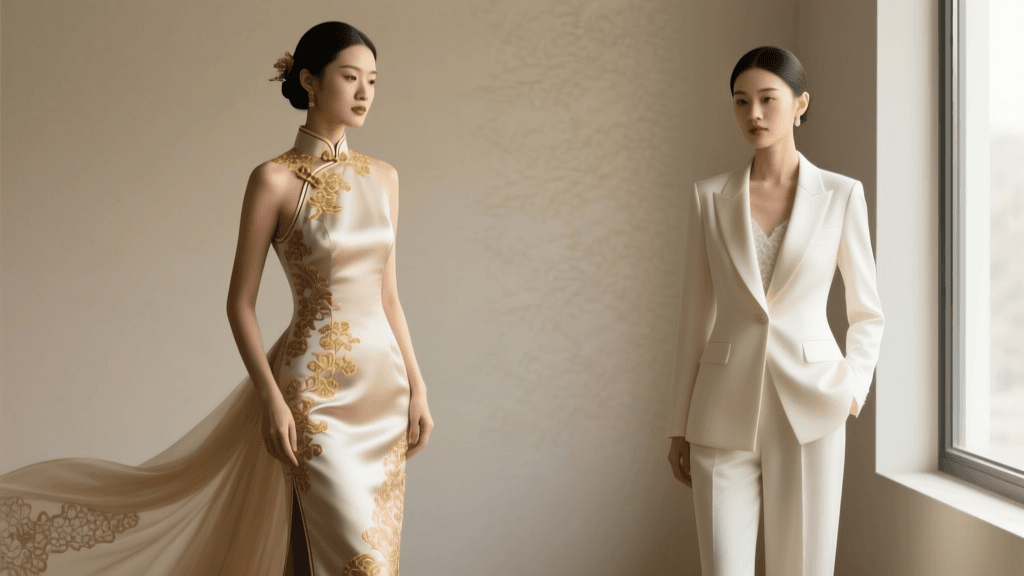
For modern brides honoring their heritage, selecting the perfect traditional Chinese wedding dress is a journey through centuries of artistry, symbolism, and cultural pride. While the form-fitting qipao (cheongsam) is often worn during evening banquets, the traditional tea ceremony and morning door games demand garments with deeper historical roots and ceremonial gravitas. Today, two distinct styles dominate the landscape of Chinese bridal fashion: the highly structured, heavily embroidered Qun Kwa and the flowing, romantic Xiu He Fu.
Understanding the nuances between these two garments is essential for any bride planning a traditional Chinese wedding. From the density of gold thread to the silhouette's impact on your bridal jewelry, each dress offers a unique experience. According to cultural historians at the M+ Museum in Hong Kong, the evolution of these dresses reflects a fascinating blend of regional customs, historical revivalism, and modern cinematic influence.
What is the Qun Kwa (裙褂)?
History and Craftsmanship
The Qun Kwa (also known as Kwa or Long Feng Kwa) traces its origins to the 18th-century Qing Dynasty, specifically flourishing in the Guangdong province. It is a two-piece ensemble consisting of a tailored, mandarin-collared jacket and a straight, pleated skirt (often a Ma Mian Qun). The defining feature of the Qun Kwa is its intricate Cantonese gold-and-silver thread embroidery, known as 'Gua Huang' craftsmanship.
Traditionally, a mother would begin embroidering her daughter's Qun Kwa the day she was born, a testament to the sheer number of labor hours required. The motifs are strictly auspicious: dragons and phoenixes (representing the balance of yin and yang), peonies (wealth), and lotuses (purity). As noted by the South China Morning Post, the density of this embroidery dictates not only the dress's visual impact but also its price and ceremonial status.
The Embroidery Density Scale
- Xiao Wu Fu (小五福): Approximately 30% of the red silk base is covered in embroidery. A budget-friendly, traditional option.
- Zhong Wu Fu (中五福): 50% coverage. Offers a beautiful balance of vibrant red silk and shimmering metallic thread.
- Da Wu Fu (大五福): 70% coverage. Highly luxurious, heavy, and visually striking.
- Gua Huang (褂皇): 100% coverage. The red silk is entirely obscured by dense gold and silver thread. This is the pinnacle of Qun Kwa craftsmanship, often taking master artisans over a year to complete by hand.
What is the Xiu He Fu (秀禾服)?
Origins and Modern Popularity
Unlike the centuries-old Qun Kwa, the Xiu He Fu is a relatively modern invention. It was popularized by the 2001 Chinese television drama 'Orange Turned Red' (Ju Zi Hong Le), in which the lead character, Xiu He, wore a stylized version of a Ming Dynasty Hanfu wedding garment. The style resonated deeply with audiences, and bridal designers quickly adapted it into a mainstream wedding category.
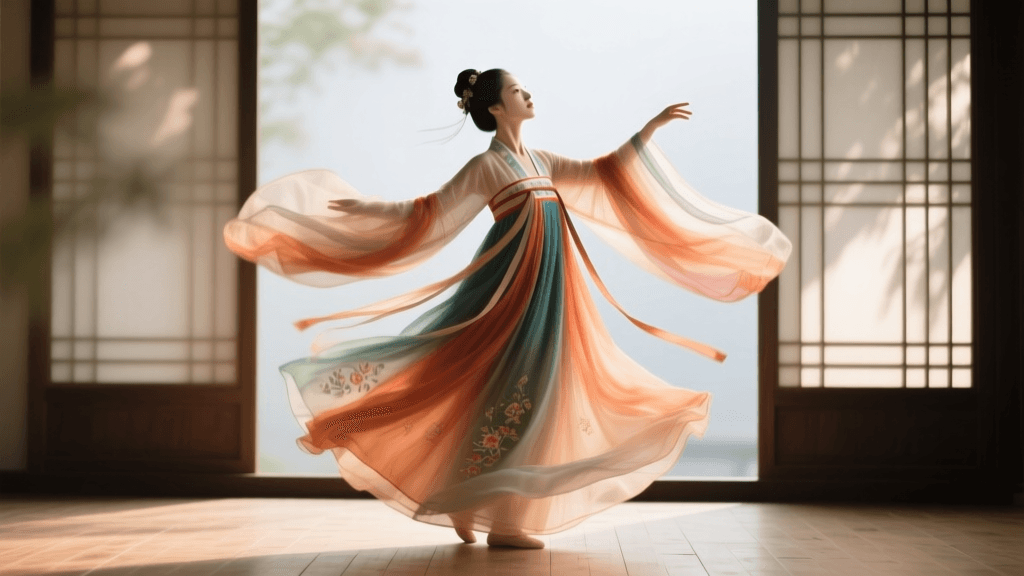
The Xiu He Fu typically features a rounded or standing collar, wide, flowing sleeves, and an A-line or mermaid-cut skirt. It utilizes traditional Su embroidery (Suzhou silk embroidery) rather than the stiff, metallic couching of the Qun Kwa. This allows for softer, more diverse motifs, including butterflies, koi fish, and intricate floral vines. According to China Highlights, the Xiu He Fu has become the preferred choice for brides seeking a romantic, fairy-tale aesthetic that is more forgiving and comfortable than the rigid Qun Kwa.
Qun Kwa vs. Xiu He Fu: A Detailed Comparison
| Feature | Qun Kwa (裙褂) | Xiu He Fu (秀禾服) |
|---|---|---|
| Historical Origin | 18th Century Qing Dynasty (Cantonese tradition) | Early 2000s (Inspired by Ming/Qing Hanfu elements) |
| Silhouette | Boxy, structured, straight-cut jacket and skirt | Fitted bodice, flowing A-line or mermaid skirt, wide sleeves |
| Embroidery Style | Cantonese gold/silver thread couching (stiff, 3D) | Su silk embroidery (soft, flat, colorful threads) |
| Weight & Comfort | Heavy, restrictive, requires upright posture | Lightweight, flexible, allows for dynamic movement |
| Best For | Formal Tea Ceremonies, traditionalist families | Door games, outdoor shoots, romantic aesthetics |
| Avg. Purchase Cost | $1,500 - $30,000+ USD | $250 - $1,500 USD |
Actionable Advice: Buying, Renting, and Timelines
Navigating the acquisition of ceremonial attire requires strategic planning. Whether you choose to invest in a bespoke heirloom or rent a high-quality garment, timing and budget allocation are critical.
Timelines for Bespoke Orders
- Qun Kwa (Da Wu Fu or Gua Huang): You must order at least 8 to 12 months before your wedding date. Master artisans hand-stitch the metallic threads, and rush orders are rarely accepted for high-density pieces.
- Xiu He Fu: A made-to-measure Xiu He Fu typically requires 3 to 4 months. The silk embroidery is complex but generally faster to produce than metallic couching.
Cost Breakdown (USD)
If you are working with a strict budget, renting is a highly practical route, especially for the Qun Kwa, which is often worn for only a few hours during the morning tea ceremony.
- Qun Kwa Rental: $300 to $1,200 depending on the embroidery density (Xiao Wu Fu vs. Gua Huang).
- Xiu He Fu Rental: $100 to $400.
- Custom Xiu He Fu Purchase: $400 to $1,500. This is a popular middle-ground; you get a bespoke, perfectly fitted garment that you can keep as a memento without the astronomical cost of a high-end Qun Kwa.
The Fitting Process: Measurements and Undergarments
A traditional Chinese wedding dress does not rely on modern corsetry or stretch fabrics. The fit must be precise, and your choice of undergarments will drastically alter the final look.
Crucial Measurements
When visiting your tailor or rental boutique, ensure they take the following specific measurements:
- Shoulder Width (Qun Kwa): The Qun Kwa's jacket lacks darts and relies entirely on the shoulder seam for its structured, boxy shape. If the shoulders are too wide, the dress will look sloppy; too narrow, and the stiff fabric will pull uncomfortably across your chest.
- High-Waist to Floor (Xiu He Fu): The Xiu He Fu skirt sits at the natural high waist. You must provide this measurement while wearing the exact heel height you plan to use on your wedding day (typically 5 to 7 cm) to ensure the hem grazes the floor perfectly without causing a tripping hazard.
- Sleeve Length: For the Xiu He Fu, measure from the shoulder point, down the arm, and over the knuckles. The traditional aesthetic requires the sleeves to cover the hands when the arms are resting at the sides.
Undergarment Strategy
Do not wear a heavily padded push-up bra with a Qun Kwa. The mandarin collar sits flush against the neck, and the stiff, boxy bodice is designed to create a regal, modest silhouette. A padded bra will push the fabric outward, destroying the structural lines and causing the collar to gap. Instead, opt for a seamless, nude, unpadded bralette or a light bustier that smooths the torso without adding volume. For the Xiu He Fu, a standard strapless bra works well, provided the neckline of the jacket is high enough to conceal it.
Accessorizing Your Ceremonial Look
The attire is only half the equation; traditional Chinese bridal jewelry carries immense cultural weight, often gifted by the groom's family as a symbol of welcoming the bride.
Gold Jewelry (Long Feng Zhuo)
The 'Dragon and Phoenix Bangles' are non-negotiable for the Qun Kwa. Because the sleeves of the Qun Kwa are straight and end at the wrist, you will need to stack multiple heavy 24k gold bangles on your wrists. Practical Tip: Purchase or rent bangles with a hinged clasp rather than solid slip-on bangles, as getting them over your knuckles on a stressful wedding morning can be difficult.
Hair and Headpieces
For the Qun Kwa, hair is traditionally swept up into a tight, neat bun to accommodate the elaborate gold filigree headpieces and dangling hairpins. For the Xiu He Fu, brides often opt for softer, romantic updos adorned with silk flowers, jade hairpins, and delicate pearl veils (known as 'Liu Su'), which complement the flowing nature of the garment.
Footwear
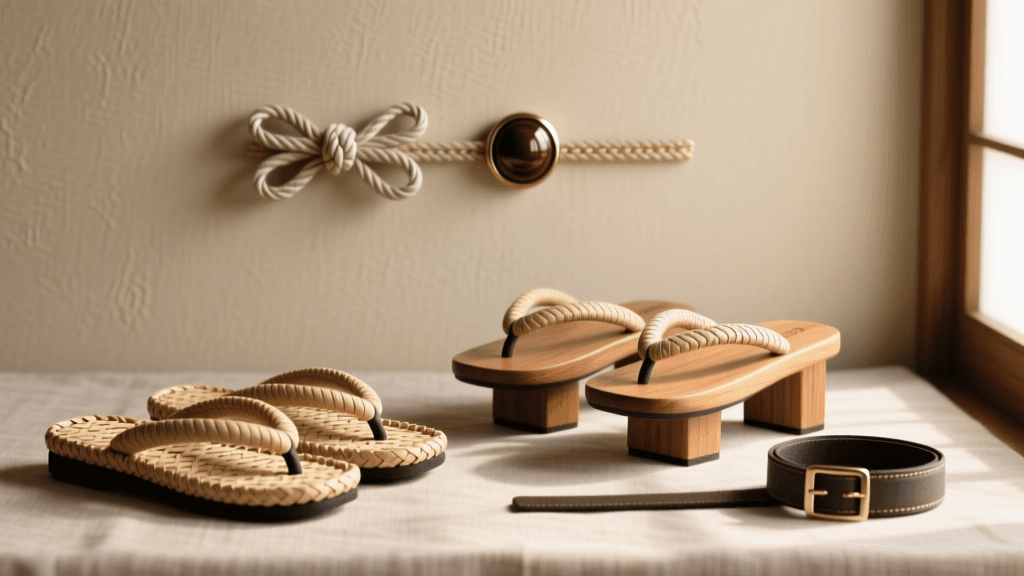
Traditionally, brides wear red, flat embroidered silk shoes. However, modern brides frequently opt for red leather block heels (5 to 7 cm) to improve posture and prevent the heavy skirts from dragging on the ground. Ensure the shoes are broken in at least two weeks prior to the wedding.
Conclusion
Choosing between the Qun Kwa and the Xiu He Fu is a deeply personal decision that balances family expectations, aesthetic preferences, and practical considerations. The Qun Kwa offers unparalleled majesty and a direct link to Cantonese heritage, while the Xiu He Fu provides a romantic, comfortable, and highly photogenic alternative. By understanding the craftsmanship, budgeting accurately, and preparing your measurements and undergarments in advance, you ensure that your ceremonial attire will be a flawless tribute to Asian traditions on your wedding day.