Ming Dynasty Court Fashion: Evolution and Modern Buying Guide
Introduction to Ming Dynasty Court Fashion
The Ming Dynasty (1368–1644) represents a golden era in the history of Chinese textiles and sartorial culture. Following the collapse of the Mongol-led Yuan Dynasty, the founding Hongwu Emperor sought to restore traditional Han Chinese customs, leading to a meticulous codification of court dress. Ming court fashion was not merely about aesthetics; it was a highly structured visual language that communicated rank, imperial favor, and cosmic harmony. Today, the revival of traditional Chinese clothing—commonly known as the Hanfu movement—has sparked immense interest in these historical garments. For enthusiasts, collectors, and cultural historians, understanding the evolution of Ming court fashion is essential, as is knowing how to navigate the modern market for historically accurate replicas.
The Evolution of Sumptuary Laws and Court Dress
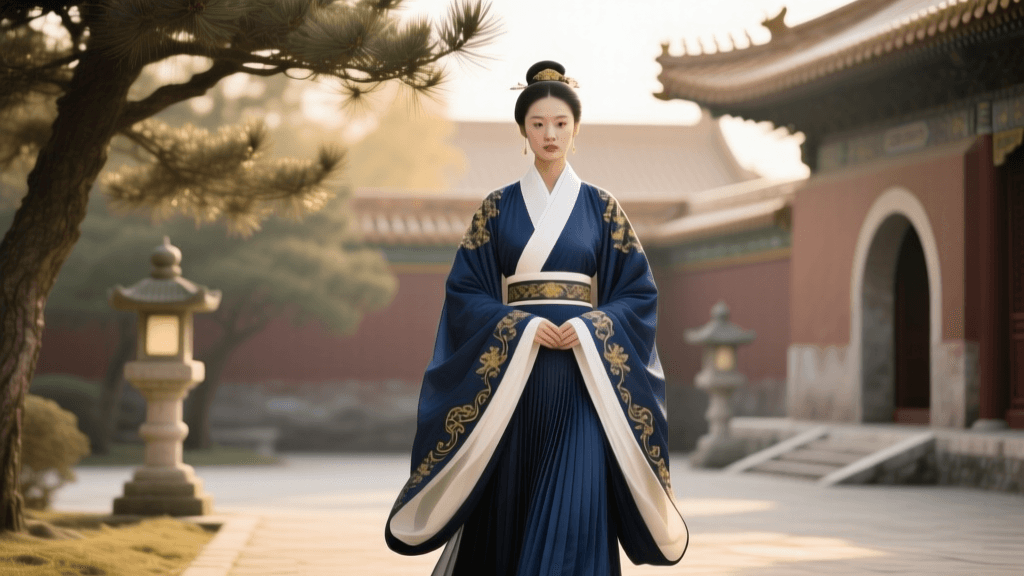
When the Hongwu Emperor established the Ming Dynasty, he implemented strict sumptuary laws to stabilize society and reinforce the social hierarchy. According to the Metropolitan Museum of Art's Heilbrunn Timeline of Art History, the Ming court rigidly regulated the colors, fabrics, and motifs that officials and nobility could wear. The highest echelons of society wore silk brocades woven with gold and silver threads, while lower-ranking officials were restricted to plainer silks or linens.
As the dynasty progressed into the mid-to-late Ming period (15th and 16th centuries), economic prosperity and the rise of a wealthy merchant class began to blur these strict boundaries. Despite imperial edicts, affluent commoners often flouted sumptuary laws by wearing forbidden motifs and luxurious fabrics. In response, the imperial court continuously updated its regulations, creating a fascinating evolutionary timeline of court dress that shifted from austere, functional designs to highly ornate, heavily layered ensembles.
"The dress of the officials must strictly follow the prescribed ranks; no one shall overstep the boundaries of their station." — History of Ming (Ming Shi), Volume 66: Treatise on Carriages and Clothing.
Decoding the Imperial Motifs: Mang, Feiyu, and Douniu
The most iconic elements of Ming court fashion are the mythical beast motifs woven into the official robes. These were not standard uniforms but rather Cifu (imperial bestowals) granted by the Emperor as marks of exceptional favor. The China National Silk Museum highlights the incredible technical mastery required to weave these complex, circular badge-like motifs (Buzi) and full-body dragon patterns into the fabric using the Zhuanghua (brocade) technique.
Comparison Chart of Ming Court Robes
| Garment Type | Motif Description | Historical Rank/Recipient | Modern Replication Cost (USD) |
|---|---|---|---|
| Longpao (Dragon Robe) | Five-clawed dragon | Emperor and Crown Prince only | $3,000 - $8,000+ |
| Mangpao (Python Robe) | Four-clawed dragon-like beast | High-ranking officials, nobility | $1,500 - $4,000 |
| Feiyufu (Flying Fish Suit) | Carp-like dragon with wings/fins | Jinyiwei (Imperial Guard), favored ministers | $800 - $2,500 |
| Douniupao (Dipper Ox Robe) | Horned, snub-nosed dragon beast | Mid-level officials, military generals | $600 - $1,800 |
| Qilin Robe | Chimerical beast with scales and hooves | Dukes, high military commanders | $1,200 - $3,500 |
The Feiyufu (Flying Fish Suit) is arguably the most famous today, largely due to its depiction in modern cinema and television dramas featuring the Jinyiwei (the Emperor's secret police and bodyguards). However, historically, the Flying Fish motif was a highly coveted imperial gift, not a standard-issue uniform.
Practical Guide: Commissioning Authentic Ming Garments Today
For modern practitioners of the Hanfu movement or historical reenactors, acquiring a historically accurate Ming court robe requires careful planning, precise measurements, and a solid budget. Here is your actionable guide to commissioning bespoke Ming-style garments.
1. Taking Precise Traditional Measurements
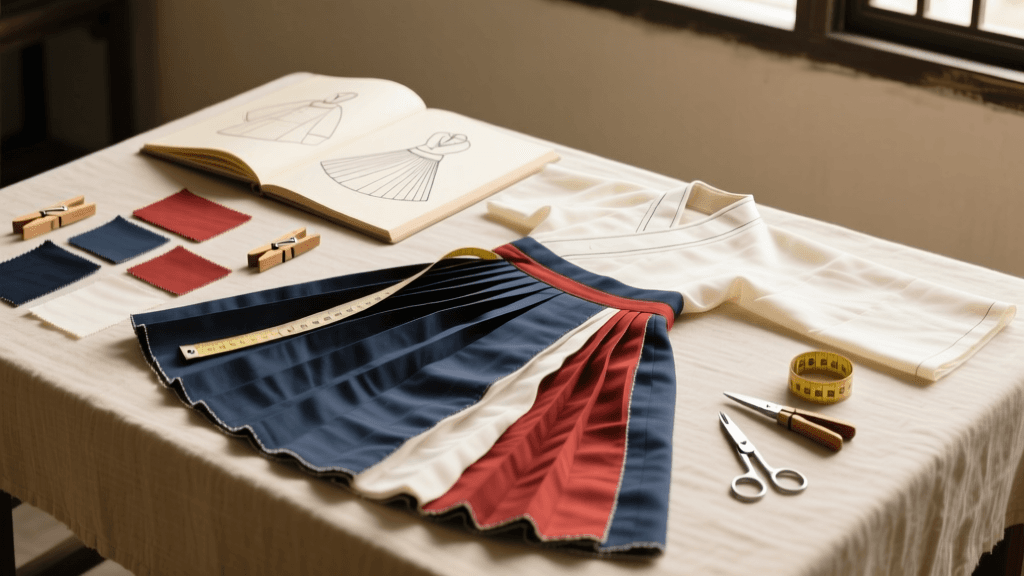
Unlike Western tailoring, which relies on complex darts and shoulder seams to create a three-dimensional shape, traditional Chinese tailoring utilizes pingmian caijian (flat cutting). The garment is constructed from flat panels of fabric that drape over the body. When ordering from a bespoke tailor, you must provide specific measurements:
- Xiongwei (Chest Circumference): Measured around the fullest part of the chest. For a Ming round-collar robe (Yuanlingpao), add 15-20 cm for the traditional relaxed drape.
- Bi Chang (Arm Length): Crucial for flat-cut garments. Measure from the prominent bone at the base of the back of your neck, over the shoulder, down to the wrist bone. Ming court sleeves often extend past the hands, requiring an extra 10-15 cm.
- Yi Chang (Garment Length): Measured from the base of the back of the neck down to the ankle bone. Court robes were designed to sweep the floor, requiring precise hemming based on the wearer's height and footwear.
2. Fabric Selection and Budgeting
The authenticity of a Ming court robe relies heavily on its textile. The pinnacle of Ming weaving was Nanjing Yunjin (Cloud Brocade) and Suzhou Songjin. Today, authentic hand-woven Yunjin is a UNESCO Intangible Cultural Heritage and is prohibitively expensive, often costing upwards of $1,000 per meter.
For practical commissioning, look for Zhuanghua satin or high-quality jacquard silk blends. Expect to pay between $80 and $250 per meter for premium reproduction silks. A full-length Mangpao requires approximately 5 to 7 meters of fabric, depending on the sleeve width (Ming court sleeves were notoriously voluminous). Total material costs for a high-end replica will range from $500 to $1,500, excluding tailoring fees.
3. Navigating the Bespoke Timeline and Artisan Selection
If you are purchasing from top-tier Hanfu brands known for Ming accuracy, such as Minghuatang or Shisanyu, be prepared for significant wait times. These brands often use a 'deposit and waitlist' model.
- Off-the-Rack (Mass Market): 1 to 3 weeks shipping. Cost: $80 - $200. (Often uses polyester and inaccurate motifs).
- Made-to-Measure (Mid-Tier): 1 to 3 months production. Cost: $300 - $800. (Uses silk blends, accurate flat-cutting).
- Bespoke Woven-to-Order (Top-Tier): 6 to 18 months. Cost: $1,500 - $5,000+. (Custom loom weaving of Zhuanghua silk, historically accurate Buzi badges).
Actionable Tip: Always request a 'motif draft' (tuan'an) from your tailor before weaving begins. Verify that the claws on a Mangpao do not exceed four, and ensure the Flying Fish motif features the distinct carp-like tail and dorsal fins, rather than a standard dragon tail.
Verifying Authenticity and Studying Artifacts
To truly understand the drape, color palette, and weave density of Ming court fashion, studying extant artifacts is invaluable. The Victoria and Albert Museum (V&A) in London houses an exceptional collection of Ming Dynasty textiles, including rare Buddhist sutra covers and official robe fragments that showcase the vibrant use of indigo, madder red, and gold-wrapped threads.
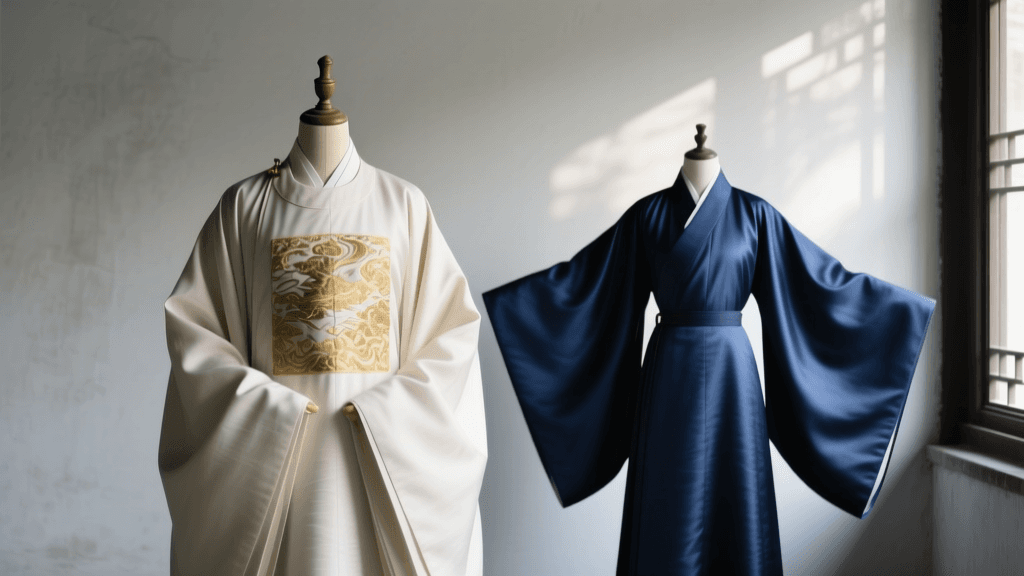
When evaluating a modern replica, check the selvedge (the finished edge of the fabric). Historically, Ming looms produced fabric roughly 60-70 cm wide. Authentic reproductions will often use narrow-loom weaving, resulting in a center-back seam and a distinct shoulder drape that wider, modern industrial fabrics fail to replicate. Furthermore, traditional Ming robes were lined with contrasting silk, and the collars were often reinforced with white silk or metallic trim to protect the garment from skin oils—a detail frequently missed by modern fast-fashion manufacturers.
Conclusion
The evolution of Ming Dynasty court fashion is a testament to the era's technological prowess in textile manufacturing and its rigid socio-political structures. From the awe-inspiring five-clawed dragons of the Emperor to the elusive Flying Fish suits of the imperial guard, these garments were woven with power, prestige, and profound symbolism. Today, by understanding the historical context, mastering the traditional measurements, and investing in authentic weaving techniques, modern enthusiasts can respectfully and accurately bring the majesty of the Ming court back to life.