Evolution of Chinese Court Fashion: Zhou to Ming Dynasties
The Mandate of Heaven Woven in Silk: An Introduction
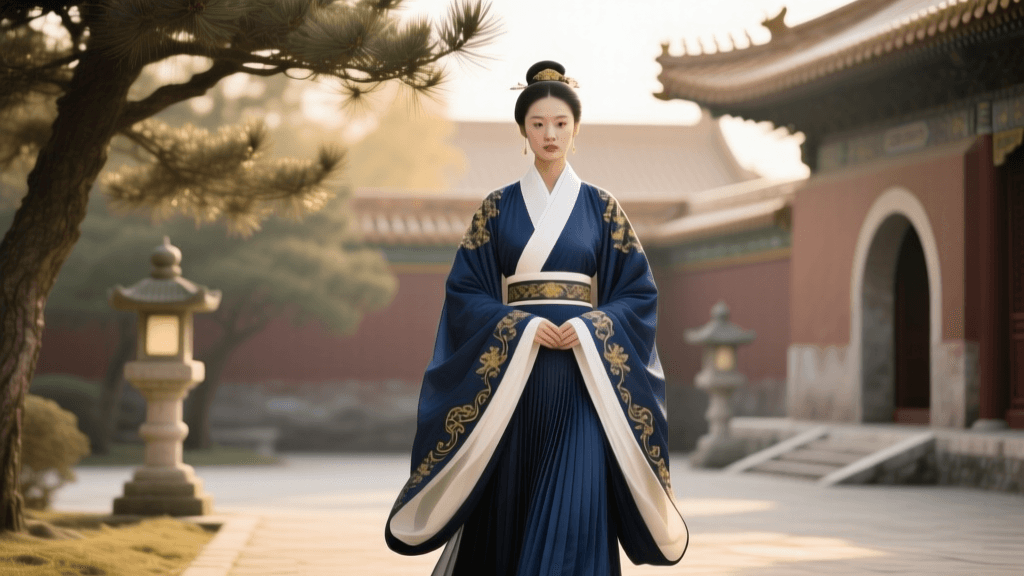
In traditional Chinese culture, clothing was never merely about protection from the elements or personal vanity; it was a profound manifestation of cosmic order, social hierarchy, and the Mandate of Heaven. Court fashion, in particular, served as a visual codex of imperial power and Confucian rites. From the austere, deeply symbolic garments of the Zhou Dynasty to the opulent, gold-woven robes of the Ming Dynasty, the evolution of Chinese court dress reflects the shifting political, cultural, and economic landscapes of one of the world's oldest continuous civilizations. According to the Metropolitan Museum of Art, the Ming dynasty especially represented a zenith of indigenous Han Chinese court fashion, re-establishing strict sartorial codes after the Mongol-led Yuan dynasty.
The Foundations of Imperial Dress: Zhou Dynasty Mianfu
The genesis of formalized Chinese court fashion lies in the Zhou Dynasty (c. 1046–256 BCE), which established the Mianfu system. The Mianfu was the highest level of ceremonial dress, worn exclusively by the Emperor and high-ranking nobility during major sacrificial rites and enthronement ceremonies. The defining feature of this ensemble was the Mianliu, a flat-topped crown adorned with bead curtains (liu) that hung before the face and behind the head. The number of bead strings and jade beads strictly denoted the wearer's rank, with the Emperor alone permitted twelve strings.
The robe itself was deeply symbolic, featuring the 'Twelve Symbols of Sovereignty.' These motifs were not mere decorations but represented the Emperor's universal dominion and moral virtues:
- Sun, Moon, and Stars: Illumination and cosmic oversight.
- Mountains: Stability and the ability to govern the earth.
- Dragons: Adaptability and supreme authority.
- Pheasants: Literary refinement and brilliance.
- Fire: Purity and the energy to lead.
- Grain (Millet): Nourishment and agricultural prosperity.
The color palette was equally regulated, favoring Xuan (a deep, dark black-blue representing the heavens) for the upper garment and Xun (a reddish-yellow representing the earth) for the lower skirt, embodying the harmony of heaven and earth.
Tang and Song Innovations: Round Collars and Scholarly Elegance
As China unified and expanded under the Tang Dynasty (618–907 CE), court fashion absorbed influences from the Silk Road. The Yuanlingpao (round-collar robe), originally a nomadic garment, was integrated into the official court uniform. The Tang court implemented a strict color-code system based on official rank: purple for the highest ministers, followed by crimson, green, and cyan. This era was marked by broader sleeves, luxurious silk weaves, and a cosmopolitan flair that reflected the empire's vast reach.
Conversely, the Song Dynasty (960–1279 CE) marked a return to conservative, scholarly elegance. The flamboyant styles of the Tang were replaced by subdued colors, narrower silhouettes, and an emphasis on intellectual refinement. The most iconic court accessory of the Song was the Zhanjiao Futou, a stiff hat with exceptionally long, horizontal wings. Legend attributes this design to the founding Emperor Taizu, who supposedly mandated the elongated wings to prevent ministers from whispering to one another during court assemblies.
The Zenith of Court Fashion: Ming Dynasty Mang Pao and Feiyu
The Ming Dynasty (1368–1644 CE) represents the ultimate maturation of Han Chinese court fashion. Following the expulsion of the Mongol Yuan dynasty, the Ming emperors sought to restore traditional Han rites while introducing new, highly regulated sumptuary laws. As noted by Encyclopedia Britannica, the Ming era was characterized by immense economic prosperity, which translated into breathtaking advancements in textile manufacturing, particularly in brocades and gold-woven silks.
The Ming court introduced the Mang Pao (Python Robe) and the Feiyu Fu (Flying Fish Robe). The 'Python' (Mang) was a mythical, four-clawed dragon-like creature. Because the five-clawed dragon was strictly reserved for the Emperor, the four-clawed Python became the ultimate mark of imperial favor, bestowed upon high-ranking officials, generals, and allied foreign leaders. The 'Flying Fish' was a mythical creature with a dragon's head and a fish's tail, while the 'Douniu' was another mythical beast. These garments were heavily woven with metallic threads, creating a shimmering, imposing presence in the imperial court.
'The bestowal of the Mang robe is a supreme honor, reflecting the Emperor's grace upon those who have secured the borders and maintained the rites of the empire.' — Adapted from the History of Ming (Ming Shi), detailing imperial sartorial rewards.
Comparison Chart: Key Court Garments Across Dynasties
| Dynasty | Primary Court Garment | Key Features & Silhouette | Rank Indicator |
|---|---|---|---|
| Zhou | Mianfu | Deep black/red, two-piece (Yi and Shang), wide sleeves | 12 Symbols of Sovereignty, Mianliu bead curtains |
| Tang | Yuanlingpao | Round collar, closed right lapel, leather boots | Strict color codes (Purple, Crimson, Green, Cyan) |
| Song | Shenyi / Court Yuanlingpao | Subdued colors, narrower sleeves, scholarly aesthetic | Zhanjiao Futou (long-winged hat) dimensions |
| Ming | Mang Pao / Feiyu Fu | Round collar or crossed collar, pleated side skirts | Mythical beast motifs (5-claw, 4-claw, Flying Fish) |
Practical Guide: Acquiring Modern Ming-Style Court Hanfu
Today, the Hanfu revival movement has sparked immense interest in Ming Dynasty court fashion. For enthusiasts, historians, and cultural practitioners looking to acquire an authentic, high-quality Ming-style Mang Pao or Yuanlingpao, understanding traditional tailoring, fabric choices, and market timing is crucial. The Victoria and Albert Museum frequently highlights the structural complexity of historical Asian textiles, a complexity that modern premium Hanfu makers strive to replicate.
Sizing and Measurements: The Traditional Flat Cut
Unlike Western clothing, which relies on 3D tailoring, darts, and shoulder seams to contour the body, traditional Hanfu utilizes a 2D flat-cutting method. The fabric is cut in straight lines, and the garment drapes naturally over the body. When ordering a custom or made-to-measure Ming-style robe, provide the following specific measurements:
- Center Back to Wrist (Sleeve Length): Measure from the prominent bone at the base of your neck (center back), across the shoulder, down the arm to the wrist. For a traditional Ming court look, add 15cm to 25cm to this measurement to allow for the iconic 'water sleeve' drape that covers the hands when arms are at rest.
- Chest Width (Garment Measurement): Measure your actual chest circumference, then add at least 15cm to 20cm for ease. Ming robes are meant to be voluminous and imposing.
- Hem Circumference: A proper Ming-style Yuanlingpao features side pleats (called Mamian or horse-face pleats on related skirts, but applied to the side slits of the robe). The total hem circumference should be between 280cm and 320cm to ensure the fabric wraps and pleats correctly without exposing the inner garments.
- Front and Back Length: Measure from the base of the neck down to the ankle bone. The robe should hover exactly 2-3cm above the ground when wearing traditional cloud-toe shoes.
Fabric Choices and Costs
The cost of a Ming-style court garment varies wildly based on the textile. Court fashion was defined by its luster and weight.
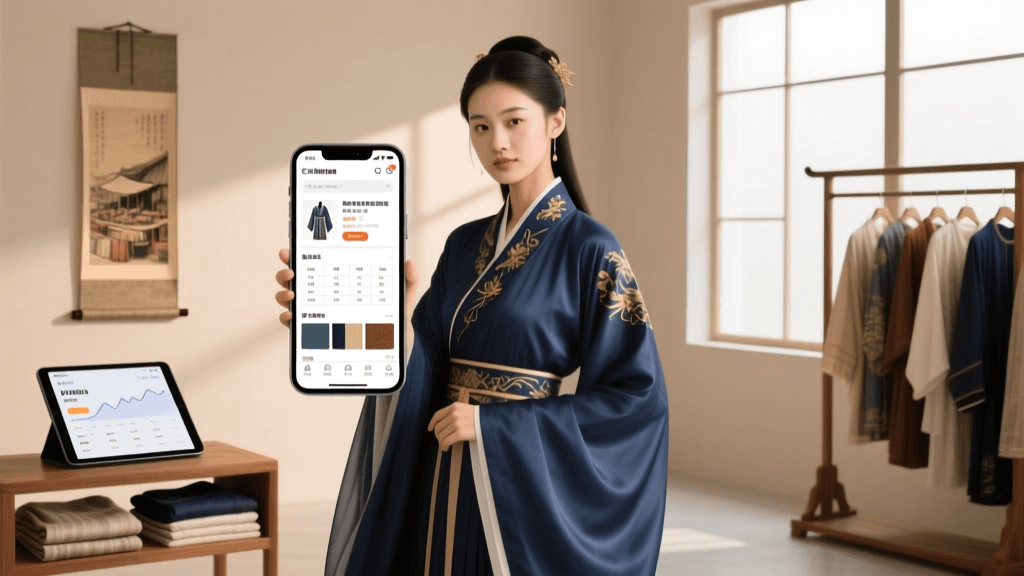
- Polyester Jacquard (Entry Level): Costing between $80 and $150, these are mass-produced garments featuring woven patterns. They are durable and easy to clean but lack the historical drape and breathability of natural fibers. Suitable for casual cosplay or large-stage group performances.
- Silk-Cotton Blends / Rayon Brocade (Mid-Tier): Ranging from $200 to $450, these offer a better drape and a subtle sheen. The motifs (like the four-clawed python) are usually woven rather than printed, providing a more authentic texture.
- Authentic Silk Brocade / Yunjin (Premium/Custom): For serious collectors and cultural ambassadors, garments made from real mulberry silk, Song Brocade, or Nanjing Yunjin (cloud brocade) interwoven with real gold or silver foil threads cost between $800 and $2,500+. These require dry cleaning and meticulous care but offer museum-quality authenticity.
Where to Buy and Timing Your Purchase
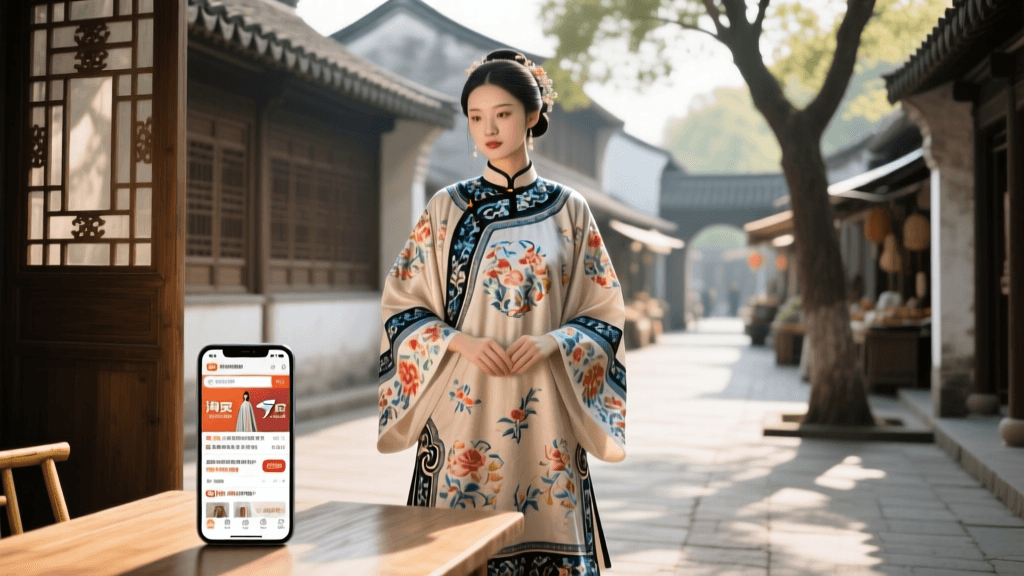
To acquire high-quality Ming-style Hanfu, look for specialized heritage brands rather than generic costume shops. Renowned makers in the Hanfu community, such as Ming Huatang (famous for their meticulous Ming dynasty reproductions) or Shisan Yu, offer premium court garments. You can order directly through their official Taobao storefronts or via international proxy agents like Superbuy or Wegobuy.
Timing is critical: Premium Hanfu makers often operate on a 'pre-order' (Yushou) model. If you need a Mang Pao for the Lunar New Year (usually late January/early February) or for the Xitang Hanfu Cultural Week (late October), you must place your order by early September. Hand-woven silk brocades and intricate gold-thread embroidery can take 60 to 90 days to produce. Always factor in an additional 2-3 weeks for international shipping and customs clearance if you are ordering from outside of China.
Conclusion
The evolution of Chinese court fashion from the Zhou to the Ming dynasties is a testament to the enduring power of clothing as a cultural artifact. Whether studying the philosophical depth of the Twelve Symbols of Sovereignty or navigating the modern market for a meticulously crafted Mang Pao, engaging with these garments offers a tangible connection to the imperial past. By understanding the historical context and the precise tailoring requirements, modern enthusiasts can wear these magnificent robes not as mere costumes, but as living continuations of a profound Asian tradition.