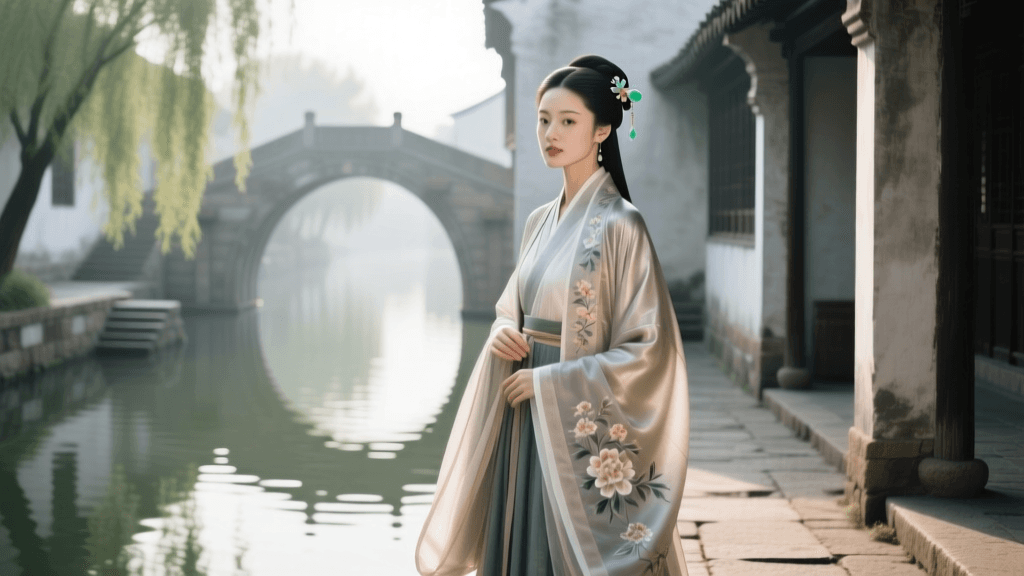
From Silk Markets to Taobao: The Hanfu E-Commerce Boom
The Historical Roots: Chang'an Markets and the Silk Road
Long before the advent of digital storefronts and global shipping networks, the acquisition of traditional Chinese garments was a deeply tactile and localized experience. During the Tang Dynasty, the capital city of Chang'an boasted two massive commercial hubs: the East Market and the West Market. These bustling centers were the epicenters of the ancient textile trade, where merchants from across Asia converged to exchange raw silk, dyed linens, and finished garments. According to historical overviews provided by the Encyclopædia Britannica, the evolution of Chinese dress was heavily influenced by these early trade routes, which not only distributed textiles but also facilitated the cross-pollination of weaving techniques and fashion silhouettes across the Silk Road.
In these ancient markets, purchasing a high-quality silk robe was an investment that required personal negotiation, tactile inspection of the weave, and custom tailoring. Artisans operated in specialized alleys, measuring patrons with cloth tapes and weaving fabrics on wooden looms just steps away from the retail stalls. This localized, artisan-driven model defined the Chinese garment economy for centuries, grounding the clothing in regional identities and strict sumptuary laws that dictated who could wear specific colors, patterns, and fabrics.
The Digital Renaissance: Hanfu on E-Commerce Platforms
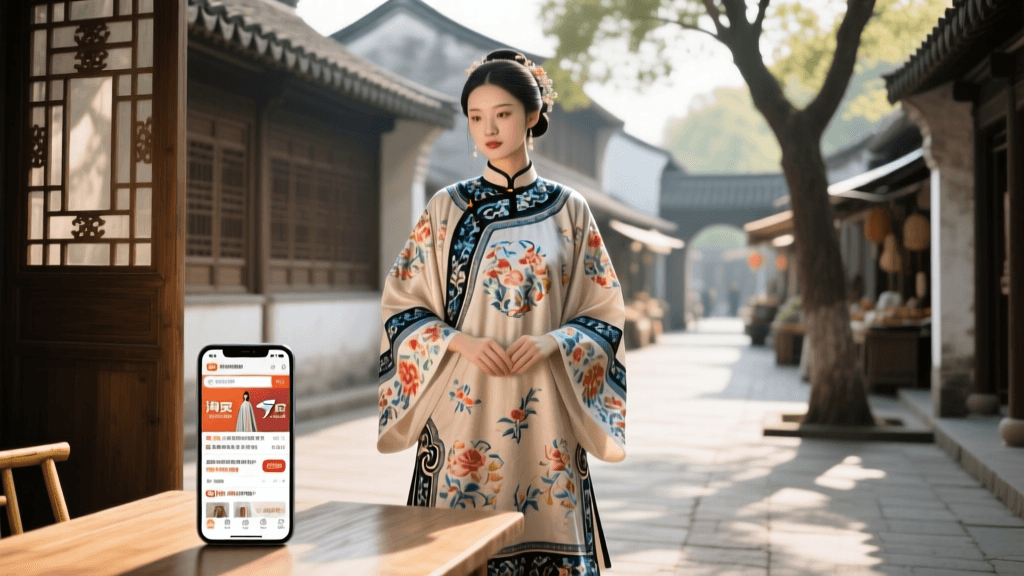
Fast forward to the 21st century, and the landscape of traditional Chinese clothing has undergone a radical transformation. The modern Hanfu movement, which began in the early 2000s as a grassroots cultural revival, has exploded into a multi-billion-dollar industry fueled almost entirely by e-commerce. Platforms like Taobao, Tmall, and JD.com have replaced the ancient markets of Chang'an, allowing indie studios and heritage brands to reach millions of consumers globally.
This digital renaissance has democratized access to historical garments. Where a Ming Dynasty silk jacket might have once been reserved for the imperial elite, today's consumers can purchase historically accurate replicas crafted from premium materials with just a few clicks. The preservation of these ancient techniques is vital to this modern market. As noted by UNESCO's Intangible Cultural Heritage registry, the traditional sericulture and silk craftsmanship of China continue to underpin the luxury segment of the Hanfu market, ensuring that ancient weaving methods like kesi (silk tapestry) and yunjin (cloud brocade) survive in the digital retail era.
Practical Guide: How to Buy Hanfu Online Today
Navigating the modern Hanfu e-commerce landscape requires an understanding of both historical garment structures and modern online retail mechanics. Whether you are a first-time buyer or a seasoned collector, here is the actionable advice you need to make informed purchases.
1. Mastering Measurements and Sizing
Unlike modern Western fashion, which often relies on standardized S/M/L sizing, Hanfu is traditionally cut using flat-pattern drafting. This means the fit is largely determined by the length of the garment and the width of the fabric panels. When shopping online, you must know your exact measurements in centimeters:
- Height and Weight: Crucial for determining the correct skirt length (especially for Mamianqun, which should graze the ankle) and the drape of the sleeves.
- Chest and Waist: While tops (Ru) and jackets (Beizi) are often wrap-style and forgiving, pleated skirts require precise waist measurements to ensure the pleats lay flat and the overlapping panels do not gap.
- Arm Span: For garments with extended sleeves (such as the Daxiushan), measuring from wrist to wrist ensures the sleeves will reach the historical floor-grazing lengths.
2. Navigating Pre-Sales (Yushou) vs. In-Stock (Xianhuo)
The most critical aspect of buying Hanfu on platforms like Taobao is understanding the production model. Due to the intricate embroidery and specialized fabric milling required, most high-quality Hanfu is sold via a pre-sale system.
- Yushou (Pre-Sale): Brands release digital renders or samples and open a deposit window. Buyers pay a deposit (usually 10-30% of the total cost). After the window closes, the brand manufactures exactly the number of orders received. Lead times typically range from 30 to 90 days. Once the items ship, buyers pay the final balance.
- Xianhuo (In-Stock): These are ready-to-ship items. They are usually basic styles, leftover stock from pre-sales, or garments made from readily available commercial fabrics. Expect to pay a slight premium for the convenience of immediate shipping.
3. Price Tiers and Brand Recommendations
The Hanfu market is highly stratified, catering to everyone from casual festival-goers to museum-level collectors:
- Entry-Level (100 - 300 RMB / $15 - $45 USD): Brands like Shisanyu offer accessible, durable sets made from polyester blends and cotton-linens. Ideal for daily wear and beginners.
- Mid-Tier (300 - 800 RMB / $45 - $115 USD): Studios like Zhongling offer excellent historical accuracy with better fabrics like viscose, rayon, and lightweight wool blends.
- High-End (1,000 - 5,000+ RMB / $140 - $700+ USD): Brands like Minghuatang are the gold standard for Ming Dynasty reproductions. They utilize genuine silk brocades, real gold-thread weaving, and meticulous historical tailoring.
Comparison Chart: Sourcing Hanfu (Historical vs. Modern)
| Feature | Ancient Markets (Tang/Ming Era) | Modern E-Commerce (Taobao/Indie) | Bespoke Artisan Studios |
|---|---|---|---|
| Sourcing Method | Physical markets, direct weaver negotiation | Digital storefronts, pre-sale deposits | Direct consultation, custom weaving |
| Lead Time | Weeks to months (hand-woven) | 30-90 days (factory batch production) | 3-6 months (custom loom setup) |
| Material Access | Regional silks, local linens, hemp | Global textiles, synthetic blends, imported wool | Heritage silks, authentic gold thread |
| Cost Structure | Barter, silver taels, highly variable | Fixed RMB pricing, tiered deposits | Premium labor and material costs |
Understanding Garment Terminology for Online Shopping
To successfully search e-commerce platforms, you must use the correct historical terminology. Searching for generic terms will yield inaccurate costumes rather than traditional garments.
- Mamianqun (Horse-Face Skirt): A wrap-around pleated skirt featuring flat front and back panels. It is the most iconic garment of the Ming Dynasty and remains the most popular item in modern Hanfu e-commerce.
- Ruqun: A classic ensemble consisting of a top (Ru) tucked into a high-waisted skirt (Qun). Popular in Tang and Song Dynasty revivals.
- Beizi: A long, open-front jacket worn over a top and skirt, characteristic of the elegant, slender silhouettes of the Song Dynasty.
- Dao Pao / Yuanling Pao: Round-collared robes worn by men and women, often featuring side slits and structured shoulders, reflecting Tang and Ming official wear.
Navigating Fabric Choices and Authenticity
The tactile experience of the ancient markets is the one thing lost in e-commerce, making fabric literacy essential for the modern buyer. The Metropolitan Museum of Art highlights the historical supremacy of Chinese silk production, a legacy that modern buyers can still access if they know what to look for.
When reading product descriptions online, pay close attention to the material breakdown:
- Silk Brocade (Zhi Jin): Look for 100% mulberry silk or authentic metallic yarns. True silk will have a distinct, luminous sheen and a higher price point. Beware of 'silky polyester' which traps heat and lacks historical drape.
- Cotton-Linen Blends: Excellent for summer wear and inner garments (Zhongyi). They provide the necessary breathability and historical matte texture that pure synthetics cannot replicate.
- Wool and Velvet: For winter Mamianqun, look for wool blends. Heavy velvet is a modern convenience that provides warmth but lacks historical accuracy for pre-Qing Dynasty garments.
Pro-Tip: Always check the buyer reviews for 'real shot' photos. Studio lighting can make cheap polyester look like high-end silk. User-uploaded photos in natural light will reveal the true drape, weave density, and color accuracy of the garment.
Conclusion
The journey of the traditional Chinese garment from the bustling, fragrant alleys of ancient Chang'an to the algorithmic feeds of modern e-commerce is a testament to the enduring appeal of Hanfu. While the transaction methods have evolved from silver taels and physical bartering to digital deposits and global shipping, the core desire remains unchanged: to wear a piece of living history. By understanding historical terminology, mastering the pre-sale system, and demanding quality fabrics, modern consumers can navigate the digital silk road with the same discernment as the ancient merchants of the past.