Hanfu Shopping Guide: From Ancient Markets to E-Commerce
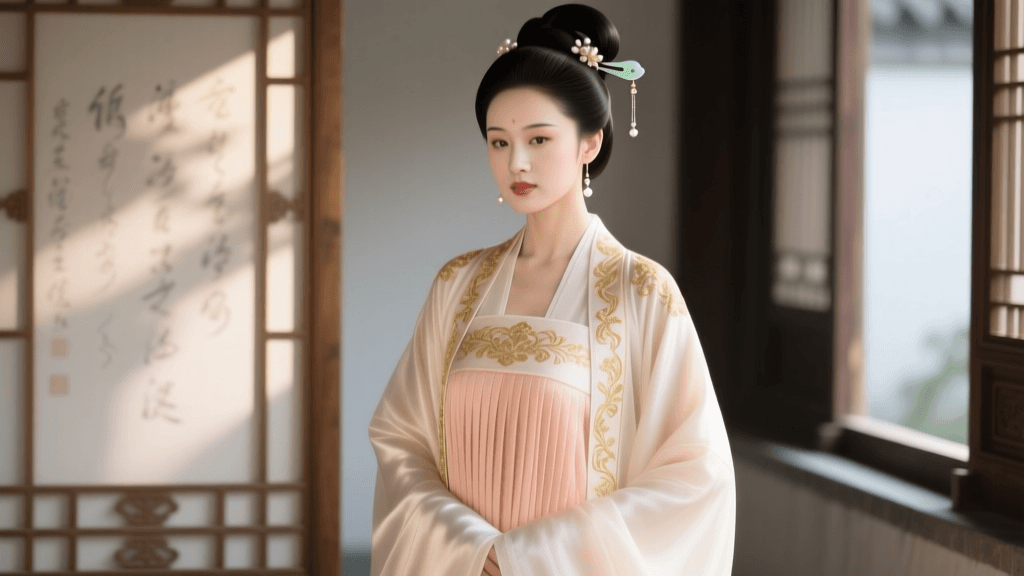
The global revival of Hanfu—traditional Han Chinese clothing—has transformed how enthusiasts acquire, wear, and appreciate these historical garments. What was once a niche hobby requiring custom tailors and specialized fabric hunting has exploded into a multi-billion-dollar digital industry. Today, the journey from a historical concept to a wearable garment happens largely through e-commerce platforms, bridging centuries of sartorial tradition with modern digital retail. Understanding this evolution is crucial for both cultural appreciation and practical procurement.
The Historical Roots: Silk Markets and Imperial Tailors
Long before the advent of digital storefronts and global shipping, acquiring traditional Chinese garments was an intricate, localized process deeply tied to the Silk Road and regional textile markets. During the Tang and Song dynasties, bustling marketplaces in cities like Chang'an and Hangzhou were the epicenters of garment procurement. Consumers did not buy 'ready-to-wear' clothing in the modern sense; instead, they purchased raw textiles—silk, hemp, and ramie—and commissioned local tailors or relied on household weaving to construct their garments.
The quality and type of fabric were heavily regulated by sumptuary laws and dictated by social class. The production of these textiles was a monumental cultural achievement. As documented by UNESCO Intangible Cultural Heritage, the ancient practices of sericulture and silk craftsmanship required immense communal effort, from cultivating mulberry trees to the meticulous weaving of brocades. The historical trade of these luxurious materials is extensively detailed by The Metropolitan Museum of Art, highlighting how silk was not just a fabric, but a currency and a diplomatic tool that connected East and West. For centuries, the 'market' for Hanfu was a physical, tactile experience rooted in regional craftsmanship and seasonal harvests.
The Digital Renaissance: Hanfu on E-Commerce Platforms
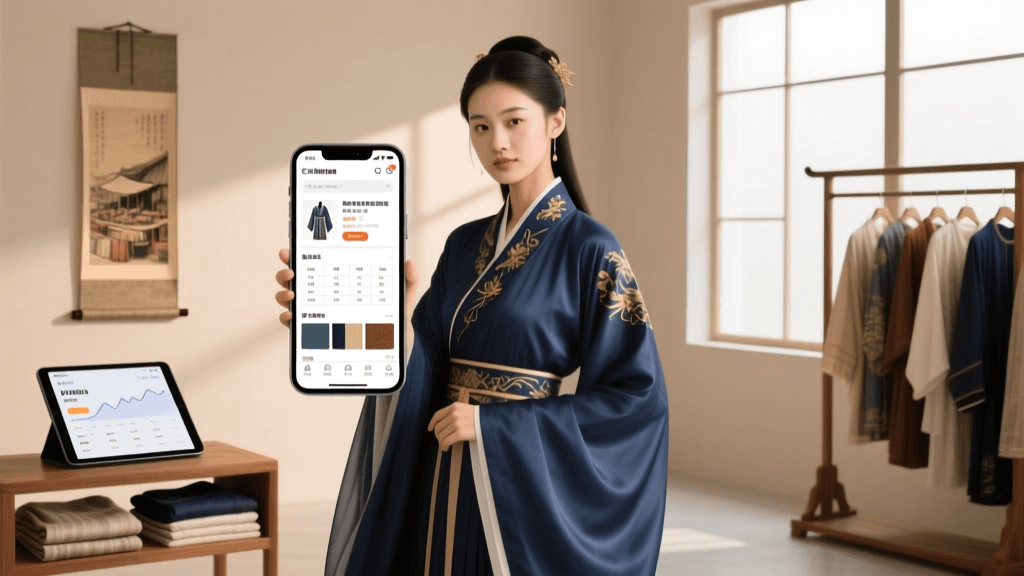
The modern Hanfu movement, which gained significant momentum in the early 2010s, fundamentally disrupted this historical model. Platforms like Taobao, Tmall, and independent WeChat boutiques democratized access to traditional garments. What was once confined to historical reenactors or rural artisans became accessible to millions of young consumers via their smartphones.
E-commerce allowed independent Hanfu studios to bypass traditional retail gatekeepers, connecting directly with a passionate consumer base. Brands could now release seasonal collections, historical reproductions based on museum artifacts, and innovative fusion designs. For international buyers, this digital shift has been revolutionary. The proliferation of shopping agents and direct cross-border shipping means that a buyer in New York or London can purchase a historically accurate Ming dynasty jacket with the same ease as a local buyer in Shanghai.
Practical Guide: Navigating Hanfu E-Commerce
Buying Hanfu online requires a different approach than purchasing modern Western fashion. Because traditional garments rely on flat-cutting, wrap closures, and specific historical proportions, standard S/M/L sizing is often inadequate. Here is how to navigate the digital marketplace with confidence.
1. Mastering Measurements for Traditional Silhouettes
Unlike Western clothing, which is tailored to the body's three-dimensional curves, Hanfu is constructed from flat panels of fabric that drape and wrap. Therefore, specific measurements are paramount:
- Waist Circumference: Crucial for the Mamianqun (horse-face skirt). Because these skirts wrap around and overlap, you must measure exactly where the skirt will sit to ensure the pleats align correctly and the skirt does not gape.
- Skirt Length: A standard rule of thumb for traditional floor-skimming skirts is your total height minus 40 cm (approx. 15.5 inches). Most e-commerce listings offer lengths in 5 cm increments.
- Bust & Shoulder Width: Essential for the upper garment (ao or ru). While Hanfu shoulders often drop slightly, the bust measurement dictates the wrap overlap. If the bust is too large for the garment's flat width, the collar will pull open.
- Arm Span: Measured from wrist to wrist with arms outstretched. This determines the sleeve length and the dramatic drape of guangxiu (wide sleeves).
2. Understanding the 'Yushou' (Pre-Sale) Culture
One of the most surprising aspects of Hanfu e-commerce for newcomers is the Yushou (pre-sale) system. Due to the intricate embroidery, specialized jacquard weaving, and small-batch nature of boutique Hanfu studios, most high-quality garments are not kept in stock. Instead, studios release digital renders or prototype photos, open a pre-sale window for 7 to 15 days, and then manufacture exactly what was ordered. Buyers must be prepared to wait anywhere from 30 to 90 days for their garments to ship. Always check the listing's estimated dispatch date before purchasing.
Cost Breakdown: What to Expect When Buying Online
The Hanfu e-commerce market is highly stratified, catering to everyone from casual festival-goers to serious historical collectors. Below is a structured guide to pricing tiers, fabrics, and expectations.
| Market Tier | Price Range (RMB / USD) | Typical Fabrics | Wait Time | Best For |
|---|---|---|---|---|
| Entry-Level | ¥150 - ¥350 ($20 - $50) | Polyester, Basic Cotton, Chiffon | In Stock / 7 Days | Beginners, Cosplay, Photography |
| Mid-Tier (Boutique) | ¥400 - ¥900 ($55 - $125) | Jacquard, Linen Blends, Rayon | 30 - 45 Days (Yushou) | Daily Wear, Enthusiasts, Travel |
| High-End / Custom | ¥1,000 - ¥3,000+ ($140 - $400+) | Mulberry Silk, Brocade, Xiangyunsha | 60 - 120 Days | Collectors, Formal Ceremonies |
Fabric Selection in the Digital Age
When shopping online, you cannot touch the fabric, making visual cues and material descriptions critical. Entry-level Hanfu often relies heavily on polyester, which can be stifling in summer and prone to static in winter. To achieve a historically authentic drape and breathable comfort, look for specific keywords in product descriptions.
For summer garments, seek out ramie or linen-cotton blends, which offer the crisp, structured look seen in Song dynasty paintings. For the luxurious, heavy drape of Ming dynasty horse-face skirts, woven jacquard or brocade is essential. The Victoria and Albert Museum notes that historical Chinese textiles were prized for their complex weaving techniques, which created patterns that were integral to the fabric rather than printed on top. Modern e-commerce buyers should avoid 'printed' patterns on flat fabric and instead look for 'woven' (提花 - jacquard) or 'embroidered' (刺绣) designs to ensure structural integrity and historical accuracy.
3. Navigating International Shipping and Agents
For buyers outside of China, purchasing directly from Taobao or independent WeChat boutiques often requires the use of a shopping agent (such as Superbuy, CSSBuy, or Sugargoo). These platforms allow you to paste the Chinese e-commerce link, purchase the item through their proxy, and have it shipped to their domestic warehouse. From there, the agent provides detailed quality control (QC) photos—crucial for checking embroidery alignment and fabric color—before consolidating your items into an international parcel. When using agents, always factor in the cost of international volumetric weight shipping, which can sometimes equal the cost of the garments themselves.
Conclusion
The transition from the ancient silk markets of Chang'an to the digital storefronts of Taobao represents a profound shift in how traditional culture is consumed and preserved. E-commerce has not only made Hanfu accessible but has also fueled a renaissance in traditional textile manufacturing, driving demand for authentic jacquard weaves and natural dyes. By understanding historical proportions, mastering the pre-sale system, and carefully selecting fabrics, modern buyers can navigate the digital marketplace to acquire garments that honor the rich, sartorial heritage of China.