Mindful Kitsuke: Zen Meditation & Kimono Dressing in 2026
The Intersection of Zen Spirituality and Mindful Dress
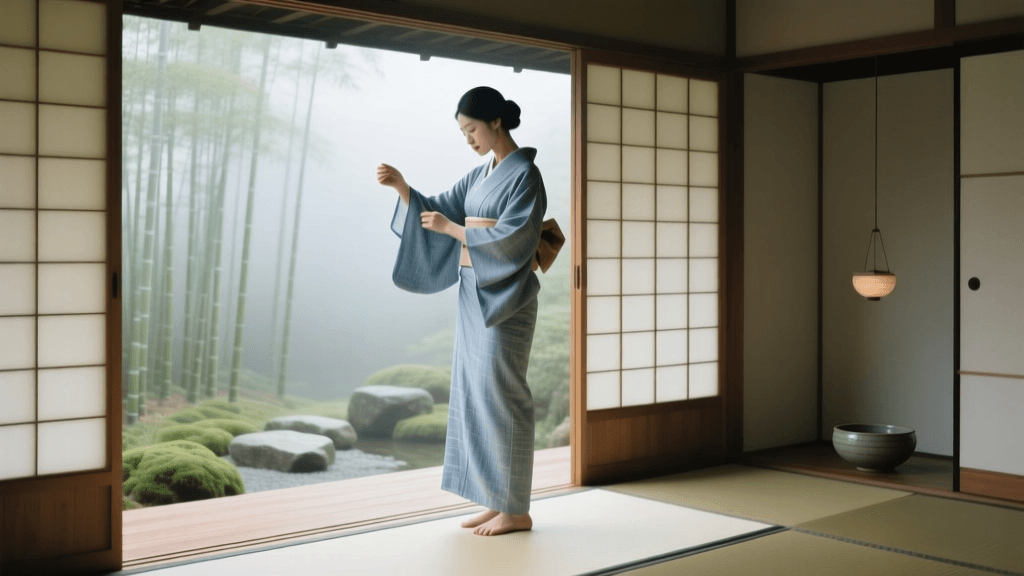
In the fast-paced landscape of 2026, the global wellness industry has increasingly turned toward ancient, embodied practices to counteract digital fatigue. Among the most profound of these is the intersection of Zen spirituality and the traditional Japanese art of kitsuke (kimono dressing). Far from being a mere exercise in historical fashion or rigid etiquette, mindful kitsuke is recognized by contemporary Zen practitioners as a form of samu (work practice) and moving meditation. The deliberate, sequential layering of garments demands absolute presence, transforming the daily act of getting dressed into a grounding ritual that prepares the mind and body for zazen (seated meditation).
When approached with a Zen mindset, the kimono ceases to be just clothing; it becomes a tactile boundary between the chaotic external world and the disciplined internal sanctuary. The physical restrictions of the garment naturally enforce the upright posture required for deep diaphragmatic breathing, while the sensory feedback of the textiles anchors the wandering mind to the present moment. As we navigate the wellness trends of 2026, integrating mindful dress into morning routines or meditation retreats offers a powerful antidote to modern dissociation.
The Sensory Experience: Fabrics for Grounding
Zen philosophy places immense value on direct sensory experience as a pathway to enlightenment. The concept of kinu-nari (the rustling sound of silk) is a prime example of how traditional garments engage the senses. However, for modern meditation practitioners, the choice of fabric must balance spiritual resonance with physical comfort, especially during extended periods of stillness.
In 2026, there has been a significant resurgence in the use of Ojiya-chijimi, a traditional crepe linen from Niigata Prefecture, for summer meditation wear. The textured, uneven surface of the linen provides continuous, subtle tactile feedback against the skin, which mindfulness teachers use as an anchor point during body-scan meditations. Furthermore, the natural moisture-wicking properties of high-grade hemp and linen blends prevent the physical distractions of overheating during intensive summer sesshin (retreats). The Kyoto National Museum has extensively documented the historical evolution of these breathable textiles, noting how Edo-period monks utilized similar woven fibers to maintain alertness during grueling hours of meditation.
2026 Retreat Wear: Comparing Meditative Garments
While the formal silk kimono holds deep ceremonial significance, modern Zen retreats in 2026 offer a spectrum of garments tailored to different stages of meditative practice. Below is a comparison of traditional and transitional garments used in contemporary mindfulness settings.
| Garment Type | Primary Material | Mobility for Zazen | Mindfulness Rating | Ideal 2026 Use Case |
|---|---|---|---|---|
| Formal Silk Kimono | Mulberry Silk | Low | 5/5 (Ceremonial) | Temple ceremonies, formal tea rites |
| Cotton Yukata | Indigo-dyed Cotton | Medium | 4/5 | Summer evening meditation, casual retreats |
| Samue | Cotton/Hemp Blend | High | 4/5 (Practical) | Daily temple chores (samu), walking meditation |
| Jinbei | Linen/Seersucker | High | 3/5 | Post-meditation relaxation, informal study |
The Samue, originally designed as work clothing for Zen monks, has become the cornerstone of the 2026 "Zen Capsule Wardrobe." Its two-piece design allows for unrestricted cross-legged sitting while maintaining the dignified, wrap-around aesthetic of traditional Japanese dress.
A Step-by-Step Guide to Mindful Kitsuke
To transform the act of dressing into a meditative practice, one must slow down and synchronize movement with breath. This mindful kitsuke routine is designed to be completed in 15 to 20 minutes, serving as a transitional bridge between waking life and seated meditation.
Step 1: Centering and the Juban (Undergarment)
Begin in seiza (kneeling posture) or sit cross-legged. Hold the juban (under-kimono) in your hands, feeling the weight and texture of the fabric. Take three deep, diaphragmatic breaths. As you slip your arms into the sleeves, do so with the awareness of ichigo ichie (one time, one meeting)—acknowledging that this exact moment, and this specific act of dressing, will never occur again in the same way.
Step 2: The Left-over-Right Rule and Mortality
Wrap the left side of the garment over the right. In Japanese culture, wrapping right-over-left is strictly reserved for dressing the deceased. By consciously choosing the left-over-right fold, the practitioner engages in a subtle, daily contemplation of mortality (maranasati), a core tenet of Zen practice that fosters deep gratitude for the present breath.
Step 3: Tying the Koshihimo with Conscious Breathwork
The koshihimo (hip ties) secure the garment. This step requires a delicate balance. If tied too tightly, it restricts the tanden (lower abdomen), hindering the deep belly breathing essential for zazen. If tied too loosely, the garment shifts, causing distraction.
- Inhale: Expand the lower abdomen fully as you position the cord.
- Exhale: Gently pull the cord snug and tie a secure knot, allowing the fabric to support the lumbar spine without compressing the diaphragm.
Step 4: The Obi as a Spiritual Anchor
For formal practice, the obi (sash) serves as a physical reminder of one's vows and discipline. The act of folding the stiff silk and wrapping it around the core generates a feeling of being "held" or grounded. According to the Japan National Tourism Organization, an increasing number of temple stays (shukubo) in Kyoto and Kamakura now include guided, mindful obi-tying workshops as a prerequisite to morning meditation sessions, recognizing the psychological fortitude the garment imparts to the practitioner.
"The kimono does not merely clothe the body; it architectures the posture of the soul. When the spine is supported by the tension of the silk, the mind is freed from the burden of holding itself up."
— Excerpt from a 2026 lecture on Sartorial Mindfulness at the Daitoku-ji Temple complex, Kyoto.
Integrating Mindful Dress into Daily Life
You do not need to reside in a monastery to experience the grounding effects of traditional Japanese garments. In 2026, urban mindfulness practitioners are adapting these traditions for modern environments. The haori (a traditional hip- or thigh-length kimono-style jacket) has emerged as a popular tool for "micro-meditations." By keeping a linen or raw-silk haori near your home meditation cushion, the simple act of draping it over your shoulders signals to the nervous system that it is time to transition from the chaos of the workday into a state of deep contemplation.
Furthermore, the integration of sustainable, ethically sourced dyes—such as persimmon tannin (kakishibu) and natural indigo—aligns the practice of mindful dressing with the Zen principle of non-harm (ahimsa) toward the environment. Wearing garments dyed through slow, natural fermentation processes connects the wearer to the rhythms of the natural world, an essential component of Zen ecological awareness.
Where to Experience Zen Garment Retreats in 2026
For those seeking immersive experiences, several renowned temples have updated their 2026 itineraries to include sartorial mindfulness. Mount Koya (Koyasan) in Wakayama Prefecture offers multi-day shukubo experiences where guests are provided with custom-fitted samue and guided through the meditative aspects of garment care, folding, and wearing. Similarly, temples in Kamakura have introduced "Walking Meditation (Kinhin) and the Michiyuki" workshops, teaching practitioners how to synchronize their breath, their footsteps, and the swing of their traditional coats while navigating the forested temple grounds.
Ultimately, the intersection of kimono and Zen spirituality reminds us that enlightenment is not found solely in the void of deep meditation, but in the meticulous, mindful attention we bring to the most ordinary actions of our daily lives. By treating the act of dressing as a sacred ritual, we weave mindfulness into the very fabric of our existence.