Xin Zhongshi And Mamianqun At Paris Fashion Week 2026
The Global Ascent of Xin Zhongshi in 2026
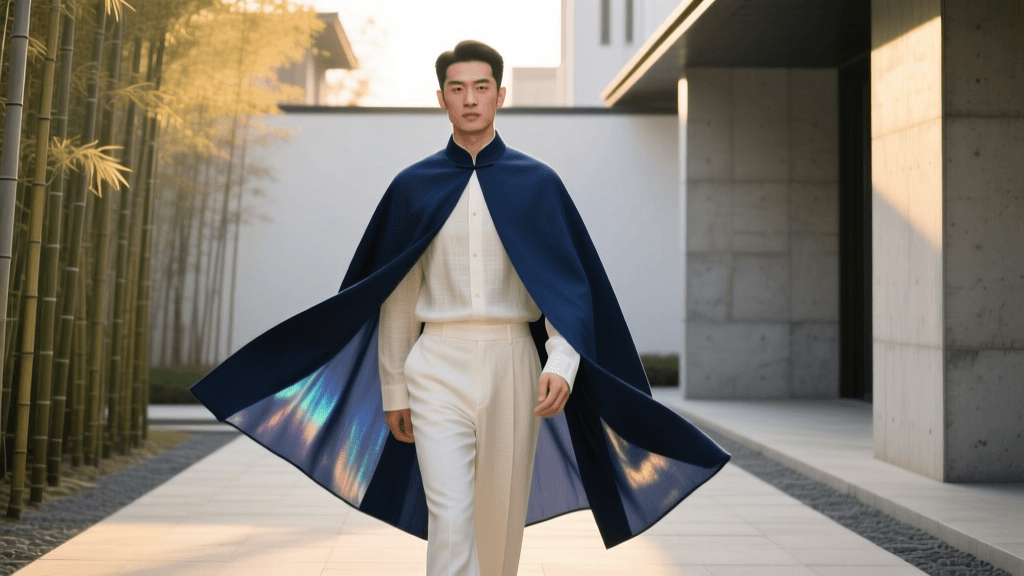
The international fashion calendar in 2026 has been undeniably shaped by a singular, powerful movement: the maturation of Xin Zhongshi (New Chinese Style). No longer confined to niche domestic markets or relegated to superficial orientalist motifs, traditional Chinese garments and textiles are now dictating structural trends at Paris and Milan Fashion Weeks. This year marks a definitive turning point where ancient weaving techniques and historical silhouettes are being integrated into contemporary global wardrobes with unprecedented authenticity and technical innovation.
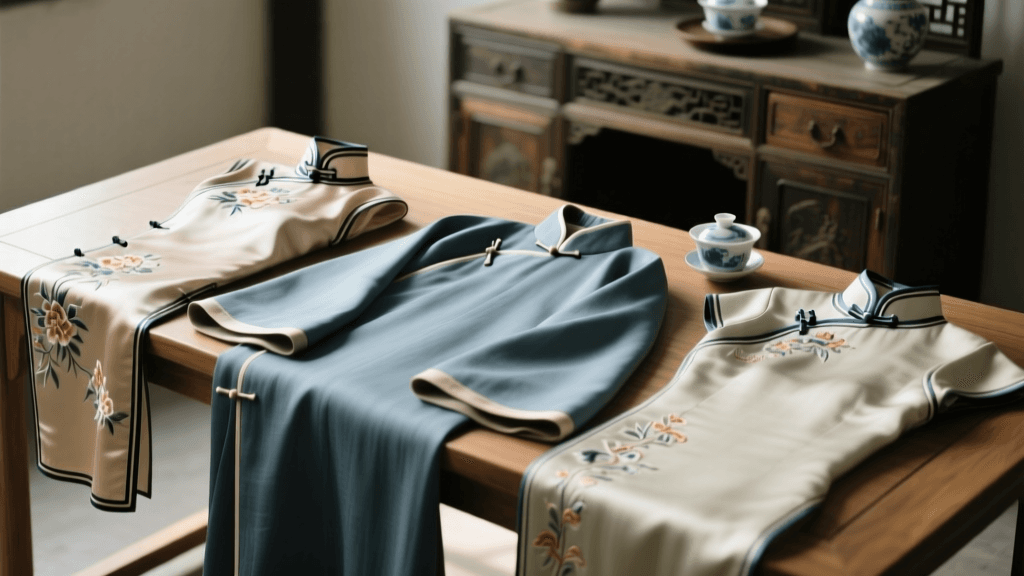
Unlike the early 2010s, where Western houses frequently appropriated Asian aesthetics without context, the 2026 design weeks are dominated by Chinese design houses and international collaborators who prioritize structural integrity. The philosophy of Xin Zhongshi in 2026 focuses on the jiaoling youren (cross-collared right lapel), the architectural drape of Hanfu, and the intricate geometry of Qing dynasty tailoring, merging these elements with modern zero-waste pattern cutting and sustainable material science.
The Mamianqun: From Ming Dynasty Courts to Parisian Runways
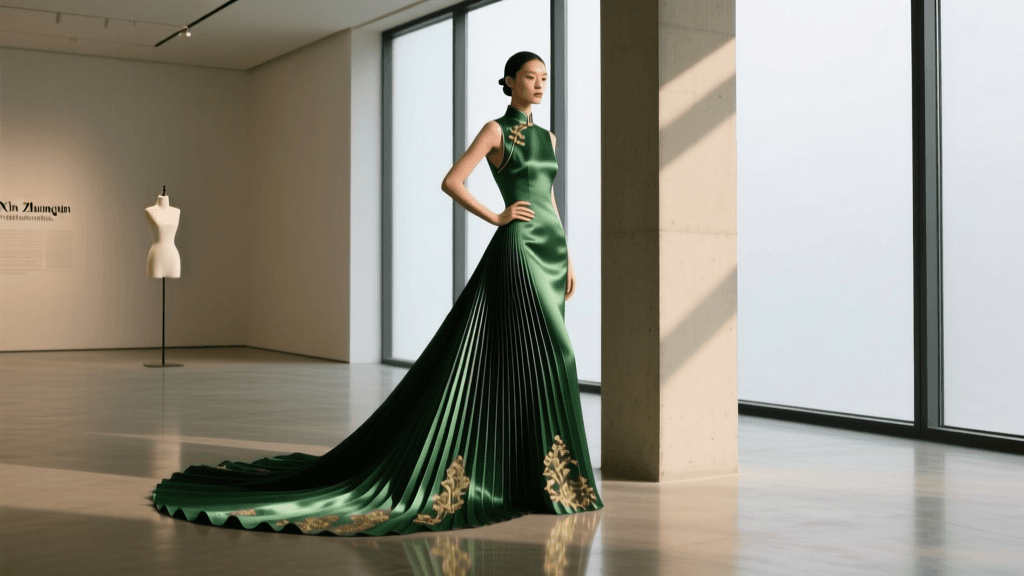
Perhaps the most striking garment to dominate the 2026 Spring/Summer and Fall/Winter runways is the Mamianqun, or horse-face skirt. Originating in the Song and Ming dynasties, this wraparound skirt is characterized by its flat front and back panels flanked by intricate, overlapping pleats. In 2026, designers are reimagining the Mamianqun using advanced memory-silk blends and technical organza that hold sharp, knife-like pleats without the need for heavy synthetic interlinings or excessive heat-setting.
At the Palais de Tokyo during Paris Fashion Week, several emerging labels showcased Mamianqun skirts crafted from upcycled Song brocade, featuring programmable LED threading woven directly into the traditional cloud-and-dragon motifs. This fusion of heritage textile and smart-fabric technology highlights how Chinese fashion is pushing the boundaries of wearable art. The drape analysis of these modern skirts reveals a deliberate weighting at the hem using micro-copper threads, ensuring the skirt maintains its historical silhouette even in the windy, unpredictable climate of European autumns.
Top Chinese Design Houses at International Design Weeks 2026
Understanding the landscape of Chinese fashion at international exhibitions requires familiarity with the key players who are bridging the gap between ancient heritage and avant-garde couture. Below is a comparative analysis of the leading design houses showcasing in Paris and Milan this year, detailing their traditional focal points and current market positioning.
| Designer Label | Traditional Motif / Technique | 2026 Runway Focus | RTW Price Range (USD) |
|---|---|---|---|
| Guo Pei | Kesi Silk Tapestry & Goldwork | Mythological Couture & Architectural Volume | $25,000 - $150,000+ |
| Uma Wang | Tea-dyed Linen & Distressed Silk | Zen Minimalism & Fluid Drape Analysis | $1,200 - $3,500 |
| Samuel Guì Yang | Qipao Tailoring & Brocade | Sino-Western Hybrid RTW & Pankou Fastenings | $850 - $2,400 |
| Feng Chen Wang | Deconstructed Hanfu Layers | Technical Streetwear & Modular Bamboo Silk | $600 - $1,800 |
As the table illustrates, the price points for Ready-to-Wear (RTW) pieces have stabilized in 2026, reflecting a mature supply chain that sources authentic heritage textiles directly from protected weaving cooperatives in Suzhou and Hangzhou, rather than relying on mass-produced digital prints.
Navigating the 2026 Paris and Milan Showrooms
For international buyers, curators, and fashion journalists, accessing the physical showrooms where these garments are presented requires strategic planning. The official schedules are tightly controlled, and the integration of Chinese designers into the mainline calendars has made tickets highly coveted.
- Paris Fashion Week (FHCM): The Fédération de la Haute Couture et de la Mode has expanded its designated 'Asian Heritage' showroom spaces at the Carrousel du Louvre. Buyers must register for trade credentials at least three months in advance, providing proof of retail or editorial affiliation.
- Milan Fashion Week (CNMI): The Camera Nazionale della Moda Italiana has partnered with the Shanghai Fashion Week committee to host a joint pavilion at the Tortona Design District. This pavilion specifically highlights Xin Zhongshi accessories, including jade-inlaid leather goods and silk-woven footwear.
- Tranoi Trade Show: For emerging Chinese labels focusing on sustainable Xin Zhongshi, the Tranoi showroom remains the premier B2B destination. Here, buyers can physically inspect the drape and weight of Mamianqun skirts and negotiate minimum order quantities (MOQs) which, in 2026, average around 50 units per SKU for heritage-woven items.
Authenticating Craftsmanship: Kesi and Song Brocade
A critical challenge for buyers and collectors in 2026 is distinguishing between authentic heritage craftsmanship and high-quality digital reproductions. The Kesi (cut silk) tapestry technique, where the weft threads are cut and turned back at the edge of the color area, creates a distinct, slit-like boundary between colors. This technique is incredibly time-consuming, with a single square meter taking an artisan up to six months to complete.
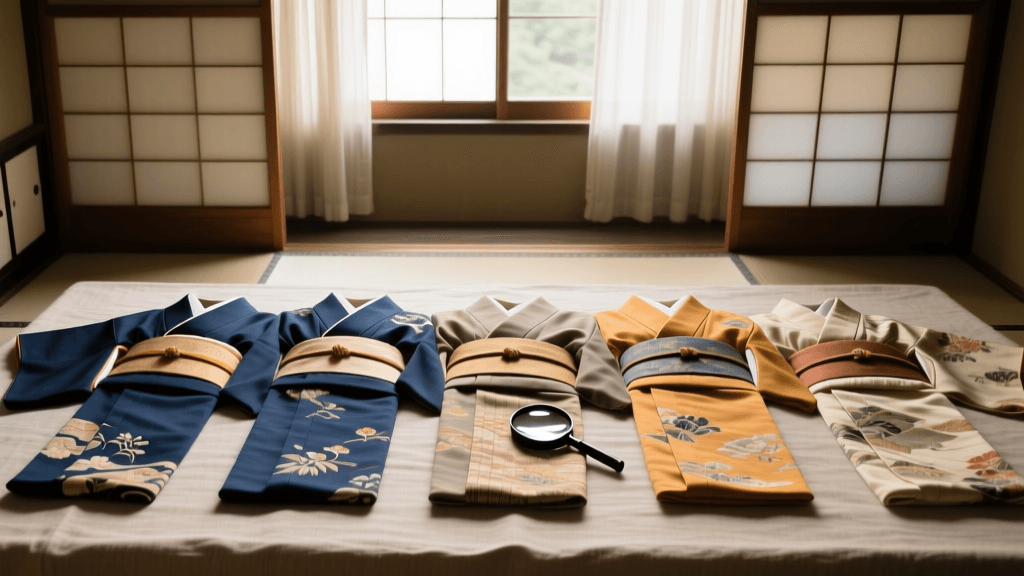
When evaluating couture pieces at international exhibitions, buyers should look for the characteristic 'slits' in the Kesi weave and the slight irregularities that denote hand-weaving on traditional wooden looms. Digital printing, while visually similar from a distance, lacks the structural reversibility and textural depth of true Kesi. For those seeking historical benchmarks to train their eyes, the extensive archival collections at institutions like the Metropolitan Museum of Art Asian Textiles Department provide invaluable reference points for authentic Ming and Qing dynasty weaving structures.
Song brocade, another staple of the 2026 Xin Zhongshi movement, is characterized by its soft, lustrous surface and complex geometric patterns. In 2026, authentic Song brocade used in high-end RTW is often blended with mulberry silk to improve durability and washability, a significant technological leap from the fragile, dry-clean-only textiles of the past decade.
Buyer’s Guide: Securing Pieces and Showroom Access
If you are attending the 2026 international design weeks with the intention of purchasing or curating Xin Zhongshi garments, consider the following actionable advice to ensure a successful acquisition strategy:
- Pre-Order Allocation: Due to the limited nature of hand-woven Kesi and Song brocade, top-tier houses like Guo Pei and Uma Wang operate on a strict pre-order model. Showroom samples are rarely available for immediate takeaway. Ensure your purchase orders include flexible delivery windows, typically spanning 4 to 6 months post-show.
- Sizing and Alterations: Traditional Hanfu and Mamianqun skirts are inherently modular and size-inclusive, relying on wrap-ties and pleating rather than rigid tailoring. However, Xin Zhongshi RTW jackets often feature structured pankou (knotted button) closures that are difficult to alter without disrupting the garment's feng shui and visual balance. Always request the brand's specific measurement matrix rather than relying on standard European sizing charts.
- Textile Certifications: In 2026, reputable Chinese design houses provide a digital blockchain certificate of authenticity with every couture and premium RTW piece. This certificate details the specific weaving cooperative, the artisan master, and the exact material composition, ensuring the ethical sourcing of the silk and the preservation of intangible cultural heritage.
The integration of Chinese traditional garments into the upper echelons of global fashion is no longer a fleeting trend; it is a permanent structural shift in how the world approaches luxury, heritage, and textile innovation. By understanding the deep historical context and the modern technical advancements of Xin Zhongshi, industry professionals can fully appreciate and capitalize on this magnificent sartorial renaissance.