Mindful Kitsuke: Kimono Dressing as Zen Meditation (2026)
The Intersection of Zen Philosophy and Traditional Garments
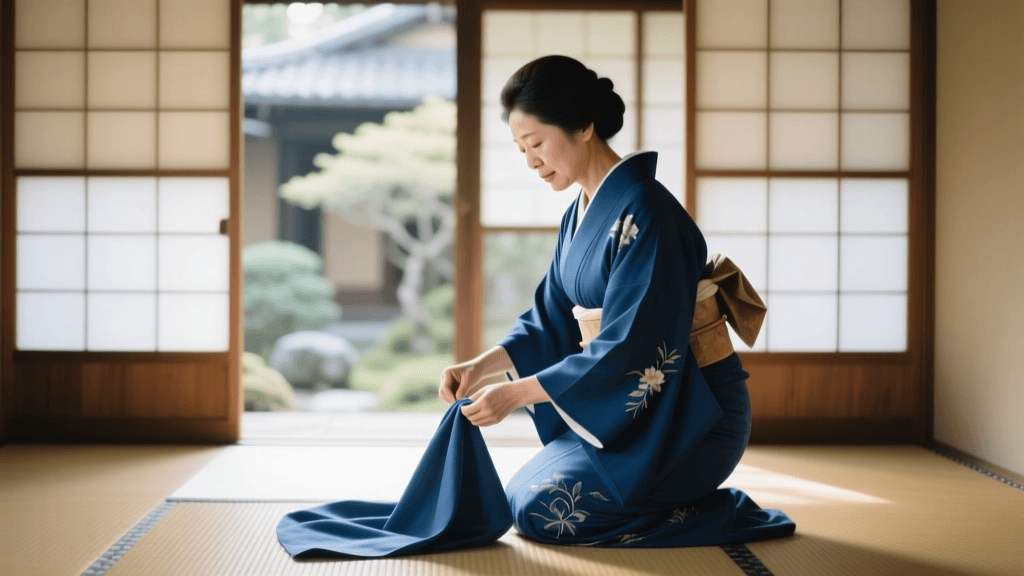
In our hyper-connected, fast-paced modern world, the search for grounding practices has led many back to ancient traditions. As we navigate 2026, the global wellness and slow-fashion movements have increasingly embraced the Japanese concept of kitsuke—the art of wearing a kimono—not merely as a method of dressing, but as a profound form of moving meditation. Rooted deeply in Zen Buddhism, the ritual of wrapping oneself in traditional Japanese garments offers a tactile, deeply sensory pathway to mindfulness.
Zen philosophy emphasizes presence, impermanence, and the elimination of the ego. According to the Stanford Encyclopedia of Philosophy, Zen practice is fundamentally about experiencing reality directly, without the filter of conceptual thought. When applied to the act of dressing, the kimono becomes a tool for this direct experience. Unlike Western tailoring, which cuts fabric to conform to the body's curves, the kimono is constructed from straight lines. It demands that the wearer adapt their posture, breath, and movement to the garment. This subtle surrender of the ego to the structure of the cloth is the first step in mindful kitsuke.
The Philosophy of the Straight Line and 'Ma'
To understand the meditative quality of the kimono, one must understand its geometry. A traditional kimono is made from tanmono, narrow bolts of fabric cut in straight lines and sewn together with minimal waste. There are no darts, no curved seams, and no tailored waistlines.
This straight-line construction creates ma (negative space) between the body and the fabric. In Zen aesthetics, ma is not merely empty space; it is a dynamic void full of potential and energy. When you practice mindful kitsuke, you become acutely aware of this space. The air trapped between the silk or linen and your skin regulates your temperature and forces you to move with deliberate grace. Rushing causes the fabric to tangle; moving with mindful intention allows the garment to drape perfectly. The Japan National Tourism Organization (JNTO) frequently highlights how traditional Japanese arts, from calligraphy to tea ceremonies, rely on this exact principle of spatial awareness and deliberate pacing.
Kitsuke as Moving Meditation: The Meditative Layers
Dressing in a kimono is a layered process, with each layer serving as a focal point for a different aspect of mindfulness. Much like the foundational practices of mindfulness meditation that guide practitioners from breath awareness to full-body scanning, kitsuke guides the wearer from skin contact to outer expression.
| Garment Layer | Japanese Term | Meditative Focus | Sensory Experience |
|---|---|---|---|
| Skin Layer | Hadajuban | Grounding and physical awareness | The cool touch of cotton or hemp against the skin, signaling the start of the ritual. |
| Inner Robe | Nagajuban | Posture and spinal alignment | Aligning the back seam (se-cho) requires a straight spine and relaxed shoulders. |
| Outer Robe | Kimono | Spatial awareness (Ma) and flow | Managing the volume of fabric and adjusting the collar (eri) to frame the face. |
| The Sash | Obi | Core strength and breath control | The physical pressure around the torso, acting as a physical anchor for deep breathing. |
| The Cord | Obijime | Finality, precision, and letting go | The tactile snap of the braided silk cord securing the knot, completing the practice. |
Breathwork, Core Engagement, and the Obi
The most physically demanding and spiritually significant part of kitsuke is the tying of the obi. In 2026, somatic therapists and Zen practitioners alike recognize the obi as a tool for core engagement and breathwork. Tying a traditional taiko musubi (drum knot) or a simple bunko musubi (bow knot) requires the wearer to hold their arms aloft while maintaining a straight back.
This physical constraint naturally encourages diaphragmatic breathing. As you pull the obi-ita (stiffener) tight and wrap the heavy silk or brocade around your waist, you must exhale deeply to allow for the final tightening. This mirrors the breathing techniques used in Zazen (seated meditation) and martial arts, where the hara (lower abdomen) is considered the center of spiritual and physical gravity. The gentle, continuous pressure of the obi against the hara serves as a physical reminder to maintain mindful breathing throughout the day.
2026 Trends: Digital Detox and Slow Kitsuke Retreats
The year 2026 has seen a massive surge in 'analog wellness'—retreats designed to combat digital fatigue through tactile, screen-free traditions. In historic cultural hubs like Kyoto and Kamakura, a new wave of 'Slow Kitsuke' workshops has emerged. These are not the rushed tourist rental experiences of the past decade. Instead, they are half-day or full-day immersive retreats that combine morning Zazen meditation with guided, silent kimono dressing.
Participants in these 2026 retreats are encouraged to source their own mindful textiles. There is a strong preference for organic, artisan-woven fabrics such as Ojiya-chijimi (a traditional crepe linen from Niigata) for summer practice, and tsumugi (slubbed silk) for winter. These textiles, with their natural irregularities, embody the Zen concept of wabi-sabi—finding beauty in imperfection. The tactile sensation of hand-loomed fabric against the skin enhances the sensory grounding required for deep meditation.
What to Expect from a 2026 Mindful Kitsuke Retreat:
- Duration: Typically 4 to 6 hours, allowing for unhurried movement.
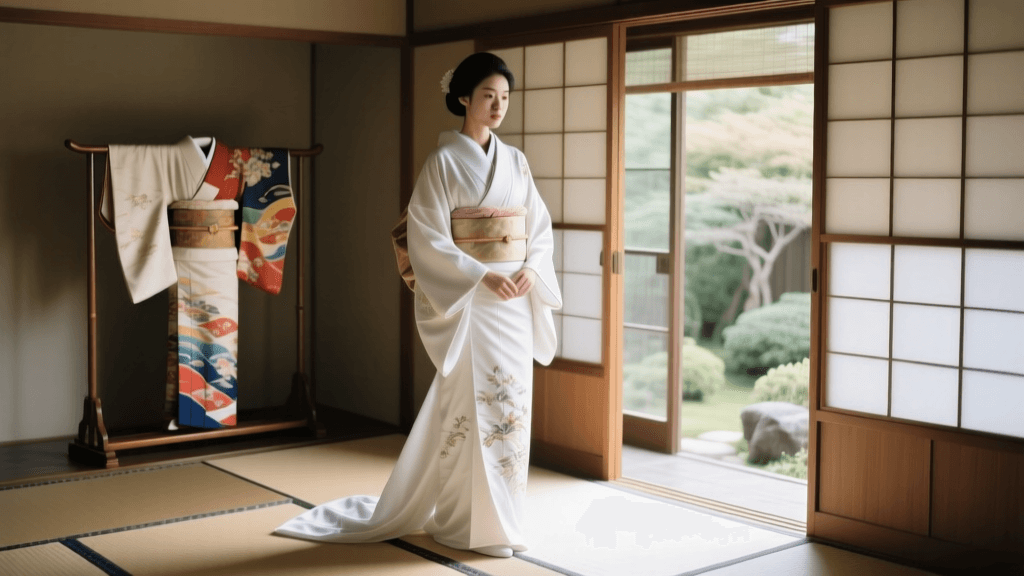
- Environment: Tatami-matted rooms overlooking dry landscape (karesansui) gardens, ensuring visual tranquility.
- Cost: Premium wellness retreats in 2026 average ¥25,000 to ¥40,000 per person, which includes the use of high-grade, vintage silk garments and a traditional matcha tea ceremony post-dressing.
- Instruction: Conducted in near-silence, with instructors using gentle, non-verbal cues to guide the placement of folds and ties.
A 15-Minute Mindful Kitsuke Morning Routine
You do not need to be at a retreat in Japan to experience the meditative benefits of traditional Japanese garments. You can integrate a simplified, mindful version of kitsuke into your daily routine using a yukata (casual cotton kimono) or a lightweight samue (monk's work garment). Here is a practical, 15-minute morning routine designed to center your mind before the day begins.
Minutes 1-3: Grounding and Preparation
Stand barefoot on a natural surface (wood or tatami). Hold the garment in front of you. Close your eyes and take three deep breaths, feeling the weight and texture of the fabric in your hands. Acknowledge the artisans who wove and dyed the material.
Minutes 4-8: The Inner Alignment
Slip your arms into the sleeves. Before tying anything, focus on the back seam. Reach behind your neck and pull the seam down slightly to expose the nape of your neck—a traditional mark of elegance and vulnerability. Straighten your spine. Feel the fabric settling over your shoulders. Let go of any tension in your jaw and neck.
Minutes 9-12: Wrapping and Spatial Awareness
Wrap the left side over the right side (the universal rule for the living in Japanese culture). As you smooth the fabric across your torso, use long, deliberate strokes. Feel the ma between your body and the cloth. Adjust the hem so it grazes your ankles perfectly. This requires you to bend your knees slightly and engage your core, rather than bending at the waist.
Minutes 13-15: The Anchor and the Breath
Take your obi or a simple cotton sash. Wrap it around your waist. As you pull it taut, exhale completely, emptying your lungs. Tie the knot with deliberate, unhurried movements. Once secured, place your hands over your lower abdomen (hara). Take five deep breaths, feeling the sash resist and support your core. Open your eyes, bow slightly to your reflection, and step into your day with intention.
Conclusion
The kimono is far more than a beautiful cultural artifact; it is a wearable architecture of mindfulness. By treating the act of dressing not as a chore, but as a sacred, meditative ritual, we can reclaim a sense of physical and spiritual grounding. As the slow fashion and wellness movements continue to evolve in 2026, the ancient wisdom woven into the straight lines and negative space of the kimono offers a timeless sanctuary for the modern mind.