Mindful Kitsuke: Kimono Dressing As Zen Meditation 2026
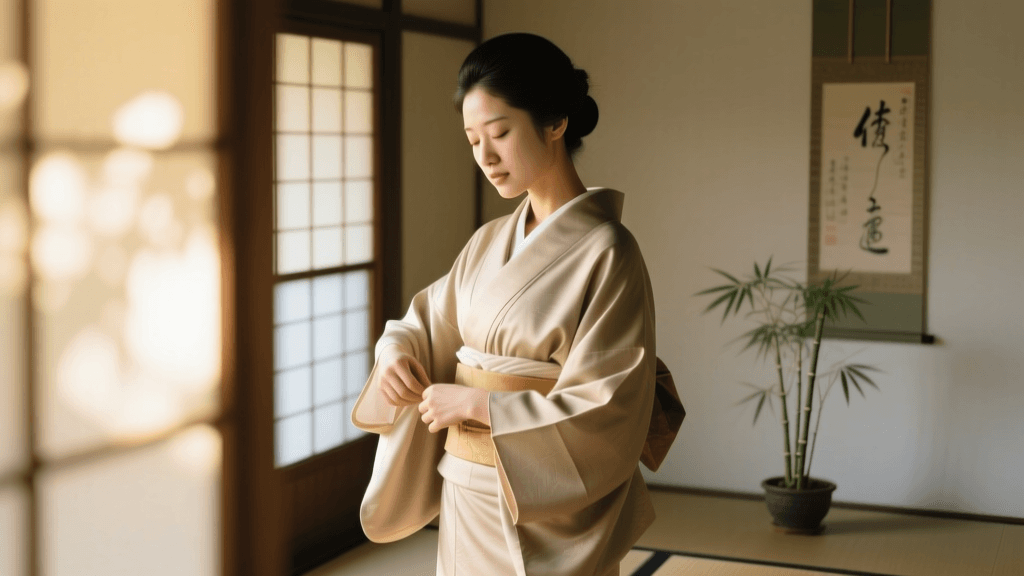
In an era dominated by smart textiles and automated fast-fashion, a profound counter-movement has taken root in the global wellness community. As of 2026, the intersection of traditional Japanese garment care and Zen spirituality has emerged as a premier practice for sensory grounding. This practice is known as mindful kitsuke—the art of dressing in a kimono not merely as a fashion statement, but as a deliberate, moving meditation. By transforming the intricate layers of traditional Japanese clothing into a tool for mindfulness, practitioners are finding a sanctuary of calm in the physical weight and tactile richness of woven silk and hemp.
The Philosophy of Ma and the Physical Body
To understand mindful kitsuke, one must first understand the Japanese aesthetic concept of Ma (negative space). In Western tailoring, garments are constructed to hug and accentuate the contours of the body. The kimono, conversely, is a flat, two-dimensional canvas that only gains its three-dimensional form when wrapped around the human figure. The space between the body and the fabric—the Ma—requires intense physical awareness to navigate.
According to the Victoria and Albert Museum, the kimono's T-shaped structure forces the wearer to become acutely aware of their posture, center of gravity, and spatial presence. When approached as a Zen practice, the act of folding, wrapping, and tying the garment becomes a physical manifestation of mental alignment. You are not just putting on clothes; you are constructing a mindful architecture around your physical form.
A 2026 Guide to Meditative Kitsuke
Modern wellness retreats in Kyoto and Kamakura now frequently incorporate kitsuke into their morning routines, pairing the physical act of dressing with established breathwork techniques. Below is a step-by-step guide to transforming your dressing routine into a grounding meditation.
Step 1: Centering with the Hadajuban (Skin Layer)
Begin in a seated seiza position. Hold the hadajuban (the innermost cotton or silk undergarment) and take three deep, diaphragmatic breaths. As you slip your arms through the sleeves, focus entirely on the sensation of the fabric against your skin. This initial layer represents your boundary with the outside world. Acknowledge the transition from a state of rest to a state of intentional presence.
Step 2: Aligning the Spine with the Eri (Collar)
When donning the nagajuban (under-kimono) and the outer kimono, the alignment of the eri (collar) is paramount. Traditional aesthetics dictate that the back of the collar should be pulled down to expose the nape of the neck. Use this adjustment as a cue for spinal alignment. As you pull the collar back, simultaneously lengthen your spine, tuck your chin slightly, and roll your shoulders down. This physical adjustment naturally opens the chest, facilitating deeper breathing and mirroring the upright posture required in zazen (seated Zen meditation).
Step 3: The Obi as an Anchor
The obi (sash) is the structural anchor of the kimono, but in mindful kitsuke, it serves as a somatic anchor for the nervous system. The deep, even pressure of a properly tied obi provides proprioceptive feedback similar to a weighted blanket, which neurobiologists recognize as a trigger for parasympathetic nervous system activation. As you wrap the koshihimo (waist ties) and the obi around your core, synchronize the tightening with your exhales. Inhale to create space, exhale to secure the knot. This rhythmic binding grounds your energy in your hara (the physical and spiritual center of gravity located just below the navel).
Selecting Grounding Textiles for Practice
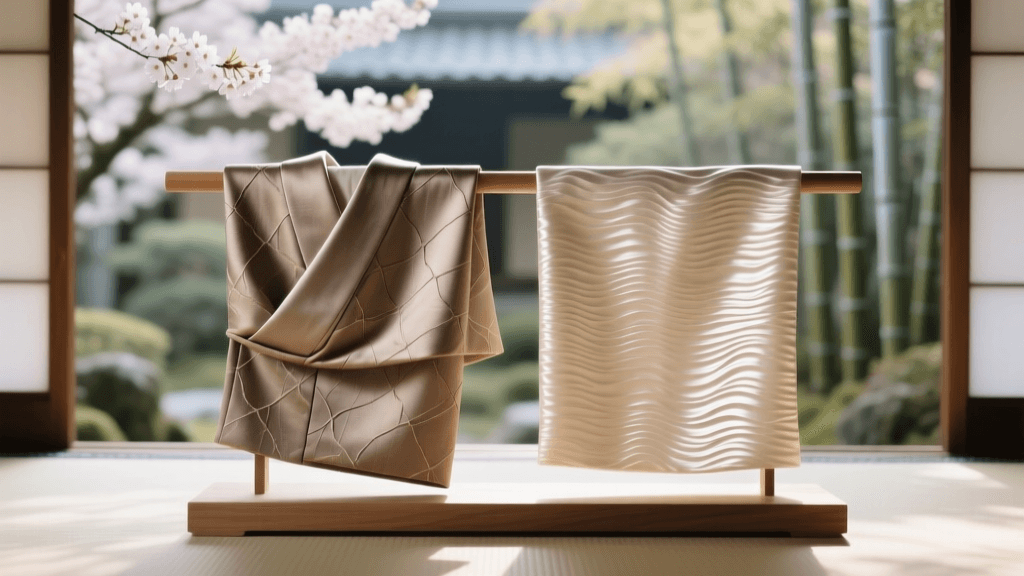
The sensory experience of mindful dressing is heavily dependent on textile selection. In 2026, practitioners are moving away from highly processed synthetic blends in favor of heritage, artisanal textiles that offer rich tactile feedback. The table below outlines the best fabrics for meditative grounding.
| Fabric Type | Japanese Name | Tactile Profile | Meditative Benefit |
|---|---|---|---|
| Pongee Silk | Tsumugi | Nubby, matte, structured, and slightly stiff. | Provides deep pressure grounding and high tactile friction; ideal for intense focus and centering. |
| Hemp / Linen | Asa | Crisp, cool, highly textured, and breathable. | Enhances sharp sensory awareness and temperature regulation; promotes alertness during morning meditation. |
| Crepe Silk | Chirimen | Soft, fluid, heavy draping with a pebbled surface. | Encourages physical yielding and fluidity; aids in emotional release and gentle, flowing movement. |
The Ritual of Garment Care: Mushiboshi
Mindfulness in traditional Japanese clothing extends far beyond the act of wearing it; it encompasses the stewardship of the garment itself. One of the most profound meditative rituals in the kimono lifecycle is mushiboshi (insect airing). Traditionally performed during the dry, crisp days of late autumn, this practice involves carefully unpacking silk kimono from tansu (wooden chests), airing them out, and inspecting them for damage.
In a modern context, mushiboshi is a powerful exercise in impermanence and gratitude. As you unfold garments that may have been worn by previous generations, you are confronted with the passage of time. The meticulous brushing of the silk, the folding along exact geometric lines, and the placement of natural camphor or cedar blocks require a quiet, singular focus. It is a practice of honoring the labor of the weavers, dyers, and artisans who brought the textile into existence. As noted by mindfulness experts at Mindful.org, engaging in repetitive, purposeful manual tasks is a highly effective way to anchor the wandering mind and reduce cognitive fatigue.
Integrating Kimono into Modern Zen Retreats
The integration of traditional dress into spiritual practice is not merely a historical footnote; it is a thriving, evolving discipline in 2026. According to the Japan National Tourism Organization, there has been a significant surge in 'slow-cultural' tourism, where international visitors seek immersive, multi-day experiences rather than superficial sightseeing.
Several prominent Zen temples in the Kansai region now offer specialized kitsuke and meditation retreats. These programs strip away the performative, highly stylized rules of modern kimono schools and return to the garment's utilitarian and spiritual roots. Participants spend hours in silence, learning to fold, tie, and move in the garment, ultimately wearing it during evening zazen sessions. The restriction of movement imposed by the lower hem of the kimono naturally enforces a shorter, more deliberate walking stride, turning the simple act of moving from the meditation hall to the tea room into a walking meditation (kinhin).
'The kimono does not merely clothe the body; it disciplines the mind. When you respect the geometry of the fabric, you learn to respect the boundaries of your own spirit.' — Teaching from a contemporary Kyoto Zen textile workshop.
Conclusion: The Garment as a Mirror
As we navigate the hyper-connected, fast-paced reality of 2026, the ancient practice of mindful kitsuke offers a vital antidote to digital dissociation. By treating the kimono not as a costume, but as a meditative tool, we reclaim our physical presence. The rustle of chirimen silk, the firm embrace of the obi, and the quiet ritual of folding the garment back into its tansu all serve to anchor us in the present moment. In the end, the art of mindful dressing teaches us that true elegance is not found in how we are perceived by others, but in how deeply we inhabit our own bodies.