Mindful Kitsuke: Kimono Dressing as Zen Meditation in 2026
The Intersection of Zen and Traditional Japanese Garments
In the landscape of 2026 wellness and spiritual tourism, a profound shift has occurred. As digital fatigue reaches unprecedented levels, practitioners and seekers are turning away from screen-based mindfulness apps and toward embodied, analog traditions. Among the most transformative of these is the intersection of traditional Japanese garments and Zen spirituality. The act of wearing a kimono—specifically the meticulous process of kitsuke (dressing)—is no longer viewed merely as a sartorial requirement for tea ceremonies or festivals. Instead, it is widely recognized in modern Zen retreats across Kyoto and Kamakura as a powerful form of moving meditation.
Zen Buddhism emphasizes direct experience, presence, and the dissolution of the ego through mundane actions. According to the Stanford Encyclopedia of Philosophy, Zen practice permeates every aspect of daily life, transforming ordinary activities like sweeping, cooking, and dressing into sacred rituals of awareness. When a practitioner engages in mindful dressing, the garment becomes a boundary between the chaotic external world and the inner sanctum of the mind. The fabric is not just a covering; it is a tactile anchor that grounds the wearer in the present moment.
Kitsuke: The Choreography of Presence
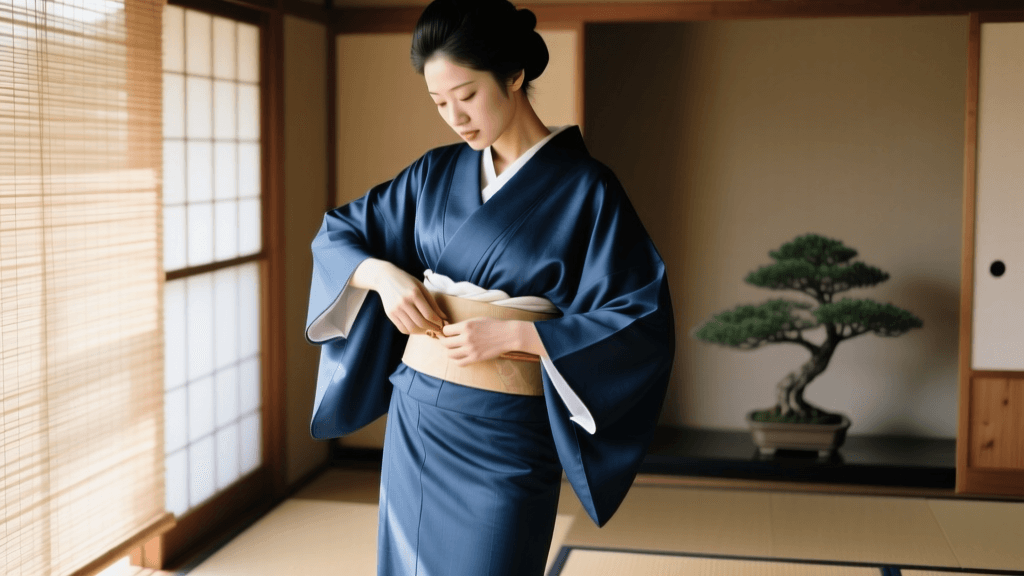
The art of kitsuke requires immense precision, patience, and physical awareness. Unlike Western clothing, which is often tailored to the exact contours of the body and fastened with rigid buttons or zippers, the kimono is constructed from straight bolts of fabric. It is the wearer who must sculpt the garment to their form. The Victoria and Albert Museum notes in their extensive guide to the kimono that this straight-line construction requires the wearer to actively shape the fabric, creating a deeply interactive relationship between body and textile.
In a Zen context, this shaping process is synchronized with the breath. As you fold the front panels, ensuring the left side overlaps the right (a strict rule, as right-over-left is reserved for dressing the deceased), you are practicing ichigo ichie—the concept of "one time, one meeting." Every fold is an acknowledgment of the present moment. The tying of the koshi-himo (waist ties) requires a firm but gentle tension, mirroring the Zen approach to the mind: holding it with enough discipline to maintain focus, but with enough softness to allow for natural flow and breath.
The 2026 Zen Retreat Wardrobe: What Practitioners Wear Today
While the formal silk kimono is reserved for special ceremonies, modern Zen retreats in 2026 prioritize garments that facilitate both deep meditation and physical labor (samu). The contemporary retreat wardrobe balances historical authenticity with sustainable, breathable textiles suited for long hours of zazen (seated meditation).
| Garment Type | Primary Use in Zen Practice | Material (2026 Standards) | Avg. Cost (USD) |
|---|---|---|---|
| Samue | Physical labor (Samu) & seated meditation | Organic Wajima Hemp / Cotton Blends | $120 - $280 |
| Juban | Undergarment for moisture & skin grounding | Ojiya-chijimi (Crepe Linen) | $85 - $190 |
| Yukata | Summer retreats & post-bath mindfulness | Indigo-dyed Iyo Kasuri Cotton | $95 - $220 |
| Kesa | Formal teaching & ceremonial monk robes | Recycled Silk / Upcycled Brocade | $350 - $900 |
The samue, originally the work clothing of Zen monks, has become the quintessential uniform for modern lay practitioners. Its loose, two-piece design allows for unrestricted blood flow during long meditation sits, while the natural hemp and cotton blends regulate body temperature in unheated temple halls. Meanwhile, the kesa—the traditional Buddhist robe worn over the shoulder—remains a potent symbol of spiritual lineage, with many 2026 monasteries emphasizing sustainability by crafting them from upcycled vintage silks.
The Sensory Experience: Textiles that Ground the Mind
Mindful dressing is inherently sensory. The textures, weights, and even the scents of traditional Japanese textiles play a crucial role in calming the nervous system. In 2026, there is a massive resurgence in the use of Ojiya-chijimi, a highly textured crepe linen from Niigata Prefecture. The distinctive bumpy texture of this fabric, created by tightly twisting the weft threads, provides a subtle, continuous tactile stimulation against the skin. This gentle friction acts as a somatic anchor, pulling the wandering mind back to the physical body during meditation.
Similarly, the scent of natural indigo dye (aizome) used in many yukata and samue is prized for its grounding properties. The fermentation process of traditional Japanese indigo produces a distinct, earthy aroma that has been shown to lower heart rates and promote a state of relaxed alertness. When a practitioner wraps themselves in an indigo-dyed garment, they are quite literally enveloping themselves in a botanical medicine that supports the meditative state.
A 15-Minute Mindful Kitsuke Routine for Home Practice
You do not need to be in a Kyoto monastery to experience the grounding benefits of mindful dressing. By adapting the principles of kitsuke, you can transform your morning routine into a daily Zen practice. Here is a structured 15-minute routine utilizing a lightweight cotton yukata or a simple samue set.
Phase 1: Grounding and Intention (3 Minutes)
Before touching the fabric, sit in seiza (kneeling) or a comfortable cross-legged position. Close your eyes and take ten deep, diaphragmatic breaths. Feel the weight of your body pressing into the floor. Acknowledge the garment resting in front of you not as an object to be consumed, but as a partner in your daily practice. Set a clear intention for the day, such as "I will move with compassion" or "I will remain present in my actions."
Phase 2: The Foundation Layer (4 Minutes)
Begin by putting on your undergarment or juban. As the fabric touches your skin, pay close attention to the temperature and texture. Smooth the fabric down your arms and torso with slow, deliberate strokes. This is a moment of self-care and bodily awareness. Ensure there are no wrinkles against your skin, as physical discomfort will become a distraction during your day. The smoothing of the fabric represents the smoothing of a chaotic mind.
Phase 3: The Main Wrap and Alignment (5 Minutes)
Slide your arms into the main garment. Bring the right panel across your body first, followed by the left panel over the right. As you pull the fabric taut, synchronize the pull with an exhalation. Stand before a mirror, not to judge your appearance, but to check your physical alignment. Are your shoulders relaxed? Is your spine straight? The straight seams of the garment should run parallel to the natural lines of your body, serving as a visual guide for your posture.
Phase 4: Securing the Hara (3 Minutes)
Take your obi (sash) or waist tie. Wrap it around your center, specifically focusing on the hara—the physical and spiritual center of gravity located about two inches below the navel. As you tie the knot, imagine you are securing your focus and energy for the day ahead. The knot should be firm enough to provide a sense of containment and support, but loose enough to allow for deep, unrestricted belly breathing. Bow slightly to your reflection, acknowledging the completion of the ritual, and step into your day with mindful intention.
Conclusion: The Garment as a Spiritual Anchor
As we navigate the complexities of 2026, the ancient wisdom embedded in Asian traditional garments offers a profound antidote to modern disembodiment. The practice of mindful kitsuke teaches us that enlightenment is not found solely in the stillness of the meditation cushion, but in the careful, deliberate actions of everyday life. By treating the act of dressing as a sacred ritual, we weave mindfulness into the very fabric of our existence, ensuring that every step we take is grounded, present, and deeply aware.