Mindful Kitsuke: Kimono Dressing for Wellness in 2026
The Intersection of Kitsuke and Modern Mindfulness
In the hyper-connected, fast-paced landscape of 2026, the global wellness community is increasingly turning toward ancient, tactile practices to combat digital burnout. Among the most profound of these is kitsuke—the traditional Japanese art of wearing a kimono. Far from being a mere sartorial choice, kitsuke is a deliberate, somatic ritual that bridges the gap between slow fashion, mindfulness, and holistic well-being. As we navigate an era dominated by ephemeral trends and screen fatigue, the methodical process of wrapping oneself in layers of silk and cotton offers a powerful grounding exercise.
The psychological concept of "enclothed cognition" suggests that the clothes we wear significantly influence our cognitive processes and emotional states. When you engage in the 45-minute ritual of kitsuke, you are not just getting dressed; you are architecting a sanctuary around your body. The American Psychological Association notes that mindfulness practices involving focused, repetitive physical movements can significantly reduce cortisol levels and enhance emotional regulation. Kitsuke demands absolute presence. You cannot rush the alignment of the se-cho (the back seam) or the precise folding of the ohashori (the waist fold) without compromising the garment's structure. This forced deceleration acts as a moving meditation, pulling the practitioner out of anxious future-tripping and into the tactile reality of the present moment.
The Slow Fashion Philosophy Behind the Kimono
Beyond mental health, kitsuke is inherently aligned with the slow fashion movement, a vital component of environmental wellness. The United Nations Environment Programme (UNEP) continues to highlight the devastating ecological footprint of fast fashion in 2026, urging consumers toward circular, long-lasting garment lifecycles. The kimono is the historical epitome of circular fashion. Traditionally, kimono are constructed from single bolts of fabric (tanmono) using straight-line cuts, meaning they can be entirely disassembled, washed, re-dyed, and sewn back together.
When you invest in a vintage or antique kimono, you are participating in a centuries-old recycling system. There is no "waste" in a kimono; even frayed edges can be turned into zori (sandals) or patchwork textiles. By choosing to wear and care for vintage silk rather than purchasing newly manufactured synthetic garments, practitioners of kitsuke actively reduce their carbon footprint, aligning their personal wellness with planetary health.
Step-by-Step Mindful Dressing: A Somatic Ritual
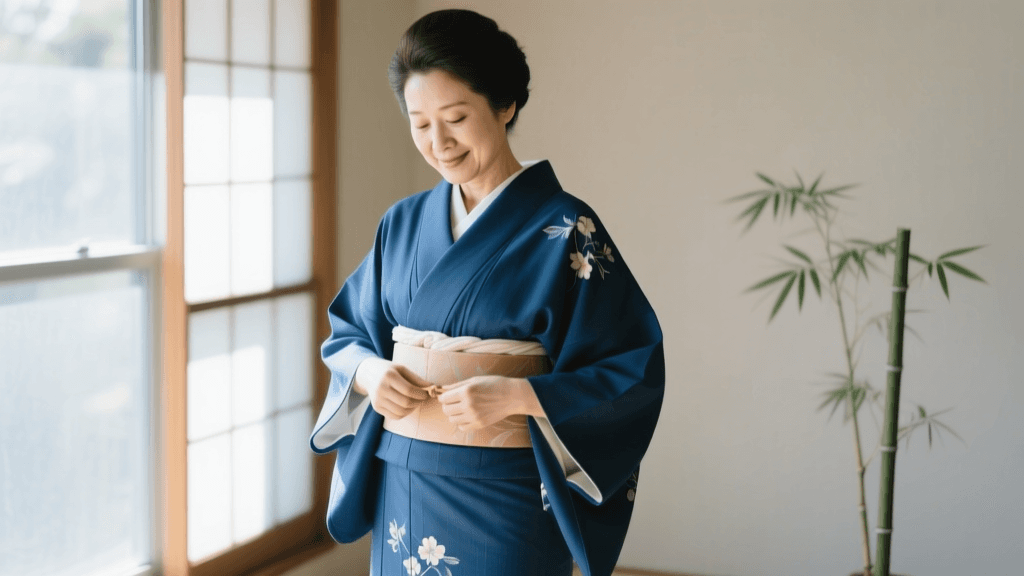
To understand kitsuke as a wellness practice, one must examine the physical sensations involved in the dressing process. The ritual begins with the tabi, the split-toe socks. Pulling on the tabi and securing the kohaze (metal clasps) requires fine motor skills and draws immediate awareness to the foundation of the body—the feet. Next comes the hadajuban and nagajuban (undergarments), which create a protective, breathable barrier between the skin and the precious outer silk.
The wrapping of the main kimono involves deep, rhythmic breathwork. As you pull the koshihimo (the long, narrow cotton ties) tightly around your waist and hips to secure the garment, you are essentially applying deep pressure therapy. Much like a weighted blanket, the firm binding of the koshihimo and the subsequent datejime (wide under-belts) provides proprioceptive input that calms the central nervous system. The final layer, the obi, is a heavy, woven sash that requires core engagement to tie. The physical weight of the obi on the lower back encourages an upright, dignified posture, which somatic therapists recognize as a physical cue for confidence and emotional resilience.
Comparison: Fast Fashion vs. Mindful Kitsuke
| Wellness Aspect | Fast Fashion Dressing (2026 Norm) | Mindful Kitsuke Ritual |
|---|---|---|
| Time Investment | 3–5 minutes; rushed, often multitasked | 30–45 minutes; dedicated, single-task focus |
| Cognitive State | Autopilot; mind wanders to daily stressors | Flow state; deep presence and spatial awareness |
| Tactile Feedback | Synthetic blends; low sensory engagement | Natural silk, cotton, and wool; high sensory grounding |
| Posture & Somatics | Slouching; no physical realignment required | Core engagement; forced upright spinal alignment |
| Environmental Impact | High waste; microplastic shedding | Circular; zero-waste pattern cutting and vintage reuse |
2026 Wellness Retreats and Immersive Workshops
Recognizing these profound benefits, the wellness tourism sector in 2026 has begun integrating kitsuke into holistic retreats. According to the Global Wellness Institute, cultural and heritage wellness tourism is one of the fastest-growing sectors, as travelers seek authentic, transformative experiences over passive spa treatments. In Kyoto and Kanazawa, boutique machiya (traditional townhouse) retreats now offer "Silent Kitsuke" mornings. Guests spend two hours in digital silence, guided by a kitsuke-shitsu (dressing master), followed by a mindful tea ceremony and walking meditation through moss gardens. These retreats frame the kimono not as a costume, but as a wearable meditation tool.
Building Your Own Mindful Kitsuke Practice at Home
How can you incorporate mindful kitsuke into your own wellness routine this year? You do not need to live in Japan or possess a $5,000 silk garment to experience the somatic benefits of this practice. Here is a practical guide to building your own slow fashion wellness ritual at home in 2026:
- Source a Vintage Garment: The 2026 online market for vintage kimono is thriving and highly accessible. Look for a casual wool or polyester-blend kimono (often priced between $40 and $90 on specialized vintage export sites) for everyday practice. Wool is excellent for beginners as it is forgiving, breathable, and provides excellent tactile feedback.
- Curate a Sensory Environment: Dedicate a 45-minute window where all notifications are disabled. Play low-frequency ambient soundscapes or traditional shakuhachi (bamboo flute) music. Light a subtle, natural incense like kyara or sandalwood to engage the olfactory senses, which are directly linked to the brain's emotional centers.
- Practice the "Seam Alignment" Meditation: The most crucial step in kitsuke is aligning the se-cho (the center back seam) perfectly with your spine. Use this moment to visualize your own internal alignment. As you smooth the fabric down your back, consciously release tension from your shoulders and cervical spine.
- Embrace the Imperfection: Modern wellness is about self-compassion. Your first few attempts at tying the bunko (a standard box-shaped obi knot) will likely be asymmetrical. Approach these "failures" with the Japanese concept of wabi-sabi—finding beauty in imperfection and the transience of the learning process.
Conclusion: Wrapping the Mind and Body
Ultimately, the kimono is a masterclass in intentional living. In a world that constantly demands we move faster, consume more, and discard without thought, the act of meticulously wrapping oneself in a garment that has survived generations is a radical act of self-care. Mindful kitsuke reminds us that true well-being is not found in a quick fix, but in the slow, deliberate, and beautiful rituals we choose to weave into our daily lives. By embracing the kimono as a tool for mindfulness, we honor both the artisans of the past and our own mental health in the present.