Mindful Kimono Kitsuke: Slow Fashion Wellness in 2026
The Antidote to 2026's Hyper-Fast Fashion
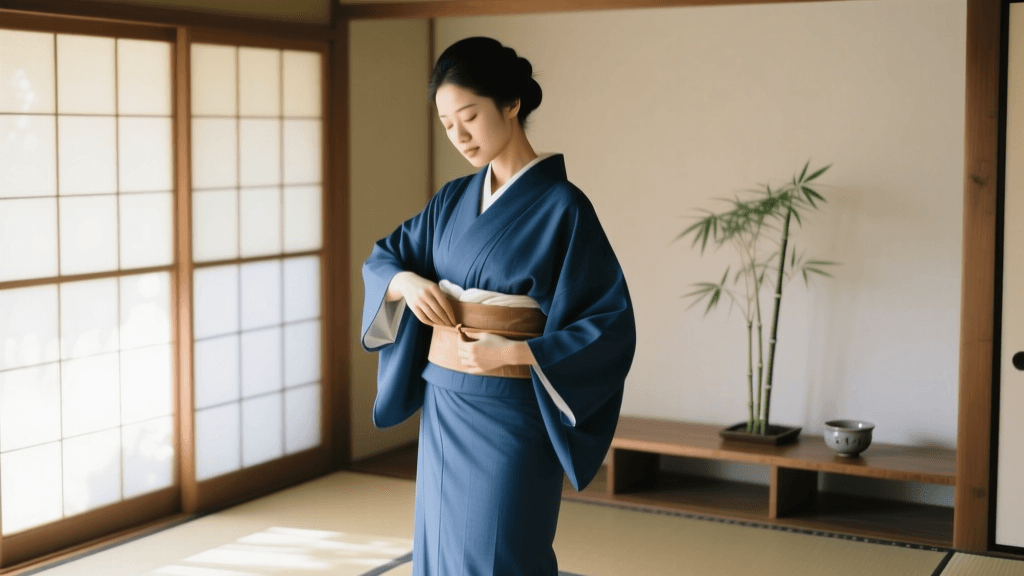
In an era dominated by AI-generated micro-trends and automated wardrobe algorithms, the traditional Japanese art of kitsuke (kimono dressing) has emerged as a powerful antidote to digital fatigue. As we navigate the cultural landscape of 2026, a growing movement of wellness advocates and slow fashion enthusiasts are turning to the kimono not merely as a garment, but as a profound tool for mindfulness and mental wellbeing. Unlike the rushed, thoughtless act of pulling on mass-produced fast fashion, kitsuke is a deliberate, multi-step ritual that demands presence, patience, and a deep physical connection to your clothing.
The philosophy of slow fashion aligns seamlessly with the Japanese concept of ichigo ichie (treasuring the unrepeatable moment). When you engage in mindful kitsuke, you are participating in a tactile meditation. The heavy drape of vintage Tsumugi silk, the crisp texture of Iyo-kasuri cotton, and the precise geometry of the Obi sash all serve to anchor your awareness in the present moment, effectively lowering cortisol levels and promoting a state of flow.
The Neuroscience of Tactile Mindfulness
Why does dressing in a kimono feel so grounding? The answer lies in the intersection of fine motor skills and sensory processing. According to the American Psychological Association, mindfulness practices that involve focused attention on physical sensations can significantly reduce activity in the brain's default mode network (DMN), the area responsible for mind-wandering and anxiety. Kitsuke requires you to align seams, measure folds, and tie complex knots, which forces the brain to concentrate entirely on the physical task at hand.
Furthermore, the tactile feedback of natural fibers stimulates the parasympathetic nervous system. The Greater Good Science Center at UC Berkeley notes that engaging the senses in a structured, intentional way cultivates emotional regulation. When you feel the smooth, cool slide of a silk Nagajuban (undergarment) against your skin, or the firm, supportive pressure of the Datejime (under-sash) around your core, you are engaging in a form of deep pressure therapy that naturally calms the nervous system.
Designing Your Mindful Kitsuke Sanctuary
To fully embrace kitsuke as a wellness practice in 2026, you must curate an environment that encourages slowness. You do not need a traditional Japanese estate; a dedicated corner of your home is sufficient. Here are the actionable specifications for creating a mindful dressing sanctuary:
- Space Dimensions: Clear a minimum area of 3x3 meters (approx. 10x10 feet). This allows for full arm extension and the sweeping movements required to adjust the kimono's hem without obstruction.
- Flooring: Opt for natural cork or woven rush (tatami-style) mats. These materials provide slight cushioning for your joints during the kneeling steps of the ritual and add an earthy, grounding scent to the room.
- Mirror Specifications: Invest in a frameless, full-length mirror measuring at least 180cm tall and 70cm wide. It must be mounted flush to the wall or secured on a heavy wooden stand to prevent wobbling when you lean in to adjust your collar.
- Lighting: Harsh overhead lighting disrupts the meditative atmosphere. Install dimmable, warm LED panels set to 2700K (warm white) to mimic the soft, diffused light of traditional Shoji paper screens.
- 2026 Setup Costs: A high-quality, wellness-focused dressing space can be assembled for between $450 and $800, depending on whether you source vintage floor mats or custom-cut natural cork.
The 7-Step Mindful Kitsuke Ritual
Transform your daily dressing routine into a moving meditation by following this 7-step mindful kitsuke protocol. Pair each step with intentional breathwork.
1. The Hadajuban (Skin Garment)
Begin by putting on the Hadajuban, the thin cotton undergarment worn directly against the skin. As you slip your arms through the sleeves, take three deep, diaphragmatic breaths. Acknowledge the boundary between your body and the outside world.
2. The Nagajuban (Under-Kimono)
Slide into the Nagajuban. Focus entirely on aligning the eri (collar) so that it sits perfectly symmetrical at the base of your throat. This step requires visual focus and fine motor adjustment, pulling your mind away from daily stressors and into geometric precision.
3. The Kimono and the Back Seam
Drape the main kimono over your shoulders. Reach behind you and locate the se (the center back seam). Align this seam perfectly with your spine. In Japanese aesthetics, the centered back seam represents integrity and uprightness. Feel your posture naturally correct itself as you align the fabric.
4. Koshihimo (Hip Cords) and Mindful Tension
Wrap the first Koshihimo around your hips. This is where you practice mindful tension. The cord must be tight enough to hold the heavy silk, but loose enough to allow deep breathing. This physical negotiation teaches the brain to find the balance between holding on and letting go.
5. The Ohashori (The Waist Fold)
Create the Ohashori, the horizontal fold at the waist that adjusts the kimono's length. Embrace the concept of wabi-sabi (finding beauty in imperfection). If the fold is slightly uneven, do not let frustration arise. Simply smooth the fabric with your palms, accepting the organic nature of the textile.
6. The Obi (The Focal Sash)
Wrapping the Obi is the most physically demanding and meditative step. As you wind the 4-meter length of brocade or woven silk around your core, engage your abdominal muscles. Practice the 4-7-8 breathing technique (inhale for 4 seconds, hold for 7, exhale for 8) to maintain calm while managing the stiff fabric.
7. Obijime and the Final Seal
Tie the Obijime (the decorative cord) over the Obi. This final knot acts as a seal on your practice. Take one last deep breath, look in the mirror, and set a positive intention for your day before stepping out of your sanctuary.
Wellness Metrics: Fast Fashion vs. Mindful Kitsuke
How does the traditional kimono ritual compare to modern dressing habits? The data below highlights the physiological and psychological shifts that occur when transitioning to slow fashion practices in 2026.
| Wellness Metric | Standard Fast Fashion Routine | Mindful Kitsuke Ritual |
|---|---|---|
| Average Time Investment | 3 to 5 minutes | 30 to 45 minutes |
| Heart Rate Variability (HRV) | Unchanged or decreased (rushed) | Increased by 12-18% (calm focus) |
| Cognitive State | Default Mode Network (mind-wandering) | Flow State (task-positive network) |
| Garment Connection | Disposable / Utilitarian | Heirloom / Deeply Valued |
| Morning Cortisol Spike | Maintained | Significantly Blunted |
Embracing Circular Slow Fashion in 2026
Participating in the kimono wellness movement inherently supports the circular economy. Rather than purchasing newly manufactured, resource-intensive garments, the modern kitsuke community overwhelmingly relies on vintage and upcycled textiles. According to the Ellen MacArthur Foundation, extending the life of a garment by just nine months reduces its carbon, water, and waste footprints by around 20-30%. In the case of vintage kimonos, we are extending their lifespans by decades, if not centuries.
In 2026, sourcing authentic, high-quality vintage kimonos is easier and more transparent than ever. Online slow-fashion cooperatives and specialized Kyoto-based recyclers now provide detailed digital provenance reports, detailing the era, weaving technique, and material composition of each piece. A beautiful, everyday-grade vintage Komon (patterned kimono) can be acquired for $80 to $150, while a formal, hand-painted Homongi might range from $400 to $1,200. By investing in these recycled masterpieces, you are not only safeguarding your mental health through mindful practice but also actively participating in the preservation of global textile heritage and environmental sustainability.
Ultimately, the kimono is more than a beautiful artifact of Asian tradition; it is a wearable sanctuary. By reclaiming the art of kitsuke, we carve out a daily space for silence, intention, and profound wellbeing in an increasingly noisy world.