Top Hanfu Styles for Qigong & Meditation Practice 2026
The Intersection of Hanfu and Mindful Movement in 2026
In 2026, the global wellness movement has deeply intertwined with traditional cultural practices, giving rise to a specialized niche known as 'Mindful Guochao.' Practitioners of Qigong, Tai Chi, and traditional Chinese meditation are increasingly turning away from synthetic, mass-produced activewear. Instead, they are embracing authentic Hanfu (traditional Han Chinese clothing) to enhance their physical and spiritual routines. The right garment is not merely an aesthetic choice; it is a functional tool that facilitates deep diaphragmatic breathing, unrestricted meridian flow, and sensory grounding. This comprehensive guide explores the best Hanfu silhouettes, eco-friendly fabrics, and styling techniques optimized for wellness practices in 2026.
The Philosophy of Qi and Garment Flow
Traditional Chinese Medicine (TCM) emphasizes the smooth flow of Qi (vital energy) through the body's meridian system. Restrictive clothing, particularly tight waistbands and synthetic fabrics that trap heat, can stagnate this flow and disrupt the body's natural thermoregulation during deep meditation. According to Harvard Health Publishing, mindful movements like Tai Chi and Qigong rely heavily on relaxed muscles and deep, unhindered breathing to lower stress hormones and improve cardiovascular health. Hanfu, with its inherent emphasis on flat-cutting, wide sleeves, and flowing drapes, perfectly aligns with these physiological requirements. The traditional cross-collar (Jiaoling) and sash-tied waists allow practitioners to customize the fit, ensuring that the lower Dantian (the body's energy center located just below the navel) remains warm and uncompressed.
Top Hanfu Silhouettes for Mindful Movement
Not all Hanfu styles are suited for physical exertion or prolonged stillness. Ceremonial garments with heavy embroidery or restrictive layering are best reserved for festivals. For wellness practices, practitioners in 2026 favor specific historical cuts that prioritize mobility and comfort.
The Daopao (Taoist Robe) for Dynamic Qigong
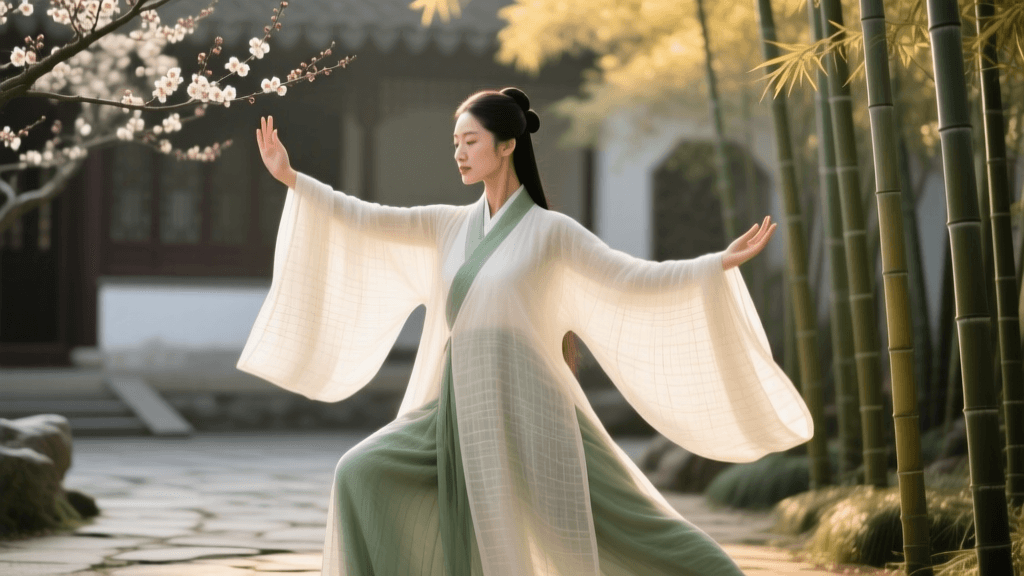
The Daopao is a wide-sleeved, full-length robe with side slits that allow for maximum leg mobility. It is the gold standard for dynamic Qigong forms like Ba Duan Jin (The Eight Brocades). The generous underarm gussets and bias-cut hems ensure that when you raise your arms to 'Support the Heavens,' the fabric moves with you rather than pulling at the shoulders. In 2026, modern wellness-focused tailors have introduced hidden inner ties to the Daopao, preventing the front panels from falling open during deep forward bends while maintaining the traditional outer silhouette.
The Shenyi (Deep Robe) for Seated Meditation
For seated mindfulness and Zen meditation, the Shenyi is unparalleled. This one-piece garment connects the top and bottom, providing continuous coverage that is crucial for maintaining body heat during prolonged stillness. The National Center for Complementary and Integrative Health (NCCIH) notes that maintaining a comfortable, stable body temperature is essential for achieving deep meditative states. The Shenyi's structured yet forgiving drape naturally encourages an upright spinal posture, while its wide skirt comfortably covers the crossed legs, protecting the knees and lower back from drafts in meditation halls or outdoor pavilions.
Songku (Wide-Leg Trousers) for Standing Meditation
Zhan Zhuang (Standing Like a Tree) requires immense lower-body stability and groundedness. The Songku, a style of wide-leg trousers popularized during the Song Dynasty, features a high, pleated waist and voluminous legs that taper slightly at the ankle. This cut allows the hips to open fully and the knees to track properly without fabric resistance. When paired with a simple, loose-fitting cross-collar tunic (Shan), the Songku provides the perfect balance of modesty, breathability, and structural support for standing Qigong.
Comparison Chart: Hanfu for Wellness Practices
| Practice | Recommended Silhouette | Best 2026 Fabric | Key Functional Feature |
|---|---|---|---|
| Ba Duan Jin (8 Brocades) | Daopao (Taoist Robe) | Organic Ramie Blend | Wide sleeves for arm extensions; side slits for lunges |
| Zhan Zhuang (Standing) | Songku (Wide Trousers) | Heavyweight Washed Linen | Grounded drape; unrestricted hip and knee mobility |
| Seated Mindfulness | Shenyi (Deep Robe) | Peace Silk (Ahimsa) | Full knee coverage; retains warmth at the lower Dantian |
| Outdoor Morning Tai Chi | Yisan (Pleated Skirt) + Shan | Hemp-Cotton Weave | Wind-resistant pleats; breathable upper layer |
2026 Fabric Innovations: Natural Fibers and Eco-Dyes
The year 2026 has seen a massive rejection of polyester and nylon in the wellness Hanfu market. Synthetic fabrics create static electricity, which TCM practitioners believe disrupts the body's bioelectric field, and they trap sweat against the skin, leading to post-practice chills. Today's practitioners demand natural, eco-friendly textiles that connect them to the earth.
Ramie and Summer Breathability
Ramie, often referred to as 'Chinese Linen,' is highly prized for summer outdoor Qigong. It possesses natural antibacterial properties and a high moisture-wicking capacity. Modern 2026 textile milling has softened the traditionally stiff ramie fiber through enzyme washing, resulting in a fabric that feels like worn cotton but retains the crisp, structural drape necessary for Hanfu silhouettes.
Peace Silk and Winter Grounding
For indoor winter meditation, Peace Silk (Ahimsa Silk) is the preferred choice. Unlike conventional silk, peace silk is harvested after the moth has naturally emerged from the cocoon, aligning with the non-harming (Ahimsa) philosophy central to meditation. As recognized by UNESCO's Intangible Cultural Heritage list, traditional Chinese sericulture has a rich history, and modern ethical adaptations allow practitioners to wear silk with a clear conscience. Peace silk provides exceptional temperature regulation, keeping the joints warm without causing overheating during intense breathwork.
Botanical Dyes for Sensory Healing
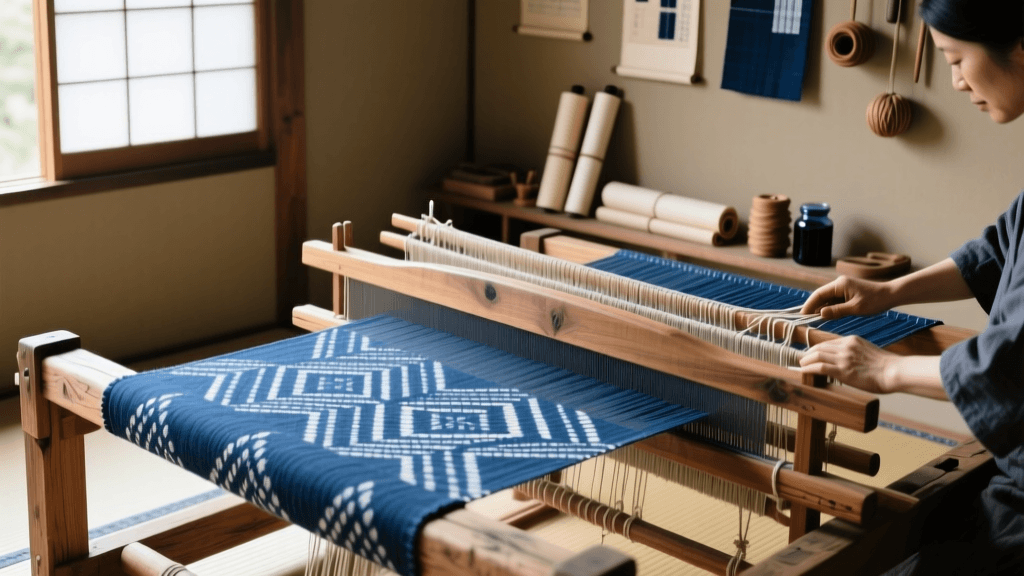
The wellness Hanfu market in 2026 is dominated by botanical dyes. Indigo-dyed garments are favored for their calming visual hue and the natural insect-repellent properties of the indigo plant. Madder root (producing soft terracottas) and tea-dyed fabrics (yielding earthy browns and creams) offer a muted, grounding color palette that minimizes visual distraction during meditation, helping the practitioner turn their focus inward.
Practical Guide: Building Your Wellness Hanfu Wardrobe
If you are transitioning your wellness wardrobe to incorporate traditional Chinese garments, here are actionable steps and considerations for 2026:
- Master the Sash Tie: Never tie your Hanfu sash directly over the navel or too tightly across the lower back. In TCM, the Mingmen (Gate of Life) point on the lower back must remain relaxed. Tie the sash at a moderate tension just above the hips, allowing two fingers to slide comfortably between the fabric and your skin to ensure unrestricted diaphragmatic breathing.
- Invest in Layering Pieces: Outdoor morning Qigong requires adaptability to shifting temperatures. Invest in a lightweight, sleeveless Bijia (vest) made of quilted organic cotton. This keeps the core and kidneys warm while leaving the arms completely free for meridian-opening stretches.
- Footwear Pairings: Traditional Hanfu is best experienced with flat, flexible footwear. In 2026, minimalist canvas Kung Fu shoes with natural rubber soles are the standard. They provide enough grip for outdoor park practice while allowing the toes to spread and grip the earth, enhancing balance during standing meditation.
- Budgeting for Quality: Authentic, natural-fiber Hanfu designed for wellness is an investment. Expect to pay between $80 and $150 USD for a high-quality, ethically dyed Ramie Daopao, and around $60 to $90 USD for a pair of heavyweight linen Songku. Avoid 'costume' shops; seek out specialized wellness-Hanfu ateliers that provide detailed fabric composition and dye-source transparency.
Conclusion
Integrating Hanfu into your Qigong and meditation practice is a profound way to honor the origins of these ancient arts while optimizing your physical comfort and energy flow. By selecting the appropriate silhouettes—like the flowing Daopao or the grounding Songku—and prioritizing natural, eco-friendly fabrics like ramie and peace silk, you create a wearable sanctuary. As the mindful movement community continues to grow in 2026, the fusion of traditional Chinese sartorial wisdom and modern wellness practices offers a holistic path to inner peace, proving that what we wear is just as vital as how we move.