Guizhou Miao Traditional Dress: Batik, Embroidery & Silver
The Wearable History Books of Guizhou
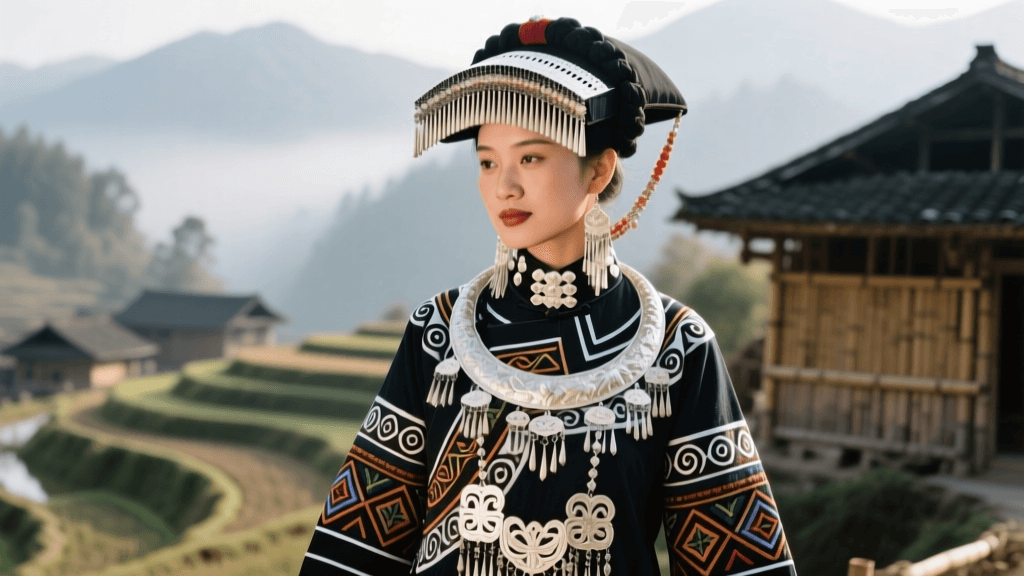
For the Miao people of China's southwestern Guizhou province, traditional clothing is far more than mere adornment; it is a profound historical archive. Historically lacking a widely used written language, the Miao encoded their migration stories, mythological beliefs, and clan identities into the very fabric of their garments. Today, the provincial dress of the Miao stands as one of the most intricate and visually striking textile traditions in Asia. According to the Victoria and Albert Museum's Asian textile archives, Miao textiles are celebrated globally for their astonishing density of embroidery and their complex, multi-layered construction. For collectors, cultural enthusiasts, and travelers, understanding the nuances of Miao regional folk dress requires a deep dive into their three primary sartorial pillars: indigo batik, mythological embroidery, and monumental silverwork.
Decoding Miao Indigo Batik (Laran)
The foundation of much of the Miao provincial dress is Laran, or wax-resist indigo batik. This painstaking process begins with the cultivation of Strobilanthes cusia, a specific variety of indigo-bearing plant native to the mountainous regions of Guizhou. The leaves are fermented in alkaline vats mixed with rice wine and ash to create a living dye bath. Artisans use a specialized brass tool called a ladao (a wax knife with a copper nib) to draw intricate geometric and floral patterns onto raw cotton using melted beeswax. The fabric is then submerged in the indigo vat repeatedly over several weeks. The wax resists the dye, and when the fabric is finally boiled to remove the wax, a striking white pattern is revealed against a deep, rich blue background.
Actionable Advice: Identifying Authentic Batik
As mass-produced, factory-printed imitations flood tourist markets in cities like Guiyang and Kaili, knowing how to identify authentic, handmade Miao batik is essential for collectors.
- The Smell Test: Authentic fermented indigo has a distinct, earthy, slightly fermented scent that lingers even after washing. Synthetic indigo smells sharply of chemicals or has no odor at all.
- The Ice Crackle Effect: During the dyeing process, the beeswax naturally cracks, allowing tiny veins of blue dye to seep into the white pattern. These "ice crackle" lines are random and organic. Factory-printed fakes often feature uniform, digitally replicated crackle patterns that look rigid and repetitive.
- The Reverse Side: Hand-drawn batik usually shows slight variations in wax penetration, meaning the pattern will be faintly visible but slightly softer on the reverse side of the cotton. Screen-printed fakes will have a stark white, completely un-dyed reverse side with sharp edges.
Regional Variations: A Comparative Guide
The Miao are not a monolith; they are divided into numerous sub-groups, often categorized by the style of their provincial dress. As highlighted by UNESCO's Intangible Cultural Heritage initiatives, preserving these distinct regional variations is vital to maintaining the cultural diversity of China's ethnic minorities. Below is a structured comparison of three major regional styles found in Guizhou.
| Region / Sub-group | Skirt Style & Measurements | Primary Motifs & Techniques | Silver Accessories | Best Time to Observe |
|---|---|---|---|---|
| Xijiang (Long Skirt Miao) | Pleated midi/maxi skirts (70-90 cm length), requiring up to 15 meters of fabric. | Flat-stitch embroidery featuring buffalo dragons and butterflies. Heavy use of silk thread. | Massive horn-shaped silver headdresses and multi-layered chest plates. | Miao New Year (Late Nov - Early Dec) |
| Danzhai (Short Skirt Miao)Micro-pleated mini skirts (15-20 cm length), worn over embroidered aprons and leggings. | Whip-stitch and seed-stitch embroidery. Motifs focus on local flora and the锦鸡 (Golden Pheasant). | Delicate silver hairpins, small combs, and lightweight bangles. | Lusheng Festival (Spring / Lunar New Year) | |
| Rongjiang (Baisha Miao) | Trousers paired with long, heavily embroidered wrap-around aprons (approx. 80 cm drop). | Tin-thread embroidery (wrapping cotton thread in thin tin foil) creating a metallic, textured relief. | Thick, twisted silver torque necklaces and heavy ear spools. | Sisters' Meal Festival (April) |
Mythological Embroidery: Stitching the Cosmos
Miao embroidery is renowned for its three-dimensional texture and vibrant, contrasting color palettes. Unlike Han Chinese embroidery, which often relies on painted outlines, Miao artisans stitch entirely from memory and imagination. The motifs are deeply rooted in animistic beliefs and creation myths. The most prominent motif is the "Butterfly Mother" (Mae Bangx), who, according to Miao cosmology, hatched the twelve eggs that gave birth to humans, dragons, elephants, and tigers. Another common motif is the "Buffalo Dragon," a benevolent creature with the horns of a water buffalo and the body of a serpent, symbolizing agricultural prosperity and rain. For textile collectors, pieces featuring the couching stitch (where a thick, brightly colored yarn is laid on the fabric surface and stitched down with a finer, contrasting thread) are highly prized for their durability and sculptural quality.
The Weight of Tradition: Miao Silverwork
In Miao culture, silver is believed to possess the spiritual power to ward off evil spirits, illuminate the dark, and signify familial wealth and social status. During major festivals, a Miao woman may wear a silver ensemble weighing anywhere from 5 to 10 kilograms. The craftsmanship involves complex silversmithing techniques, including filigree, repoussé, and granulation, often passed down through specialized patriarchal lineages.
Actionable Buying Guide: Sourcing Authentic Silver
If you are traveling to Guizhou to purchase Miao silver jewelry, understanding the market dynamics, measurements, and purity standards is crucial to avoid overpaying for alloys.
- Purity Standards: Traditional Miao silver is typically 999 pure silver (fine silver), which is very soft and malleable, allowing for intricate hand-hammering. Modern commercial pieces may use 925 sterling silver for added durability. Beware of "Tibetan Silver" or "Miao Silver" sold in cheap tourist stalls; these are often copper-nickel-zinc alloys containing zero actual silver and potentially harmful levels of lead.
- Costs and Pricing: In Guizhou's silver markets (such as those in Kaili or Xijiang), authentic silver is priced by weight plus a craftsmanship fee. Expect to pay between 15 to 25 RMB per gram for the raw silver value. A solid, hand-hammered 999 silver bangle weighing 80 grams should cost roughly 1,200 to 2,000 RMB ($165 - $280 USD), depending on the complexity of the filigree work.
- The Sound Test: Pure 999 silver does not produce a high-pitched, sustained "ring" when tapped. It produces a dull, soft thud. If a large bangle rings like a bell, it likely contains a high percentage of copper or brass.
- Measurements for Wearability: While festival headdresses are spectacular, they are impractical for daily wear. For actionable, everyday purchases, look for silver hairpins (15-20 cm in length, weighing 30-50g) or twisted torque necklaces (14-16 cm diameter, weighing 100-150g). These pieces integrate beautifully into modern wardrobes while retaining their traditional craftsmanship.
Practical Sourcing and Travel Guide
To source authentic garments and witness the creation of these provincial dresses, timing and location are everything. While Xijiang Thousand Households Miao Village is the most famous destination, it has become highly commercialized. For serious collectors and cultural enthusiasts, reports from China Daily's Heritage section frequently highlight smaller, less commercialized hubs where traditional crafts remain a daily necessity rather than a tourist performance.
Where to Go
- Kaili City: The capital of the Qiandongnan Miao and Dong Autonomous Prefecture. Visit the Kaili Ethnic Minorities Museum for historical context, and explore the local weekend markets where village artisans sell raw indigo cloth and unpolished silver.
- Danzhai County: The undisputed center for authentic indigo batik and the home of the Short Skirt Miao. Here, you can commission custom batik yardage directly from village cooperatives.
- Shiqiao Village: Famous for its traditional paper-making and natural dyeing cooperatives, offering hands-on workshops for travelers wanting to learn the Laran wax-resist technique.
When to Visit
Align your trip with the lunar calendar to witness the garments in their intended context. The Miao New Year (typically falling in late November or early December) is the premier event for viewing heavy, full-embroidery festival wear and massive silver displays. Alternatively, the Sisters' Meal Festival (held in April) offers a vibrant display of springtime courtship dress, featuring brighter silk embroidery and delicate silver floral hairpins. By understanding the deep regional distinctions, the botanical chemistry of their dyes, and the metallurgical realities of their silverwork, collectors and travelers can engage with Guizhou's Miao provincial dress not just as consumers, but as informed custodians of a living, wearable history.