The Evolution of Hanfu Commerce: From Silk Markets to E-Commerce
The Historical Roots: Silk Roads and Tang Dynasty Markets
The story of Chinese traditional garments is inextricably linked to the history of commerce, trade routes, and bustling physical markets. During the Tang Dynasty (618–907 CE), the capital city of Chang'an (modern-day Xi'an) was home to the famed East and West Markets. These sprawling commercial hubs were the beating heart of the ancient textile trade. Merchants from Persia, Sogdiana, and beyond converged here to trade not only raw silk but also intricate brocades, gauzes, and foreign weaving techniques. The markets were strictly regulated by drum towers that dictated the opening and closing of daily commerce, creating a highly structured retail environment that was unprecedented in the ancient world.
According to the Metropolitan Museum of Art's Heilbrunn Timeline of Art History, the Silk Road was not merely a conduit for raw silk, but a complex network that facilitated the exchange of weaving techniques, motifs, and finished garments across Eurasia. This early era of physical, cross-cultural commerce laid the foundational aesthetics for traditional Chinese clothing, integrating foreign influences into native Hanfu silhouettes, such as the adoption of round-collar robes and narrower sleeves for equestrian convenience.
The 20th Century: Bespoke Tailors and Fabric Markets
As China transitioned into the 20th century, the commerce of traditional garments shifted from imperial state-run monopolies and sprawling bazaars to localized, bespoke tailoring and specialized fabric markets. During the Republican era, the qipao (cheongsam) rose to prominence. The commerce of this era was deeply personal and tactile. In cities like Shanghai, fabric markets such as the South Bund Fabric Market became legendary. Consumers would purchase raw textiles—ranging from everyday cotton to luxurious Xiangyunsha (gambiered Canton gauze)—and take them to master tailors who operated small storefronts or worked out of their homes.
This era of garment commerce relied heavily on apprenticeship, word-of-mouth reputation, and the physical draping of fabric. Buyers needed a discerning eye for textile quality, and the transaction was as much about the relationship with the tailor as it was about the garment itself. While this model ensured high-quality, custom-fitted garments, it inherently limited the scale and geographic reach of traditional Chinese fashion.
The Digital Renaissance: Hanfu Meets E-Commerce
The 21st century introduced a paradigm shift. The early 2000s saw the birth of the modern Hanfu movement, driven by internet forums and a desire among Chinese youth to reconnect with pre-Qing dynasty sartorial traditions. Initially, early adopters had to draft their own patterns and sew their garments or commission small-scale tailors. However, the explosion of China's digital retail infrastructure quickly transformed this niche hobby into a multi-billion-dollar industry.
As highlighted by the United Nations Conference on Trade and Development (UNCTAD), China has cemented its position as the world's largest e-commerce market, a digital infrastructure that has directly enabled niche cultural markets like Hanfu to scale from subculture to mainstream retail. Platforms like Taobao and Tmall allowed small, independent Hanfu studios to reach a nationwide audience without the overhead of physical storefronts. The rise of the "Guochao" (national trend) movement further accelerated this, blending traditional aesthetics with modern streetwear and making Hanfu a staple in the digital shopping carts of Gen Z consumers.
Actionable Guide: Navigating the Modern Hanfu Market
For modern enthusiasts, collectors, and cultural practitioners, buying traditional Chinese garments requires an understanding of both historical silhouettes and modern e-commerce mechanics. Here is practical advice for navigating today's market.
Mastering Hanfu Measurements
Unlike modern Western clothing, which relies on standardized S/M/L sizing based on bust and waist, traditional Hanfu is cut using a flat-pattern, zero-waste method. When ordering online, you must provide specific measurements to ensure the garment drapes correctly:
- Shoulder and Arm Span: Because Hanfu sleeves are often cut in one piece with the body or attached at a dropped shoulder, you must measure from the center back of your neck, over the shoulder, down to the wrist. This ensures the characteristic long, flowing sleeves do not fall short.
- Bust and Waist: While Hanfu is generally forgiving due to its wrap-style closures, measuring the natural waist is crucial for garments like the Mamianqun (horse-face skirt), which sits at the natural waist rather than the hips.
- The Collar Rule: Always ensure the product description specifies jiaoling youren (cross-collar, right over left). The left lapel must always cross over the right, a strict historical rule of etiquette.
Seasonal Fabric Choices and Costs
Selecting the right fabric is critical for comfort and historical accuracy. Here is a breakdown of seasonal fabrics and their typical e-commerce price ranges:
- Spring/Autumn: Look for Song Brocade (Song Jin) or medium-weight jacquard weaves. These offer structure and a subtle sheen. Expect to pay $80 to $250 for a full set (top and skirt).
- Summer: Opt for pure linen, ramie, or Xiangyunsha (a mud-dyed silk that is naturally cooling and antibacterial). Authentic Xiangyunsha is a premium intangible heritage craft; a genuine summer dress will cost between $150 and $400, whereas linen sets range from $40 to $100.
- Winter: Heavy silk brocades, wool-blend jacquards, and garments lined with faux or real shearling are essential. Winter cloaks (Doupeng) typically cost between $120 and $350.
Timing Your Purchases for Festivals
The Hanfu e-commerce market operates heavily on a "pre-sale" (yushou) model. Brands release digital renders and take deposits to fund manufacturing. If you need a garment for a specific cultural event—such as the Lunar New Year, the Mid-Autumn Festival, or the Huazhaofestival (Flower Festival)—you must place your order 45 to 90 days in advance. Buying in-stock (xianhuo) items limits your choices to leftover inventory and basic staples.
Channel Comparison: Where to Buy Traditional Garments
To help you decide where to source your garments, we have compared the primary retail channels available to modern consumers.
| Channel | Best For | Price Range (USD) | Lead Time | Pros | Cons |
|---|---|---|---|---|---|
| Physical Markets | Fabric sourcing, bespoke tailoring | $50 - $500+ | 1-3 weeks | Tactile selection, custom fit | Requires travel, language barriers |
| Taobao / Tmall | Mainstream brands, everyday Hanfu | $30 - $200 | 1-45 days | Massive variety, buyer protection | Pre-sale delays, inconsistent sizing |
| Independent Studios | Museum-grade historical accuracy | $150 - $1000+ | 2-6 months | Premium fabrics, strict authenticity | High cost, long waitlists |
| Live Streaming | Flash sales, visual fabric demos | $20 - $150 | 3-15 days | Real-time draping, host interaction | Impulse buys, complex returns |
The Future: Live Streaming and Global Reach
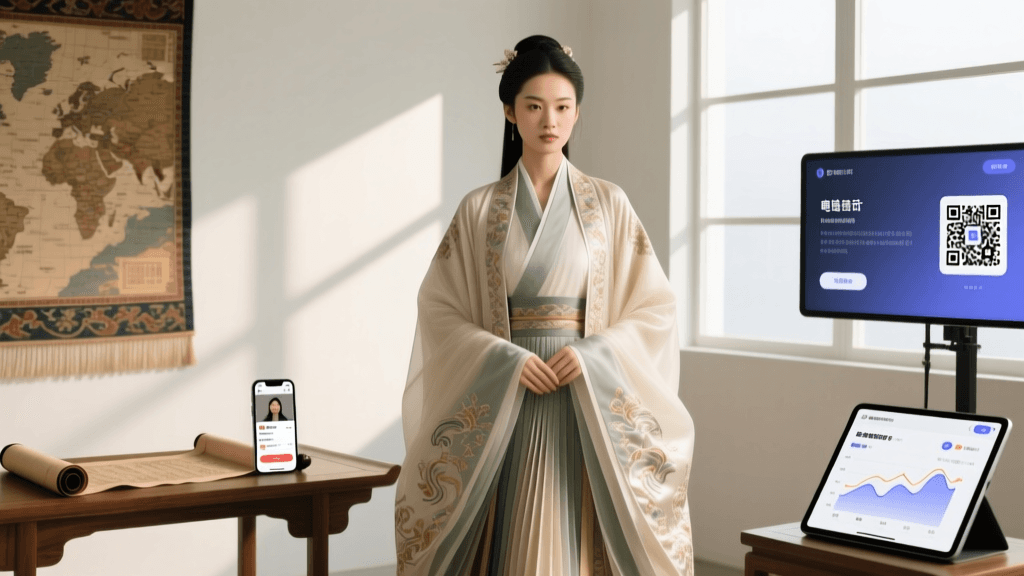
The most recent evolution in Chinese garment commerce is the dominance of live-streaming e-commerce on platforms like Douyin (the Chinese counterpart to TikTok) and Taobao Live. Hosts demonstrate the drape of a silk skirt in real-time, show how to properly tie a complex sash, and explain the historical provenance of a woven motif. This visual medium solves one of the biggest hurdles of buying traditional garments online: understanding how flat, wide-cut fabrics translate onto a three-dimensional body.
Furthermore, the market is no longer confined to domestic borders. Cross-border e-commerce platforms and independent global websites are making Hanfu accessible to the diaspora and international enthusiasts. Institutions such as the Fairbank Center for Chinese Studies at Harvard University have long documented the historical depth of Chinese material culture, noting that the modern global export of these garments represents a significant shift in how traditional aesthetics are consumed and understood internationally. Today, a buyer in New York or London can commission a historically accurate Ming Dynasty袄裙 (Ao Qun) from a boutique studio in Hangzhou, bridging a geographic divide that the ancient Silk Road merchants could scarcely have imagined.
Conclusion
From the strictly regulated drum towers of Tang Dynasty Chang'an to the algorithmic live-streams of modern Hangzhou, the commerce of traditional Chinese garments has undergone a profound transformation. Yet, the core appeal remains unchanged: a deep appreciation for the artistry of the weave, the elegance of the silhouette, and the cultural heritage embedded in every thread. By understanding both the historical context and the modern mechanics of e-commerce, today's consumers can navigate this vibrant market with confidence, ensuring that these ancient traditions continue to thrive in the digital age.