Schuhplattler Dance Costumes: Authentic Miesbacher Tracht Guide 2026
The Intersection of Folk Dance and Traditional Bavarian Dress
When discussing European folk dress, few garments are as globally recognized—or as frequently misunderstood—as the Bavarian Tracht. However, for serious practitioners of traditional folk dance, the costume is not merely a visual marker of regional identity; it is a highly engineered tool designed to facilitate specific kinetic movements. As we enter the 2026 Gau Trachtenfest (regional costume festival) season, there is a massive resurgence in demand for historically accurate, dance-functional garments, moving sharply away from the commercialized 'tourist' costumes of the past decade.
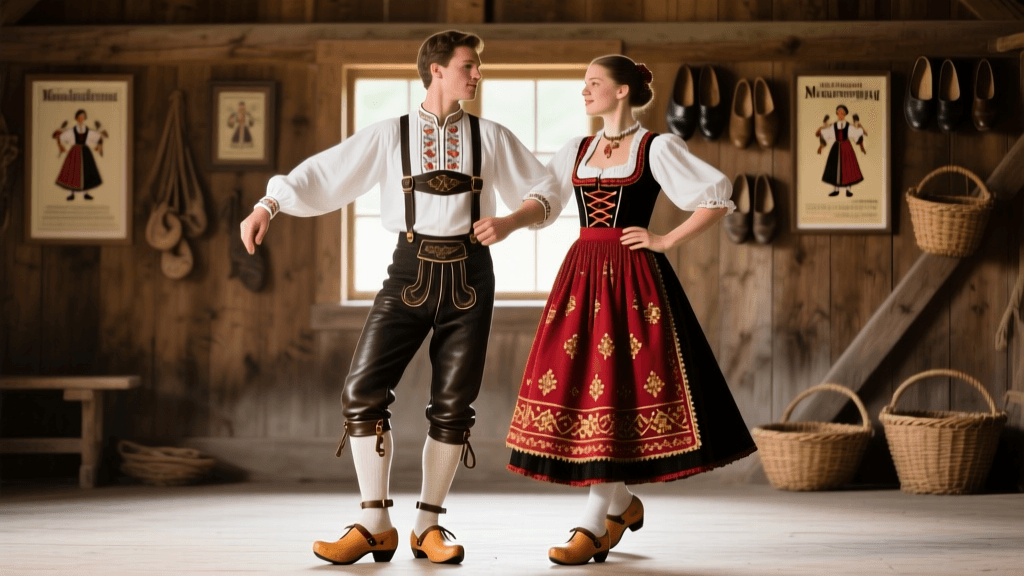
The Schuhplattler, arguably the most famous Bavarian and Tyrolean folk dance, requires a unique synthesis of stamina, rhythm, and sartorial precision. The dance involves the male performers rhythmically slapping their thighs, knees, and shoe soles (the 'platteln'), while the female performers execute rapid, continuous spinning sequences (the 'Drehen'). To perform these movements correctly, dancers rely on the Miesbacher Tracht, widely considered the gold standard of Bavarian folk dress. According to the Trachten-Informationszentrum, the Miesbacher style is distinguished by its specific color palettes, tailoring constraints, and adherence to historical rural workwear, which naturally lends itself to the rigorous demands of folk dance.
Anatomy of the Male Schuhplattler Tracht
For the male dancer, the core of the Miesbacher Tracht is the Lederhose, specifically the Kniebundhosen (knee-breeches). In 2026, authentic dance trachten are exclusively crafted from 'sämisch gegerbtes Hirschleder' (smoke-tanned deerskin). This specific tanning process uses cod liver oil and smoke, resulting in a leather that is exceptionally soft, breathable, and, most importantly, washable. For a Schuhplattler dancer, the leather must be supple enough to allow for deep squats and high kicks without chafing or restricting blood flow.
Tailoring for the 'Platteln' Movement
The cut of an authentic dance Lederhose differs significantly from modern fashion interpretations. The gusset (the diamond-shaped piece of fabric in the crotch) is cut wider and lower in traditional dance garments. This historical tailoring technique provides the necessary range of motion for the deep lunges and rapid leg-slapping required in the Schuhplattler. Furthermore, the knee cuffs must be tightly buttoned to prevent the slapping hands from catching on loose fabric, which could lead to severe finger injuries during high-speed routines.
Footwear: The Haferlschuh
No Schuhplattler costume is complete without the traditional Haferlschuh. Originally designed for alpine farming, this shoe features a distinctive side-lacing system and a heavily nailed, thick leather sole. In the context of the dance, the Haferlschuh acts as a percussion instrument. The thick sole produces the sharp, resonant 'clack' required when dancers slap their feet. In 2026, bespoke cobblers in Upper Bavaria are reinforcing the toe boxes and heel counters of dance-specific Haferlschuhe with hidden carbon-fiber inserts to withstand the thousands of impacts a festival dancer endures over a single weekend.
The Female Dirndl: Mobility and Tradition in Dance
While the male costume is defined by its percussive elements, the female Miesbacher Dirndl is an exercise in controlled momentum and elegant mobility. The traditional dance Dirndl consists of three primary components: the Seidenmieder (silk bodice), the Rock (skirt), and the Schürze (apron).
Bodice Construction and Breathability
The Miesbacher bodice is heavily structured, often featuring internal boning to maintain a rigid, upright posture, which is essential for the aesthetic of Bavarian folk dance. However, unlike the rigid corsetry of the Victorian era, the dance bodice is designed with a slightly higher armhole and a more flexible side panel. This allows the dancer to raise her arms fully for the partnered spinning figures without the bodice riding up or restricting her diaphragm. In 2026, master tailors are increasingly utilizing modern, moisture-wicking natural linen blends for the bodice lining, ensuring comfort during intense summer festival performances.
The Physics of the Skirt and Apron
The most critical element for the female dancer is the skirt. An authentic Miesbacher dance skirt is cut from a full circle of high-quality wool or heavy cotton blend, falling precisely to the mid-calf. The hem is heavily weighted, either with a thick velvet band or internal lead-free weighting tape. This weighting is a masterclass in functional garment design: when the dancer executes the rapid 'Drehen' (spinning), the weighted hem forces the skirt to flare out perfectly horizontally, creating a beautiful bell shape while simultaneously preventing the fabric from flying up and exposing the dancer's undergarments. The apron, tied securely at the front, is cut slightly narrower than the skirt to prevent it from wrapping around the dancer's legs during pivots.
2026 Festival Trends: Authenticity vs. Fast Fashion
As the 2026 festival season approaches, cultural preservation societies are pushing back against the 'fast fashion' Dirndls sold in commercial party shops. The official Oktoberfest guidelines and regional heritage boards heavily emphasize the importance of wearing historically grounded Tracht, particularly for members of registered dance Vereine (clubs). Below is a comparison of what constitutes an authentic dance costume versus commercial party wear in the current market.
| Feature | Authentic Verein Tracht (2026 Standard) | Commercial 'Party' Costume |
|---|---|---|
| Material | Smoke-tanned deerskin, silk, heavy wool | PU leather, polyester, cheap cotton |
| Skirt Cut | Full circle, weighted hem, mid-calf length | Gathered rectangle, lightweight, knee-length |
| Bodice | Structured, front-laced, internal boning | Unstructured, back-zipper, decorative lacing |
| Footwear | Nailed Haferlschuh / Leather character shoes | Sneakers, foam-soled fashion boots |
| Estimated Cost | €1,200 - €2,500 (Bespoke/Full Set) | €40 - €120 (Off-the-rack) |
Investing in authentic Tracht is now viewed not just as a cultural duty, but as a sustainable choice. High-quality Hirschleder and wool garments, when properly maintained, last for decades and are often passed down through generations of dancers.
Sourcing and Caring for Your Dance Costume
Acquiring a genuine Miesbacher Tracht requires engaging with specialized Trachten tailors (Trachtenschneidereien). For the 2026 season, lead times for bespoke Lederhosen are currently averaging six to eight months due to the limited availability of traditionally smoke-tanned deerskin. Dancers are advised to commission their garments in the autumn prior to the summer festival circuit.
Maintenance for the Active Dancer
Caring for dance-specific Tracht requires specific knowledge. Hirschleder can be hand-washed using specialized leather soap and a soft brush, then air-dried away from direct heat. Once dry, the leather must be manually stretched and kneaded to restore its softness. For the female Dirndl, the silk bodice must be dry-cleaned, but the heavy wool skirt can be brushed and aired out. The Deutscher Trachtenverband frequently publishes updated care manuals for regional costumes, emphasizing the use of natural, pH-neutral cleaners to preserve the integrity of natural madder and indigo dyes used in modern heritage weaving.
Conclusion: Preserving Kinetic Heritage
The Miesbacher Tracht is far more than a static museum piece; it is a dynamic, living garment that exists in symbiosis with the Schuhplattler dance. Every stitch, weighted hem, and tanned seam serves a distinct kinetic purpose. As we celebrate the folk dance festivals of 2026, the commitment to wearing authentic, properly constructed European folk dress ensures that both the visual beauty and the physical mechanics of these ancient traditions are preserved for future generations. Whether you are a seasoned performer or a cultural enthusiast attending your first Gau Trachtenfest, understanding the functional brilliance of these garments profoundly deepens the appreciation of Bavarian heritage.