Miao Silver Jewelry & Pleated Skirts: Guizhou Folk Dress Guide
The Heart of Guizhou: Understanding Miao Provincial Dress
The mountainous terrain of Guizhou Province in southwestern China has long served as a sanctuary for the Miao people, an ethnolinguistic group renowned for their extraordinary textile and metallurgical traditions. Unlike the standardized silhouettes of Han Chinese historical garments such as the hanfu or qipao, Miao provincial dress is a vibrant, highly localized expression of identity, history, and spiritual belief. According to Encyclopedia Britannica, the Miao (closely related to the Hmong diaspora) have preserved their cultural heritage through intricate visual languages woven, dyed, and forged into their daily and ceremonial wear.
For collectors, cultural enthusiasts, and travelers, understanding the mechanics of Miao regional folk dress requires looking beyond the visual spectacle. The traditional attire—specifically the indigo-dyed pleated skirts and the heavy, hand-forged silver ornaments—represents thousands of hours of meticulous labor. This guide provides a comprehensive, actionable breakdown of Miao sartorial traditions, including specific measurements, sourcing costs, and maintenance protocols for authentic provincial garments.
The Art of the Miao Pleated Skirt: Indigo and Geometry
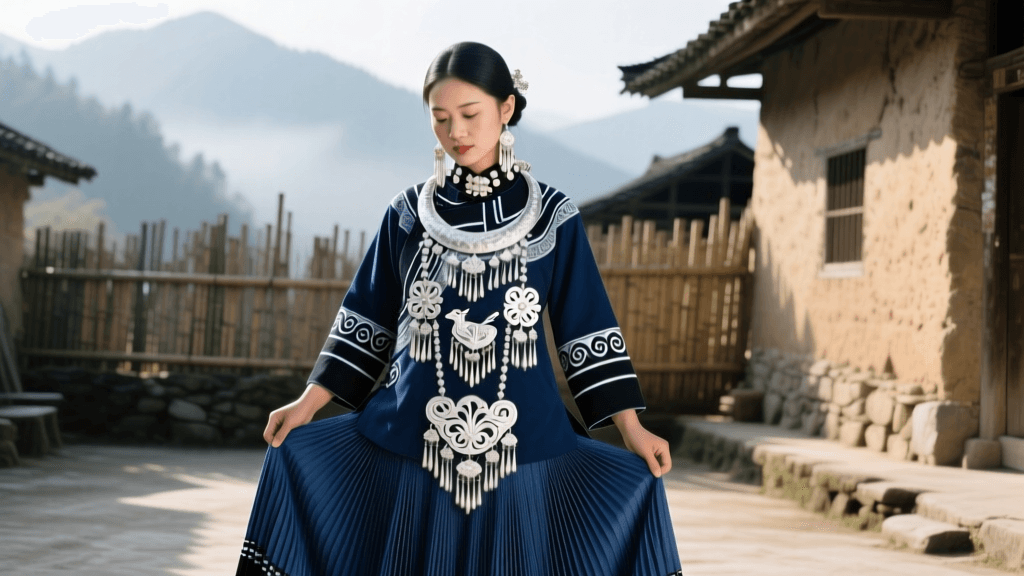
The quintessential garment of the Miao women in Guizhou's Leishan and Taijiang counties is the pleated skirt, known locally as the baidiequn. Unlike modern machine-pleated fabrics, these skirts are crafted from hand-woven cotton that undergoes a grueling, months-long dyeing and stiffening process. As highlighted by Smithsonian Magazine, the preservation of these textile techniques in Guizhou's remote villages is a testament to the community's dedication to ancestral crafts.
The Indigo Dyeing and Stiffening Process
The deep, lustrous blue-black hue of the skirt is achieved using Indigofera tinctoria. The cotton is dipped into a fermented indigo vat—often enriched with rice wine, ash water, and sometimes ox blood or egg white to add a metallic sheen and structural stiffness. A single skirt requires up to 20 meters of cotton and may be dipped and dried up to 30 times over several weeks to achieve the desired depth of color and rigidity.
Commissioning a Skirt: Measurements and Timing
If you are commissioning an authentic Miao pleated skirt from an artisan in Guizhou, you must account for specific regional measurements and timelines:
- Fabric Length: 15 to 20 meters of unpleated hand-woven cotton.
- Pleat Count: A high-quality ceremonial skirt features between 500 and 1,000 individual pleats, each measuring roughly 1 to 1.5 centimeters in width.
- Waistband: Typically 10 to 15 centimeters wide, made of undyed white or naturally dyed brown cotton, left unpleated for tying.
- Skirt Length: Usually ranges from 45 cm (mini-skirt style worn over leggings) to 75 cm (midi-length), depending on the specific village sub-group.
- Timing: Expect a lead time of 3 to 6 months. The dyeing process is heavily dependent on weather, as the fabric must be sun-dried between dips.
- Cost: A plain, unembroidered indigo pleated skirt costs between $150 and $300 USD. Skirts featuring the famous 'hundred-bird' embroidery along the hem can exceed $1,500 USD.
Miao Silver Jewelry: Weight, Craftsmanship, and Cost
No Miao ceremonial outfit is complete without silver. The Miao believe that silver wards off evil spirits and symbolizes the moon, light, and purity. During festivals like the Lusheng Festival or the Miao New Year, women may wear up to 10 kilograms of silver jewelry. The crafting of these pieces involves complex silversmithing techniques, including repoussé, chasing, and intricate wire filigree. China Daily has extensively documented how the silver forging industry in Guizhou provides vital economic support to rural artisan communities while keeping ancient metallurgical techniques alive.
Breakdown of Traditional Miao Silver Ornaments
When purchasing or appraising Miao silver, it is crucial to understand the standard components of the ceremonial set. Below is a structured comparison of the primary silver ornaments, their average weights, and estimated market costs.
| Ornament Name | Description & Placement | Average Weight | Estimated Cost (USD) |
|---|---|---|---|
| Yinjiao (Silver Horn) | Large, horn-shaped headdress symbolizing the water buffalo. Worn on the crown. | 1.5 kg - 3.0 kg | $400 - $900 |
| Xiangquan (Neck Ring) | Thick, twisted or flat silver torque worn tightly around the neck. | 0.5 kg - 1.2 kg | $150 - $350 |
| Chest Plate (Yapian) | Repoussé chest piece featuring dragons, birds, and floral motifs. | 0.8 kg - 1.5 kg | $250 - $500 |
| Yashang (Shoulder Pieces) | Crescent-shaped silver collars resting on the collarbone and shoulders. | 1.0 kg - 2.0 kg | $300 - $600 |
| Silver Hairpins | Set of 10-20 intricately carved pins used to secure the bun and headdress. | 0.2 kg - 0.5 kg | $80 - $150 |
Buying Silver in Guizhou: A Practical Guide
For those traveling to Guizhou to purchase authentic silver, towns like Kaili and Xijiang Miao Village are the primary hubs. However, buyers must be equipped with practical knowledge to avoid mass-produced, machine-stamped alloys disguised as hand-forged silver.
Buyer's Tip: Authentic Miao silver is rarely 99.9% pure sterling. Traditional silversmiths typically use an alloy ranging from 70% to 90% silver, mixed with copper or zinc to provide the structural integrity needed for heavy, intricate filigree work. Always ask the artisan for the specific silver purity (hanyinliang) before purchasing.
Pricing Mechanics: Artisans generally charge based on the daily market price of silver plus a craftsmanship fee. Expect to pay the equivalent of $0.80 to $1.20 USD per gram for the raw material, plus a 30% to 100% markup for the labor, depending on the complexity of the filigree. A 500-gram chest piece should therefore cost between $600 and $1,200 USD.
Styling and Modern Adaptation
While a full 10-kilogram ceremonial suit is reserved for weddings and major festivals, elements of Miao provincial dress can be integrated into modern wardrobes or cultural exhibitions.
- The Indigo Jacket: The traditional duanyi (short jacket) features a cross-collar and is fastened with hand-knotted frog buttons. These jackets pair beautifully with modern linen trousers or contemporary denim, offering a structured, indigo-dyed aesthetic similar to high-end Japanese selvedge denim.
- Statement Silver: Instead of the heavy Yinjiao headdress, opt for a single, hand-forged silver hairpin or a lightweight repoussé bangle. These pieces provide the historical weight of Guizhou craftsmanship without the physical strain of full ceremonial wear.
- Embroidered Sashes: The woven and embroidered waist sashes, often featuring geometric motifs representing the Yellow River and the migratory paths of the Miao ancestors, can be worn as belts over modern coats or displayed as textile art.
Caring for Indigo Textiles and Forged Silver
Authentic regional folk garments require specialized care to maintain their structural integrity and historical value. The organic dyes and traditional alloys used in Guizhou react poorly to modern chemical cleaners.
Maintaining Indigo-Pleated Cotton
The stiffness of a Miao pleated skirt is achieved through natural binders like ox blood or egg white. Never machine wash or dry clean a traditional pleated skirt. Water will dissolve the stiffening agents, causing the pleats to collapse and the indigo to bleed. To clean the garment, gently spot-clean with a damp cloth and a mild, pH-neutral soap. Store the skirt rolled tightly around a cylindrical cardboard tube to preserve the pleat geometry, and keep it in a cool, dark place to prevent the indigo from oxidizing into a dull gray.
Polishing Traditional Silver Alloys
Because Miao silver contains higher levels of copper than commercial sterling silver, it is highly susceptible to tarnishing, especially in humid climates. Avoid commercial silver dips, which can strip the intentional dark patina that silversmiths apply to repoussé crevices to highlight the motifs. Instead, use a soft, untreated microfiber cloth to gently buff the raised surfaces. For deep cleaning, use a soft-bristled toothbrush with a paste made of baking soda and water, carefully avoiding the deeply chased recesses of the metal.
Conclusion
The regional folk dress of Guizhou's Miao people is far more than a visual feast; it is a wearable archive of migration, spirituality, and extraordinary human skill. Whether you are a collector seeking a museum-grade indigo textile, a jeweler studying traditional filigree, or a traveler looking to ethically support rural artisans, understanding the precise measurements, costs, and cultural contexts of these garments is essential. By approaching Miao provincial dress with respect for its craftsmanship and a commitment to proper preservation, we ensure that the silver and indigo of Guizhou continue to shine for generations to come.