The Miao Silver Headdress and Embroidery: A Buyer Guide
The Living Heritage of Miao Textile and Silver Art
The Miao people, widely recognized in the West by the name Hmong, represent one of China's most culturally vibrant and historically rich ethnic minorities. Primarily concentrated in the mountainous regions of Guizhou, Hunan, and Yunnan provinces, the Miao have cultivated a breathtaking sartorial tradition that serves as far more than mere adornment. Historically lacking a widely used written language, the Miao encoded their history, mythology, and clan identities directly into their clothing. According to Encyclopedia Britannica's comprehensive overview of the Miao people, their intricate textiles and heavy silver jewelry act as a wearable archive, preserving millennia of migration stories, spiritual beliefs, and social structures.
For textile collectors, cultural historians, and fashion enthusiasts, acquiring authentic Miao garments and silverwork is a profound way to engage with Asian traditions. However, navigating the markets of southwestern China requires a discerning eye. The surge in cultural tourism has led to an influx of mass-produced, machine-made replicas that lack the soul and structural integrity of genuine artisanal pieces. This guide provides a deep dive into the craftsmanship of Miao silver headdresses and embroidery, offering actionable advice, precise measurements, and pricing structures to help you source, authenticate, and care for these magnificent cultural artifacts.
Deconstructing the Miao Silver Headdress (Yinshi)
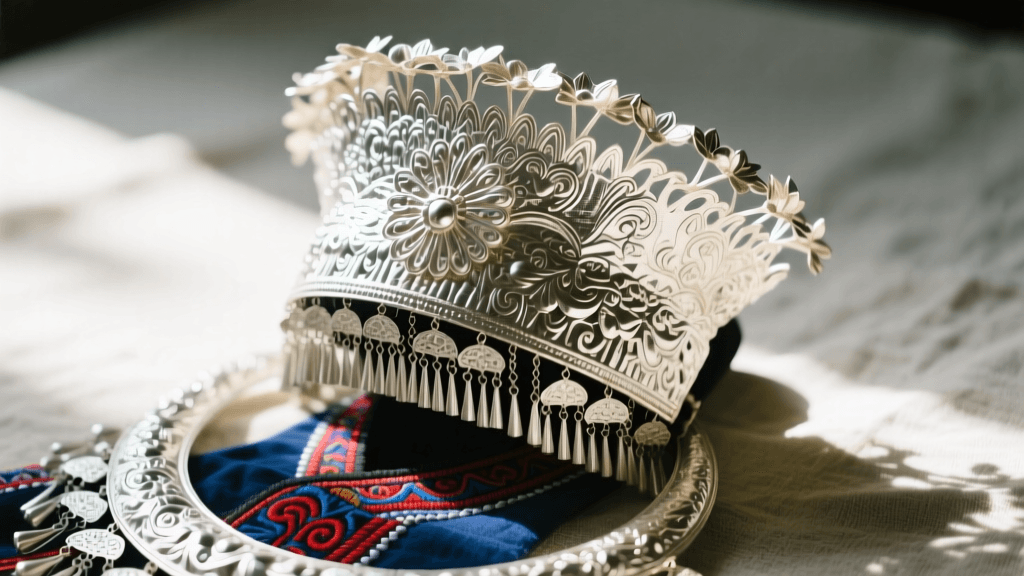
In Miao culture, silver is revered not only as a display of familial wealth and social status but also as a spiritual talisman believed to ward off evil spirits and illuminate the path to the afterlife. The creation of a Miao silver headdress, or Yinshi, is a painstaking process undertaken by master silversmiths who undergo decades of apprenticeship. The silver is traditionally smelted, hammered, drawn into fine wires, and woven into intricate filigree patterns depicting dragons, phoenixes, butterflies, and floral motifs.
A full ceremonial Miao silver headdress can weigh anywhere from 1.5 to over 5 kilograms, requiring immense physical endurance from the wearer during festivals such as the Lusheng Festival or the Sisters' Meal Festival. The structural foundation often involves a wooden or horn base, wrapped in textiles, and entirely encased in interlocking silver plates, dangling bells, and hairpins. The acoustic element is deliberate; the chiming of the silver bells is meant to announce the wearer's presence and please the ancestors.
Practical Guide: Sizing, Weight, and Cost Specifications
When sourcing Miao silver for personal wear, museum display, or private collection, understanding the physical specifications and market costs is crucial. Prices fluctuate based on the purity of the silver (usually 99% pure or 'foot silver'), the complexity of the filigree, and whether the piece is a contemporary commission or a vintage antique.
| Silver Component | Average Weight | Typical Dimensions | Estimated Cost (USD) | Key Authenticity Marker |
|---|---|---|---|---|
| Full Horn Headdress (Nijiao) | 2.0 - 4.5 kg | 60cm x 45cm | $1,200 - $3,500 | Hand-hammered repoussé; seamless wire weaving |
| Multi-Layer Neck Ring (Xiangquan) | 0.8 - 1.5 kg | 22cm diameter | $400 - $900 | Interlocking clasp; no soldering marks on wires |
| Chest Plaque (Yapai) | 0.6 - 1.2 kg | 30cm x 30cm | $350 - $850 | Dangling bells produce a clear, high-pitched chime |
| Hairpins & Floral Combs | 50 - 200g (set) | 15cm - 25cm length | $80 - $250 | Slight asymmetrical variations indicating handcraft |
Miao Embroidery: Techniques, Motifs, and Natural Dyes
While silver provides the armor, Miao embroidery provides the narrative. The embroidery techniques utilized by Miao women are among the most complex in the world, often taking several years to complete a single ceremonial jacket. One of the most highly prized techniques is Zanghua, or 'hidden flower' embroidery, where the stitching is so dense and layered that it creates a three-dimensional, sculptural effect on the fabric. Another remarkable method is double-sided embroidery, where the motif is perfectly identical and flawless on both sides of the textile, leaving no loose threads or hidden knots.
The motifs are deeply symbolic. The 'Butterfly Mother' is a ubiquitous design, originating from the Miao creation myth where a butterfly laid twelve eggs, hatching the first humans, dragons, and elephants. Dragons in Miao embroidery differ vastly from imperial Han Chinese dragons; they are often depicted with the bodies of fish, buffaloes, or silkworms, reflecting an agrarian, animistic worldview rather than imperial authority.
Furthermore, the base fabrics are traditionally dyed using natural indigo and madder root. The Miao are masters of Lajian (batik/resist dyeing), using brass knives to draw intricate geometric patterns with melted beeswax on cotton or hemp before submerging the cloth in fermented indigo vats. The resulting 'ice-crack' patterns, where the wax fractures and allows dye to seep in, are a hallmark of authentic, hand-dyed Miao textiles.
Actionable Advice: Sourcing Authentic Miao Garments and Silver
Acquiring genuine Miao craftsmanship requires venturing beyond the highly commercialized tourist storefronts. For serious collectors and buyers, the following actionable strategies will ensure you invest in authentic heritage pieces:
- Target the Right Locations: Travel to Kaili City in Guizhou Province, the heartland of Miao culture. The Kaili Ethnic Minorities Museum and the surrounding weekend markets offer access to village artisans. Xijiang Miao Village is visually stunning but heavily commercialized; seek out the smaller, surrounding villages like Shidong or Langde for direct-to-artisan purchases.
- Timing Your Visit: Plan your sourcing trip around the Sisters' Meal Festival (usually April) or the Miao New Year (November). During these times, villagers wear their heirloom pieces, and silversmiths are actively producing new commissions, allowing you to observe the craftsmanship firsthand.
- The Sound and Magnet Test: Authentic Miao silver is high-purity and non-magnetic. Bring a strong neodymium magnet; if the silver sticks, it contains iron or steel alloys. Furthermore, tap the piece lightly. Pure silver produces a dull, soft thud or a clear, sustained chime (in the case of thin bells), whereas plated base metals produce a sharp, high-pitched 'clink'.
- Examine the Reverse Side: Turn the embroidered garment inside out. Machine embroidery will show a chaotic web of bobbin threads and uniform, perfectly straight stitch lines. Hand embroidery will display meticulous, deliberate stitching, often with a backing cloth applied to protect the threads.
- Negotiate and Understand Provenance: Antique pieces (pre-1960s) command a premium, often ranging from $2,000 to over $10,000 for a full ceremonial set. Contemporary handmade pieces are priced based on silver weight plus labor. Always ask the artisan about the specific village origin and the meaning of the motifs, as documented provenance adds significant value. For more on the demographic and historical context of these villages, refer to historical and demographic data on Wikipedia's Miao people entry.
Caring for Your Miao Silver and Silk
Preserving these artifacts requires an understanding of the materials. High-purity silver is soft and highly susceptible to tarnishing when exposed to sulfur and humidity. Never use harsh chemical dips or abrasive polishes on Miao silver, as these will strip the intentional oxidation that artisans use to highlight the intricate filigree patterns. Instead, use a soft, untreated microfiber cloth to gently buff the raised surfaces, leaving the darkened crevices intact to maintain the three-dimensional contrast.
Miao embroidered silk and indigo-dyed hemp require equally careful preservation. The natural indigo dye can crock (rub off) if exposed to moisture. Store embroidered jackets flat in acid-free tissue paper within a climate-controlled environment, ideally maintaining a relative humidity of 45-55%. Never hang heavy, fully embroidered Miao jackets on standard hangers, as the sheer weight of the dense stitching and attached silver elements will warp the shoulder seams and tear the vintage fabric over time.
'The clothing of the Miao is not merely decorative; it is a profound textual language. When we lose the techniques of the indigo vat and the silversmith's hammer, we lose the very syllables of their history.' — Cultural Heritage Preservation Initiative, as noted in UNESCO's Intangible Cultural Heritage frameworks.
Conclusion
The clothing traditions of the Miao ethnic minority represent a pinnacle of Asian textile and metallurgical artistry. From the chiming, heavy silver horn headdresses to the densely stitched Butterfly Mother motifs, every element serves a vital historical and spiritual function. By understanding the precise measurements, mastering the authentication tests, and respecting the rigorous care requirements, collectors and enthusiasts can play a vital role in preserving this extraordinary heritage. Whether you are acquiring a single indigo-dyed batik scarf or commissioning a full suite of ceremonial silver, you are participating in the safeguarding of a living, breathing cultural atlas.