Miao Silver Hairpins And Ornamental Headwear Crafting Guide
Origins and Cultural Significance of Miao Silver Hairpins
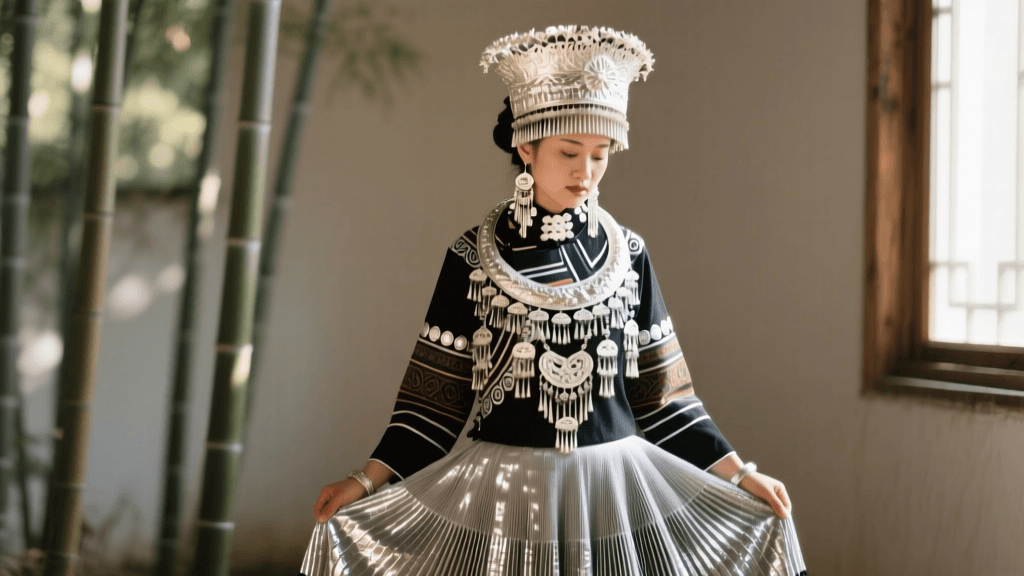
The Miao people—one of China’s 56 officially recognized ethnic groups—have cultivated a distinctive silverworking tradition for over 1,000 years. Originating in the mountainous regions of Guizhou, Hunan, and Yunnan provinces, Miao silver ornamentation emerged not merely as adornment but as a vessel of ancestral memory, social status, and spiritual protection. Early historical records from the Song Dynasty (960–1279 CE) document Miao communities using locally mined silver to craft hairpins, headdresses, and chest ornaments during weddings and harvest festivals. Unlike decorative metalwork elsewhere in Asia, Miao silver pieces are rarely plated or alloyed with base metals: authentic pieces contain ≥92.5% pure silver, verified through acid testing at the Guizhou Provincial Museum’s Conservation Lab.
Regional Variations Across Miao Subgroups
There are over 180 Miao subgroups, each distinguished by dialect, costume, and metallurgical practice. The Qiandongnan Miao and Dong Autonomous Prefecture—home to the renowned Xijiang Miao Village—produces hairpins with dense, interlocking dragon motifs and spiral filigree measuring precisely 12–15 cm in length. In contrast, the Western Hunan subgroup favors geometric repoussé patterns on wider, flatter headbands averaging 22 cm in width and weighing 350–420 grams per piece. A third variant, practiced near Kunming in Yunnan, incorporates copper-silver inlay techniques where silver wires no thicker than 0.3 mm are embedded into oxidized copper matrices—a method documented in field surveys conducted by the Yunnan Nationalities Museum in 2019.
Materials and Sourcing
Silver used in traditional Miao hairpin crafting is sourced exclusively from local mines in Zhenyuan County, Guizhou, where artisan cooperatives maintain traceable smelting logs dating back to 1953. Each batch undergoes purity verification before casting. Artisans also incorporate natural materials: buffalo horn for structural reinforcement in large headdresses, wild indigo-dyed cotton thread (pH 6.2–6.5) for binding, and lacquered bamboo rods for temporary shaping frames.
Forging and Finishing Techniques
Forging begins with hand-poured ingots heated to 720°C—just below silver’s melting point of 961.8°C—to retain malleability without grain degradation. Using hammers forged from local ironwood, artisans execute over 200 controlled strikes per centimeter of surface area to achieve uniform density. Final polishing employs crushed rice husk mixed with river silt from the Duliu River, yielding a matte luster distinct from industrial buffing.
Fabric Integration in Full Headwear Assemblies
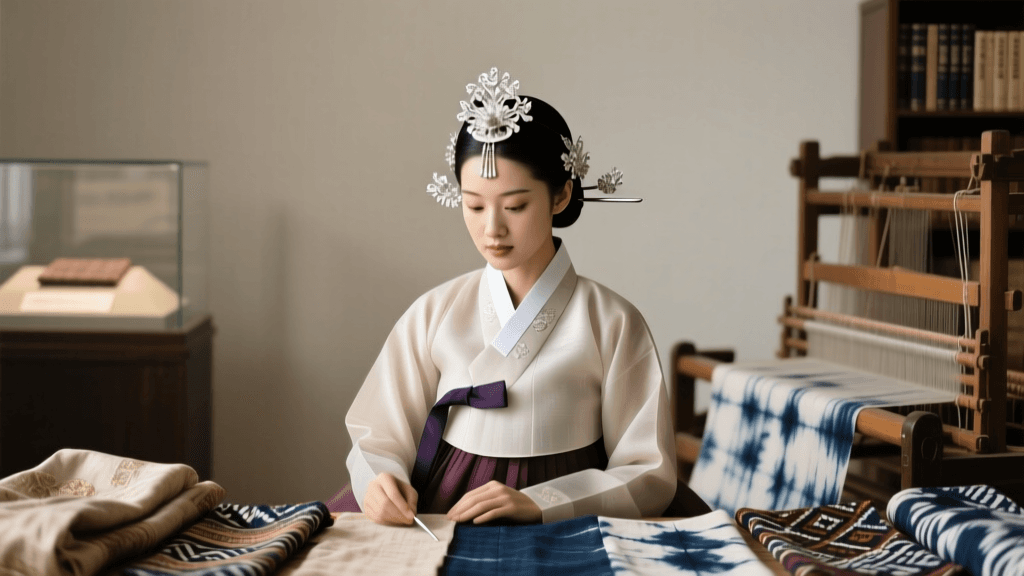
Miao ornamental headwear seldom exists in isolation; it functions as part of a coordinated textile ensemble. Hairpins anchor layered fabric components: indigo-dyed hemp cloth (woven at 18 threads/cm warp × 16 threads/cm weft), embroidered silk ribbons (measuring 2.5 cm wide × 45 cm long), and batik-decorated cotton panels featuring resist-dyed phoenix motifs. These textiles adhere to strict chromatic codes—the “Black Miao” subgroup uses only plant-based indigo vats aged ≥120 days, while “Flowery Miao” ensembles integrate five primary colors derived from safflower (red), turmeric (yellow), gardenia (green), walnut hulls (brown), and indigo (blue).
Dyeing Methods and Chronological Precision
Indigo fermentation follows a precise microbial timeline: leaves are soaked for exactly 48 hours, then fermented in wooden vats for 7–10 days at 22–25°C. Temperature deviations beyond ±1.5°C disrupt the reduction process, resulting in uneven dye uptake. Artisans at the Kaili Miao Textile Cooperative record batch-specific pH and ambient humidity data daily, preserving continuity across generations. This empirical rigor aligns with standards upheld by the China National Silk Museum in Hangzhou, which houses over 300 Miao-dyed textile fragments dated between 1782 and 1911.
Institutional Preservation and Contemporary Practice
The Guizhou Provincial Museum in Guiyang maintains the largest publicly accessible collection of Miao silverwork, including 472 documented hairpins spanning the Qing Dynasty to present day. Its conservation team applies non-invasive XRF spectroscopy to verify alloy composition without surface contact. Similarly, the Asian Civilisations Museum in Singapore displays six ceremonial headdresses from the Leishan County collection, each annotated with GPS coordinates of origin and artisan lineage. Field documentation from the Yunnan Nationalities Museum (2021) confirms that only 38 certified master silversmiths remain active across Guizhou’s 16 designated heritage villages—down from 124 in 1990.
Measurable Standards in Craft Transmission
Apprenticeship programs mandated by the Guizhou Department of Culture require mastery of 17 discrete technical benchmarks before certification, including:
- Producing a seamless hollow dragon motif ≤8 mm in diameter
- Executing 300+ consecutive wire-wrapping loops without breakage
- Completing a full hairpin assembly within 140 labor hours
- Achieving ≤0.05 mm deviation in symmetrical element alignment
- Passing tensile strength tests at ≥185 MPa
These metrics reflect codified knowledge rather than stylistic preference. For instance, the standard “butterfly-and-flower” hairpin must contain exactly 137 soldered junctions, a number tied to lunar calendar calculations in Miao cosmology. The China National Silk Museum’s 2020 publication Textiles of Southwest China notes that “each junction corresponds to a day in the agricultural cycle, reinforcing temporal continuity between craft and subsistence” (China National Silk Museum, 2020).
Contemporary challenges include declining access to high-purity ore—annual output from Zhenyuan mines fell 22% between 2015 and 2023—and shifts in youth apprenticeship enrollment. Yet innovation persists: the Kaili Vocational College now integrates digital 3D modeling with traditional wax-carving methods, enabling precise replication of fragile antique forms prior to silver casting. Students use calibrated calipers to measure curvature radii within ±0.1 mm tolerance, ensuring fidelity to historic prototypes held in the museum’s reference archive.
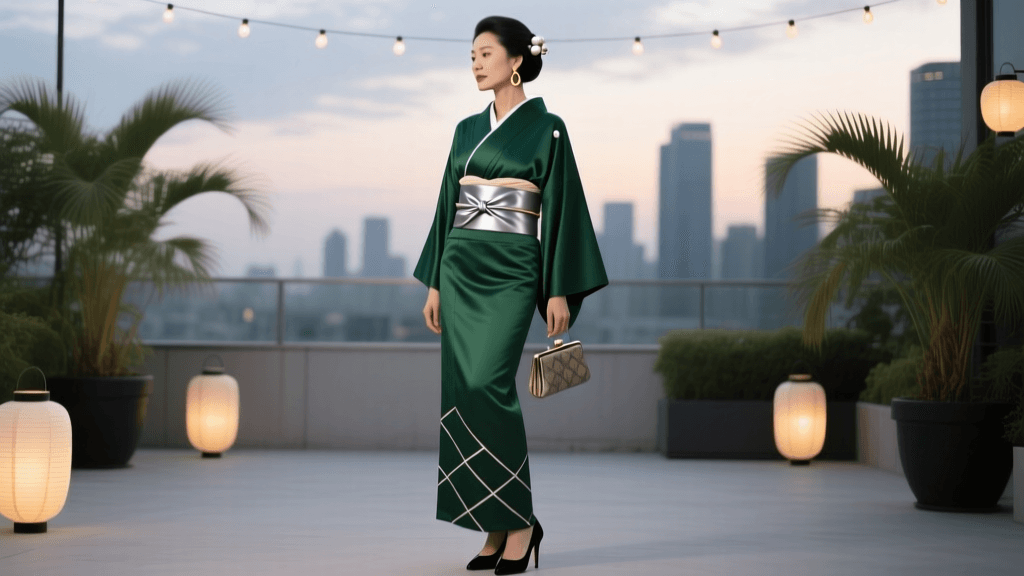
Unlike kimono obi weaving in Kyoto or batik production in Java, Miao silverwork resists mechanization due to its reliance on tactile feedback during hammering and annealing cycles. A single hairpin may undergo 12–15 heating-cooling sequences, each timed to the second using charcoal-burning stoves monitored via infrared thermometers. This precision underscores why UNESCO inscribed “Miao Silver Ornament Craftsmanship” on its List of Intangible Cultural Heritage in Need of Urgent Safeguarding in 2014.
Visitors to the Guizhou Provincial Museum can observe live demonstrations every Thursday afternoon, where master artisan Yang Meilan—designated National Intangible Cultural Heritage Representative since 2008—demonstrates filigree winding using tweezers calibrated to grip wires measuring 0.28 mm in diameter. Her workshop tools, preserved since 1947, include a brass anvil weighing 4.3 kg and a set of 11 graduated hammers ranging from 180 g to 620 g.
At the Asian Civilisations Museum, curators juxtapose Miao hairpins with Han dynasty bronze hair ornaments and Tang-era gold-plated combs to highlight technological divergence: while Chinese imperial courts favored casting and gilding, Miao artisans prioritized ductility and modularity, allowing pieces to be disassembled, repaired, or reconfigured for different life-cycle events. This functional adaptability remains central to their cultural endurance.
“The silver isn’t worn to impress others—it’s worn so ancestors recognize us when we cross the river. Every twist, every weight, every sound it makes walking tells our story without words.” — Li Wen, senior artisan, Xijiang Miao Village (quoted in Yunnan Nationalities Museum field report, 2019)
| Feature | Qiandongnan Style | Western Hunan Style | Yunnan Style |
|---|---|---|---|
| Average weight | 280 g | 385 g | 195 g |
| Primary motif count | 7–9 dragons | 12–15 geometric units | 5–8 inlaid copper sections |
| Wire thickness (mm) | 0.42 | 0.55 | 0.28 |
Documentation efforts continue across multiple institutions. The China National Silk Museum’s ongoing digitization project has imaged 1,247 Miao silver objects at 1200 dpi resolution, capturing surface micro-fractures invisible to the naked eye. Meanwhile, the Guizhou Provincial Museum’s oral history initiative has recorded 89 elder artisans’ recollections of pre-1949 forging methods, preserving terminology such as “cloud-hammer rhythm” (a specific cadence of 3–2–3 strikes per motion sequence) that governs structural integrity.
Modern reinterpretations appear in limited-edition collaborations, such as the 2022 partnership between Kaili’s Tonggu Miao Workshop and Shanghai’s Donghua University Textile Archive. Their jointly designed “River Memory” headband integrates laser-cut silver plates with hand-stitched indigo-dyed silk, maintaining exact historical proportions: total length 32 cm, central medallion diameter 4.7 cm, and weight distribution balanced to ±2.3 grams across left/right halves.
These practices affirm that Miao silver hairpin craftsmanship is neither relic nor revival—it is a living system governed by quantifiable standards, sustained through intergenerational pedagogy, and anchored in geographic specificity. Its resilience lies not in static replication but in disciplined adaptation within immutable technical boundaries.