Miao Ethnic Garments: Indigo Batik and Silverwork
The Living Textile Heritage of the Miao People
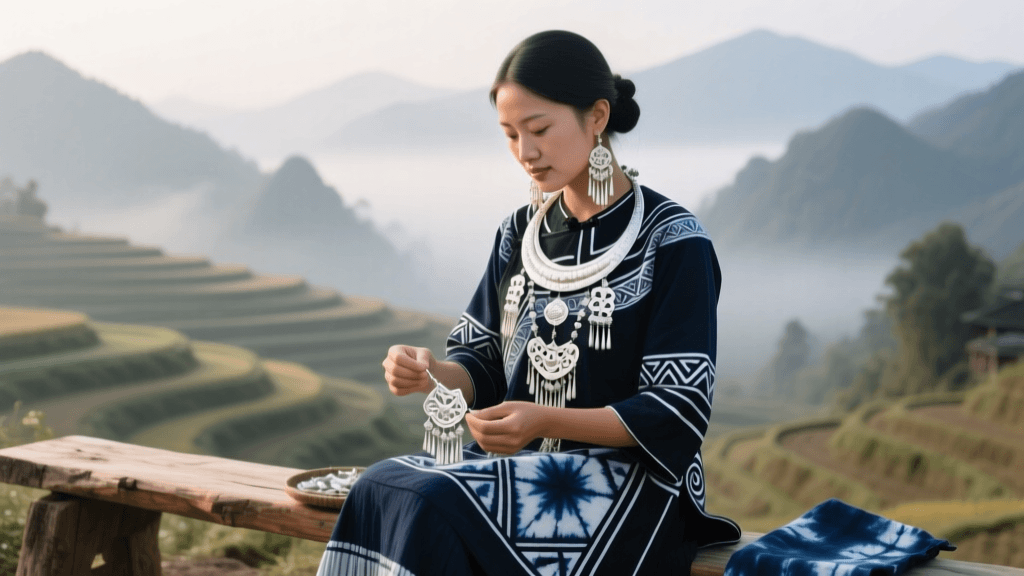
The Miao people, widely recognized across the globe as the Hmong, possess one of the most visually striking and culturally profound sartorial traditions in Asia. Concentrated primarily in the mountainous provinces of Guizhou, Yunnan, and Hunan in southwestern China, the Miao have historically utilized their clothing as a wearable encyclopedia. Because the Miao did not possess a widely used written language until the mid-20th century, their history, mythology, and clan identities were meticulously encoded into the threads of their garments. According to Encyclopedia Britannica, the intricate embroidery, batik, and silverwork of the Miao are not merely decorative; they are vital markers of social status, marital availability, and spiritual protection.
For textile collectors, cultural travelers, and fashion historians, understanding the nuances of Miao ethnic clothing requires looking beyond the vibrant colors to the painstaking craftsmanship that defines each piece. This guide explores the alchemy of Miao indigo batik, the heavy elegance of their silver adornments, and provides actionable advice for sourcing authentic garments directly from artisan communities.
The Alchemy of Indigo Batik (Laran)
Miao indigo batik, known locally as laran, is a masterclass in botanical chemistry and resist-dyeing. The process begins with the harvesting of the Strobilanthes cusia plant (Chinese indigo) in late summer. The leaves are soaked in wooden vats and fermented with rice wine, water, and plant ash to create an alkaline environment. This fermentation process, which takes between 14 to 21 days, reduces the indigo into a soluble, yellowish-green liquid.
Artisans use a specialized brass tool called a lada (batik knife), which features a reservoir to hold melted beeswax. The wax is drawn onto raw cotton or hemp fabric in intricate geometric and floral patterns. Once the wax hardens, the cloth is submerged into the indigo vat. The magic of indigo lies in oxidation: when the fabric is pulled from the vat, it is yellow-green, but as it meets the air, it rapidly oxidizes into a deep, rich blue. This dipping and oxidizing process is repeated up to twenty times to achieve the signature dark navy-black hue of authentic Miao batik. Finally, the cloth is boiled to melt away the beeswax, revealing the crisp, white resist patterns against the deep blue background.
Decoding the Motifs: The Butterfly Mother and the Buffalo
The motifs found in Miao batik and embroidery are deeply symbolic. The most revered is the 'Butterfly Mother' (Mais Bangx), a central figure in Miao creation mythology who is said to have hatched the ancestors of humanity from her eggs. You will also frequently see the water buffalo, an animal essential to the agrarian life of the Miao, symbolizing strength, wealth, and agricultural prosperity. The Metropolitan Museum of Art notes that regional Chinese textiles often serve as canvases for indigenous cosmologies, and Miao garments are a premier example of mythological storytelling through fiber arts.
The Weight of Heritage: Miao Silver Adornments
No Miao festival garment is complete without silver. Unlike the delicate, lightweight jewelry common in Western fashion, Miao silver adornments are substantial, heavy, and designed to project wealth and spiritual armor. Silversmithing is traditionally a male-dominated craft among the Miao, passed down from father to son. Artisans employ techniques such as repousse, filigree, and granulation to shape silver into elaborate horned headdresses, multi-layered necklaces, and intricately carved hairpins.
Buyer’s Guide to Miao Silver
When purchasing Miao silver in markets like Kaili or Xijiang, it is crucial to understand the economics and metallurgy of the craft:
- Purity: Authentic Miao silver is typically 990 (99% pure) or 925 (sterling). Pure 999 silver is too soft for the structural demands of large headdresses.
- Weight: A full festival silver set for a woman can weigh anywhere from 5 to 15 kilograms (11 to 33 lbs). The large horned headdresses alone often weigh 2 to 4 kilograms.
- Pricing Structure: You are paying for the raw silver weight plus the artisan's labor. As of recent market rates, raw silver hovers around $0.75 to $1.00 USD per gram. A 500-gram necklace will cost roughly $375-$500 USD for the metal, plus a 20% to 50% markup for the hand-forged craftsmanship.
- The Magnet Test: Always carry a small neodymium magnet. Authentic silver is non-magnetic. If a piece attracts the magnet, it is a base metal alloy plated in silver, commonly sold to unwary tourists in highly commercialized zones.
Market Comparison: Sourcing Authentic Textiles
The commercialization of ethnic tourism in Guizhou has led to a flood of factory-made imitations. The UNESCO Intangible Cultural Heritage registry recognizes the importance of preserving these traditional techniques, but buyers must be vigilant. Use the table below to differentiate between authentic artisan pieces and commercial replicas.
| Textile Type | Dye Source | Wax Application | Price Range (USD) | Best For |
|---|---|---|---|---|
| Authentic Handmade Batik | Natural Indigo (Fermented) | Hand-drawn with Lada | $150 - $500+ | Collectors, Museums, Heirloom Fashion |
| Semi-Handmade Batik | Synthetic Indigo | Hand-drawn or Stamped | $40 - $120 | Everyday wear, Home Decor |
| Factory Commercial Print | Chemical Dyes | None (Printed Resist) | $10 - $30 | Souvenirs, Fast Fashion |
Actionable Tip: Authentic natural indigo has a distinct, earthy, slightly fermented scent that lingers even after years of use. Synthetic dyes smell like chemicals or have no odor at all. Furthermore, natural indigo will 'crock' (rub off slightly on your skin or white cloth) when dry, which is a sign of authenticity, whereas synthetic chemical dyes are heavily fixed and will not rub off.
Timing Your Visit: Festivals and Markets
To witness Miao clothing in its full, living context and to source directly from makers, timing your visit to align with traditional festivals is essential.
- The Sisters' Meal Festival (Spring): Held in the third lunar month (usually March or April) in areas like Taijiang County, this is a courtship festival where young women don their most elaborate indigo and silver garments to attract suitors. It is the best time to see the diversity of regional embroidery styles.
- The Lusheng Festival (Autumn): Taking place in the eighth or ninth lunar month (September to November), this harvest festival features traditional pipe (lusheng) music, bullfighting, and communal dancing. It is an excellent time to purchase textiles, as families bring their surplus handmade goods to the peripheral markets.
- Sourcing Locations: Skip the main commercial thoroughfares of Xijiang Miao Village for high-end textiles. Instead, visit Danzhai County, the recognized capital of Miao batik, where you can find cooperatives of female artisans. For silver, the Sunday morning markets in Kaili offer direct access to silversmiths from surrounding valleys.
Caring for Your Miao Textiles and Silver
Proper maintenance is vital to preserve the integrity of these culturally significant items.
Indigo Batik Care
Never wash authentic indigo batik in a machine or use warm water, as heat and agitation will strip the natural dye. Hand wash the garment in cold water using a pH-neutral, mild detergent. Do not soak for more than five minutes. Roll the garment in a clean towel to press out excess water, and dry it flat in the shade. Direct sunlight will rapidly bleach natural indigo, turning your deep navy into a washed-out grey.
Silver Maintenance
Miao silver is often intentionally oxidized in the crevices by the artisan to highlight the intricate repousse details. Do not use harsh chemical silver dips, as they will strip this intentional patina. Instead, use a soft, dry microfiber cloth to polish only the raised surfaces. For heavy tarnish, create a gentle paste of baking soda and water, apply it with a soft-bristled toothbrush only to the raised areas, rinse with distilled water, and dry immediately.
'When a Miao woman puts on her silver and indigo, she is not just dressing herself; she is putting on her ancestors, her village, and the history of her people.' — Traditional Guizhou Proverb
Investing in authentic Miao ethnic garments is an investment in human history. By understanding the botanical chemistry of indigo, the metallurgy of silver, and the mythological motifs woven into every stitch, collectors and travelers can ethically support the artisans keeping these extraordinary Asian traditions alive.