Miao Traditional Clothing: Indigo Batik and Silver Art
The Living History of Miao Traditional Clothing
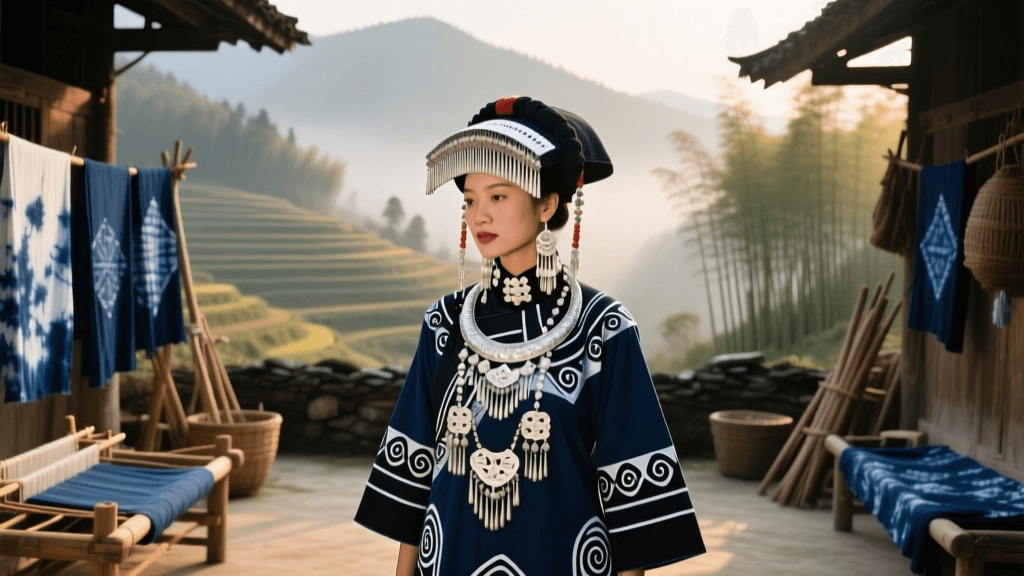
For the Miao people, one of the largest and most culturally diverse ethnic minority groups in China, clothing is far more than mere adornment. Historically lacking a widely used written language, the Miao have long relied on their intricate textiles and heavy silver ornamentation to record their history, mythology, and social status. Often referred to as a 'wearable archive,' Miao traditional clothing serves as a visual language that communicates a wearer's village, marital status, and lineage. Today, the breathtaking artistry of Miao indigo batik and silversmithing continues to captivate textile collectors, fashion historians, and cultural travelers alike.
According to cultural historians featured in Smithsonian Magazine, the motifs stitched into Miao garments and cast into their silver jewelry are direct references to their creation myths, particularly the legend of the 'Butterfly Mother,' who is said to have birthed the first humans. Understanding these garments requires a deep dive into the meticulous craftsmanship that defines Miao material culture.
The Alchemy of Indigo Batik (Lajian)
The foundation of many Miao garments, particularly among the communities in Guizhou and Yunnan provinces, is indigo-dyed cotton. The Miao are masters of lajian (batik), a resist-dyeing technique that yields striking, intricate blue-and-white patterns. The process is labor-intensive and deeply tied to the agricultural calendar.
The Batik Process: Step-by-Step
- Wax Application: Artisans use a specialized brass tool called a lajindao to draw patterns onto hand-woven cotton. The tool holds melted beeswax, which acts as a resist. The wax must be kept at a precise temperature; if it is too hot, it bleeds into the fabric, and if it is too cool, it flakes off.
- Indigo Fermentation: The indigo dye is derived from the Persicaria tinctoria plant. Creating the dye vat is an alchemical process that takes weeks. The vat is 'fed' with rice wine, ash water, and sweet rice soup to maintain the correct pH and bacterial balance necessary for fermentation.
- Dyeing and Oxidation: The fabric is dipped into the vat multiple times. Upon removal, the fabric is yellow-green but rapidly oxidizes to a deep, rich blue when exposed to air. Achieving a dark, colorfast navy can require up to 20 consecutive dips over several weeks.
- Wax Removal: Finally, the cloth is boiled in water to melt away the beeswax, revealing the crisp, white geometric and floral patterns beneath. The natural cracking of the wax during the dyeing process creates the characteristic 'ice-crack' veins that authenticate handmade batik.
Miao Silver: The Weight of Wealth and Protection
No Miao festival or wedding ensemble is complete without elaborate silver jewelry. Silver is believed to possess spiritual properties that ward off evil spirits, protect the wearer from illness, and bring good fortune. As noted by BBC Travel, in traditional Miao society, a family's wealth and social standing are directly measured by the weight and intricacy of the silver worn by its women.
'A girl without silver is like a garden without flowers. The heavier the silver, the deeper the family's love and the stronger the spiritual protection.' — Traditional Miao Proverb
Key Silver Ornaments
A full ceremonial silver set can weigh anywhere from 5 to 10 kilograms (11 to 22 lbs) and includes several distinct pieces:
- Silver Horns (Yinjiao): A massive, crescent-shaped headdress resembling water buffalo horns, symbolizing agricultural wealth and ancestral reverence.
- Neck Rings and Torques: Thick, twisted silver bands worn tightly around the neck, often layered with multiple strands of silver chains and bells.
- Chest Locks and Pendants: Large, shield-like chest pieces engraved with dragons, phoenixes, and the Butterfly Mother, designed to protect the heart and vital organs.
- Hairpins and Combs: Intricately filigreed pins used to secure the heavy, oiled hair buns typical of Miao women.
Practical Sourcing Guide: Where, When, and How to Buy
For collectors and enthusiasts looking to acquire authentic Miao textiles and silver, navigating the markets in Guizhou Province requires specific knowledge. As highlighted in guides to the region by CNN Travel, commercialization has led to an influx of mass-produced replicas. Here is how to source authentic pieces.
Timing and Locations
The best time to witness and purchase authentic ceremonial garments is during major festivals, such as the Lusheng Festival (typically in the 10th lunar month, around November) or the Sisters' Meal Festival (spring). The most prominent markets are located in Kaili City (the capital of the Qiandongnan Miao and Dong Autonomous Prefecture) and the Xijiang Qianhu Miao Village. For serious antique textiles, the Sunday market in Shiqiao Village is renowned for its paper-making and batik artisans.
Costs and Measurements
- Authentic Batik Fabric: Expect to pay between 150 and 300 RMB ($20 to $40 USD) per square meter for genuine, hand-drawn, and naturally dyed indigo batik. Factory-printed imitations sell for less than 30 RMB per meter.
- Antique Pleated Skirts: A genuine, hand-pleated indigo skirt requires up to 20 meters of fabric and a month of labor. Vintage pieces in good condition range from 2,000 to 5,000 RMB ($280 to $700 USD).
- Silver Jewelry: Authentic 'Zu Yin' (pure Miao silver, typically 92.5% to 99% purity) costs roughly 15 to 25 RMB per gram, plus a craftsmanship fee. Be wary of 'Miao Yin' alloys, which are often a mix of copper, zinc, and nickel with a silver plating, sold for 3 to 5 RMB per gram.
Comparison Chart: Authentic vs. Commercial Miao Textiles
When shopping in local markets or online, use this structured comparison to verify the authenticity of Miao batik and embroidered garments.
| Feature | Authentic Handmade Batik/Embroidery | Commercial Factory Replica |
|---|---|---|
| Scent | Faint, earthy smell of natural indigo and beeswax. | Chemical odor from synthetic dyes and industrial fixatives. |
| Reverse Side | Indigo penetrates fully; patterns are visible (though lighter) on the back. | White or un-dyed back; color only sits on the surface layer. |
| Line Quality | Slight irregularities and 'ice-crack' veins where wax fractured naturally. | Perfectly uniform, pixelated, or digitally printed lines with no cracking. |
| Texture | Stiff initially due to natural wax and indigo residue; softens beautifully with wear. | Uniformly soft, lacking the structural body of hand-woven cotton. |
| Stitching | Hand-spun silk or cotton thread; slight variations in stitch tension. | Machine-embroidered with synthetic rayon threads; high, uniform sheen. |
Care and Maintenance for Miao Garments
Preserving the integrity of natural indigo and antique silver requires specific, mindful care routines. Improper cleaning can strip the dye or tarnish the metals irreparably.
Caring for Indigo Batik
Never wash authentic indigo batik in hot water or use harsh, alkaline detergents, as this will strip the natural dye. For the first few washes, expect some color bleeding; this is normal for natural indigo. Hand wash the garment in cold water using a pH-neutral, gentle soap. Do not wring the fabric aggressively; instead, press the water out and dry it flat in the shade. Direct sunlight will cause the natural indigo to fade prematurely.
Maintaining Miao Silver
Miao silver, especially high-purity pieces, is relatively soft and prone to bending. Store heavy neck rings and headdresses flat in padded boxes to prevent warping. To prevent oxidation and tarnishing, keep the silver in a low-humidity environment with anti-tarnish silica strips. If the silver darkens, avoid commercial chemical dips. Instead, gently polish it with a soft microfiber cloth and a mild paste made of baking soda and water, taking care to avoid any embedded turquoise or coral stones, which are porous and easily damaged by moisture and abrasives.
Conclusion
The traditional clothing of the Miao people is a masterclass in cultural resilience and artistic devotion. From the alchemical mastery of the indigo vat to the heavy, protective embrace of hand-forged silver, every thread and motif tells a story of migration, mythology, and survival. For collectors and cultural enthusiasts, investing in authentic Miao garments is not merely an acquisition of beautiful textiles; it is an act of preserving a living, breathing history that continues to evolve in the mountains of southwestern China.