The Collector's Guide to Shibori, Yuzen, and Kasuri
The Art of Japanese Resist Dyeing: A Collector’s Primer
For textile enthusiasts and vintage kimono collectors, navigating the secondary market for Japanese garments requires more than just an eye for color and pattern. It demands a deep understanding of traditional dyeing and weaving techniques. The 'Big Three' of Japanese surface design—Shibori, Yuzen, and Kasuri—represent centuries of artisanal mastery. However, the modern market is flooded with mass-produced, digitally printed imitations. As highlighted by the Victoria and Albert Museum's extensive kimono archives, the distinction between a hand-crafted Edo or Meiji-era textile and a 1970s synthetic print drastically alters both the historical value and the preservation requirements of the garment. This guide provides actionable, expert-level advice on authenticating, handling, and preserving these masterpieces.
Identifying the Big Three: Shibori, Yuzen, and Kasuri
Before investing in a vintage piece, collectors must be able to identify the foundational technique used to create the pattern. Below is a comparative breakdown of the three primary methods.
| Feature | Shibori | Yuzen | Kasuri |
|---|---|---|---|
| Technique | Shaped resist (tie, bind, stitch, fold) | Paste-resist (rice paste applied to silk) | Ikat (pre-dyed threads woven together) |
| Visual Hallmark | Soft, blurred edges, 3D puckering on fabric | Crisp, multi-colored outlines, pictorial motifs | Blurry, geometric, cross-stitch or hazy look |
| Primary Regions | Arimatsu, Kyoto, Okinawa (Bingata) | Kyoto (Kyo-Yuzen), Kanazawa (Kaga-Yuzen) | Kurume, Okinawa, Matsuyama, Amami Oshima |
| Typical Cost (Vintage) | $50 - $400+ | $150 - $2,500+ | $80 - $600+ |
Shibori: The Tactile Art of Shaped Resist
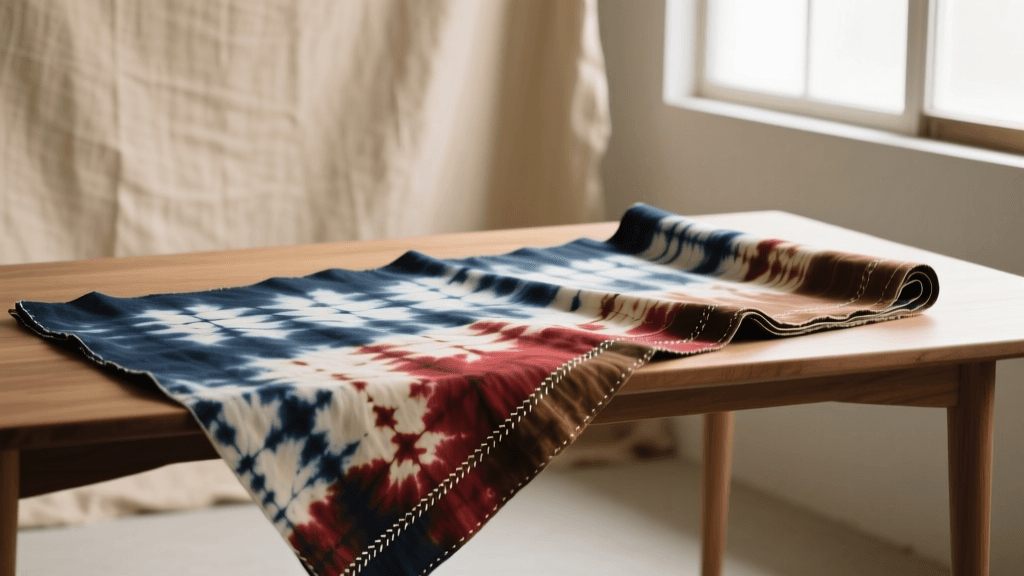
Shibori encompasses a vast array of shaped-resist techniques. The most recognizable is kanoko shibori (fawn-spot tie-dye), which requires an artisan to individually bind thousands of tiny dots with thread before dyeing. Arashi shibori involves wrapping fabric diagonally around a pole and compressing it, yielding striking diagonal rain-like patterns. Authentication Tip: Authentic shibori is inherently three-dimensional. Run your fingers over the fabric; you should feel distinct puckering and textural variations. If the 'shibori' pattern is completely flat, it is a modern digital or roller print.
Yuzen: Paste-Resist Pictorial Masterpieces
Yuzen allows for painterly, multi-colored designs on silk. Artisans apply a water-resistant rice paste (norimaki) to outline the design, preventing dyes from bleeding into adjacent areas. Kyo-yuzen (Kyoto) favors softer, stylized aesthetics, while Kaga-yuzen (Kanazawa) is known for hyper-realistic botanical motifs using a strict five-color palette (Kaga gosai). Authentication Tip: Look for the itome—the ultra-fine white line where the rice paste resisted the dye. This line is rarely perfectly uniform, revealing the human hand behind the work.
Kasuri: The Precision of Ikat Weaving
Kasuri is the Japanese iteration of ikat. Threads are tightly bound and dyed (traditionally in natural indigo) before they are woven on a loom. When woven, the pre-dyed threads align to create patterns, resulting in a characteristic blurry or 'hazy' edge (kasureru). Authentication Tip: Examine the fringe or the inner seams of the garment. In true kasuri, the dye penetrates the core of the yarn. If the inside of the thread is white while the outside is blue, the fabric was printed after weaving.
Practical Authentication Tips for Vintage Textiles
Beyond visual inspection, serious collectors should employ the 'Loupe Test' and the 'Reverse Test'.
- The Loupe Test: Invest in a 10x or 20x jeweler's loupe (cost: $15–$30). Examine the edges of the dyed motifs. Digital prints will reveal a grid of tiny CMYK dots. Hand-dyed Yuzen and Shibori will show continuous, organic dye penetration into the silk fibers.
- The Reverse Test: Open the kimono and look at the back of the fabric. Because traditional Japanese dyeing involves submerging the fabric or brushing dye heavily through the fibers, the reverse side of authentic Shibori and Yuzen will show significant dye penetration. Printed fakes will have a stark white or severely faded reverse side.
According to preservation guidelines discussed by the Textile Society of America, understanding the chemical nature of the dyes and fibers is the first step in preventing irreversible degradation in historical textiles.
Preservation and Storage: A Step-by-Step Protocol
Proper storage is non-negotiable for vintage silk and cotton. Improper handling can lead to shattering silk, permanent creases, and dye transfer. Follow this strict archival protocol:
1. Folding and Padding
Never hang a vintage kimono on a standard hanger; the weight of the silk and the lining will distort the shoulders and cause tearing. Instead, fold the garment along its original seam lines. A standard kimono folds down to roughly 14 x 30 inches (35 x 76 cm).
- Material: Use unbuffered acid-free tissue paper for silk garments (buffered paper contains alkaline reserves that can damage protein-based silk fibers over time). Brands like Gaylord Archival offer 100-sheet packs for approximately $35.
- Method: Place sheets of tissue between every fold to prevent hard creases, which can cause the silk fibers to snap over time.
2. Archival Boxing
Store the folded kimono in an acid-free, lignin-free archival textile box. A standard 33 x 17 x 6-inch box (cost: $40–$60) provides ample room without crushing the garment. Keep the box in a dark, interior closet to avoid UV light exposure and temperature fluctuations.
3. Climate and Pest Control
Silk is highly susceptible to humidity and pests. Maintain a stable environment of 65°F (18°C) and 50% relative humidity. Use a digital hygrometer (cost: $12) to monitor the storage area. For pest deterrence, use natural Japanese cedar blocks (kusunoki or sugi, cost: $20 for a set). Never use mothballs (naphthalene or paradichlorobenzene), as their chemical off-gassing will permanently stain and degrade vintage silk and metallic threads.
Cleaning, Maintenance, and Professional Care
Cleaning vintage Japanese textiles is fraught with risk. The water-soluble nature of some traditional dyes, combined with the delicate state of aged silk, means that home washing is almost always a mistake.
Spot Cleaning vs. Professional Arai-Hari
For minor, localized soil on cotton Kasuri, you may gently dab the area with distilled water and a tiny amount of Orvus WA Paste (a pH-neutral quilt soap, cost: $15). However, for vintage silk Yuzen or Shibori, you must seek a professional who specializes in arai-hari.
Arai-hari is the traditional Japanese method of kimono cleaning. The process involves:
- Completely unpicking the garment into its original flat, rectangular panels.
- Washing each panel individually, sometimes stretching them taut on large wooden boards to dry and realign the fibers.
- Re-sewing the kimono by hand.
This meticulous process typically costs between $150 and $350, depending on the garment's condition and the artisan's location. While expensive, it is the only safe way to clean and restore the structural integrity of a high-value vintage piece. The Metropolitan Museum of Art's Japanese textile collection demonstrates how proper, professional conservation allows these garments to survive for centuries without losing their vibrant luster.
Handling Metallic Threads
Many vintage Yuzen kimono feature surihaku (gold or silver leaf application) or metallic embroidery. These elements are highly fragile. When folding a kimono with metallic threads, ensure the tissue paper completely isolates the metallic sections from touching the silk, as the metallic oxides can cause chemical burns and staining to the adjacent fabric over decades of storage.
Conclusion
Collecting Shibori, Yuzen, and Kasuri is a deeply rewarding pursuit that connects you to the living history of Japanese artisanship. By mastering the tactile and visual cues of authentication and adhering to strict, museum-quality preservation standards, you ensure that these extraordinary textiles will continue to tell their stories for generations to come. Whether you are acquiring a $50 indigo Kasuri yukata or a $2,000 Meiji-era Yuzen uchikake, the respect you afford the craft is reflected in how carefully you preserve it.