Miao Provincial Dress: A Guide to Guizhou Silverwork and Silk
Introduction to Miao Provincial Dress
The Miao people, one of China’s largest and most culturally diverse ethnic minority groups, possess a sartorial heritage that functions as a wearable history book. Lacking a traditional written language for much of their ancient history, the Miao encoded their migration stories, mythology, and clan identities into the intricate provincial dress of their communities. Nowhere is this more evident than in Guizhou province, the mountainous heartland of Miao culture, where regional folk dress reaches its absolute zenith in both textile complexity and metallurgical artistry.
For collectors, cultural enthusiasts, and travelers, understanding the nuances of Miao provincial dress requires a deep dive into its foundational pillars: master-level embroidery, natural indigo dyeing, and heavy, symbolic silverwork. This guide provides an actionable, detailed look into the craftsmanship, regional variations, and practical sourcing of authentic Miao garments.
The Heart of the Garment: Guizhou Embroidery Techniques
Miao embroidery is not a monolith; it comprises over a dozen distinct regional techniques, each serving as a geographical identifier. The most highly prized among collectors and cultural institutions is poxian (broken thread) embroidery and zhou (crepe) embroidery. According to the UNESCO Intangible Cultural Heritage registry, the broader traditions of Chinese silk craftsmanship form the bedrock of these regional textile arts, providing the raw materials necessary for such meticulous work.
Sourcing and Evaluating Embroidery
When evaluating authentic Miao textiles, examine the thread preparation. Master artisans in counties like Taijiang and Jianhe split a single silk thread into up to 16 micro-threads to achieve a gradient effect that mimics painting. A genuine, hand-embroidered festival jacket utilizing the poxian technique requires between 12,000 and 15,000 hours of labor, often taking three to four years to complete.
- Authentication Tip: Look for the indigo-dyed cotton base. Synthetic bases or machine-stitched outlines indicate post-1990s tourist production.
- Cost Guide: Expect to pay upwards of $800 to $2,500 USD for a genuine, mid-20th-century festival jacket in good condition. Contemporary commissioned pieces from recognized heritage artisans can exceed $5,000 USD due to the scarcity of naturally dyed silk threads and the sheer labor hours involved.
Indigo Dyeing and Batik (Laran)
Before a single stitch is placed, the fabric must be prepared. The Black Miao and other subgroups rely heavily on natural indigo dyeing and laran (beeswax batik). The process of achieving the deep, midnight-blue hue characteristic of Miao skirts is incredibly labor-intensive.
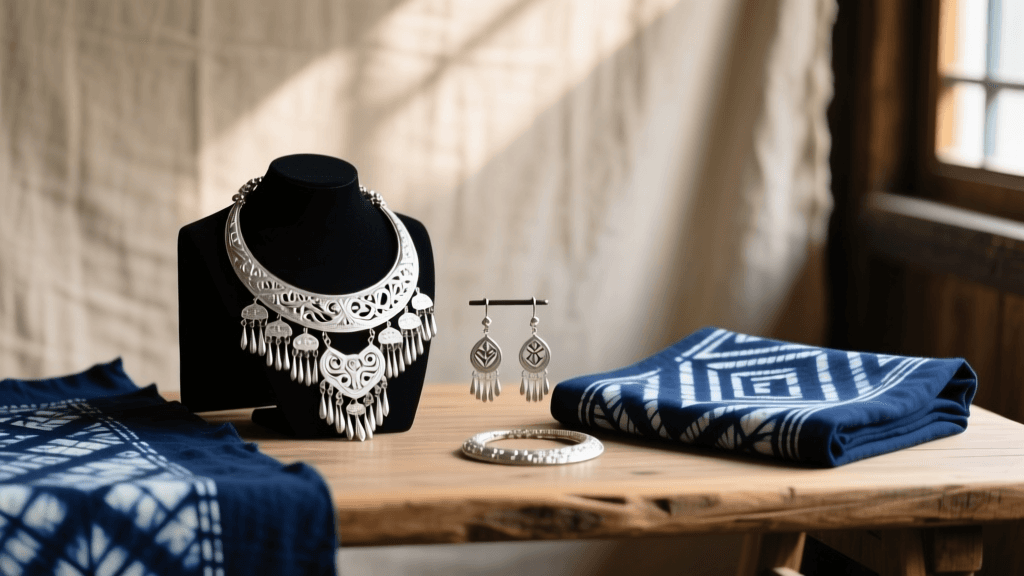
The cotton is dipped into fermented indigo vats up to 30 times. Between each dip, the fabric is washed, dried, and beaten with wooden mallets to compress the fibers and create a subtle, metallic sheen. For batik, artisans use a specialized brass pen called a ladao to draw intricate geometric and floral patterns with melted beeswax. The fabric is then dyed, and the wax is boiled off, revealing crisp white patterns against the deep blue background. When sourcing vintage batik, look for the slight 'crackle' effect where the dye has seeped through natural fractures in the wax—a hallmark of authentic hand-drawn batik that machine printing cannot replicate.
The Weight of Tradition: Miao Silverwork
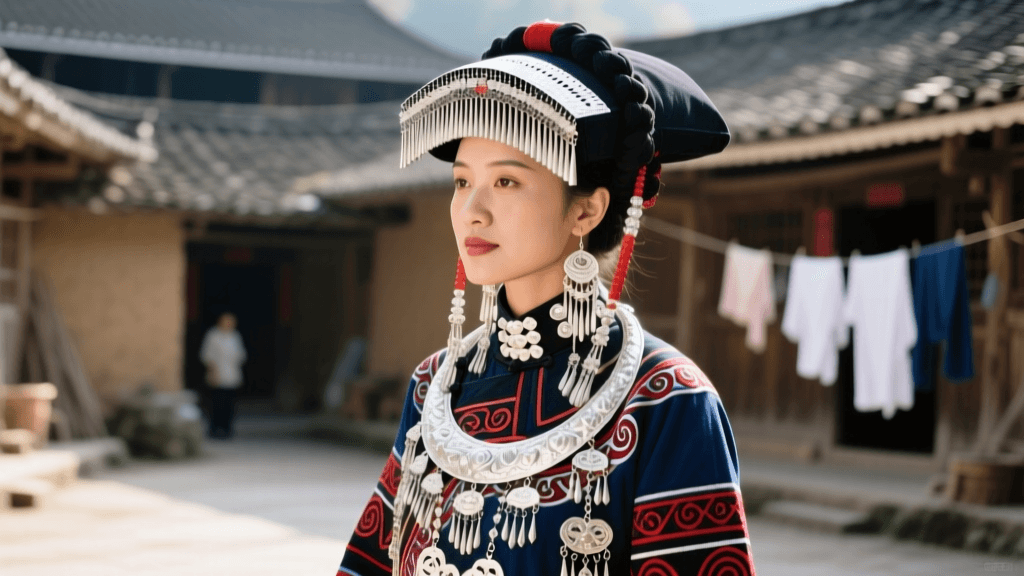
No Miao festival ensemble is complete without silver. The silverwork of the Xijiang and Kaili regions is renowned for its staggering weight and intricate repoussé motifs, featuring dragons, buffalo horns, and the mythical Butterfly Mother. Major institutions like the Metropolitan Museum of Art's Asian Art department frequently highlight the structural complexity of these silver headdresses in their ethnographic textile exhibitions.
Practical Guide to Purchasing Miao Silver
Traditional Miao silver is prized for its high purity, often reaching 99.9% (known as zu yin or foot silver). This makes the metal remarkably soft, allowing artisans to craft impossibly delicate filigree, but it also means the jewelry is heavy and prone to bending if not stored correctly.
- Material Cost: Pure silver fluctuates, but expect the raw material to cost around 5 to 7 RMB per gram on the open market.
- Craftsmanship Fee: Master silversmiths charge between 10 to 25 RMB per gram depending on the complexity of the filigree and repoussé work.
- Weight: A full festival headdress, horn comb, and chest plate can weigh between 5 to 10 kilograms (11 to 22 lbs).
- Total Cost: A complete, authentic 5kg bridal silver set will cost approximately 75,000 to 125,000 RMB ($10,500 to $17,500 USD).
Warning: Beware of 'Tibetan silver' or cheap 'Miao silver' sold in commercial tourist traps; these are often copper-nickel alloys with zero silver content. Always request a hallmark, ask for a purity test, or use a portable precious metal verifier if purchasing high-value items in local markets.
Regional Variations: A Comparison Chart
Guizhou’s mountainous terrain has historically isolated communities, leading to hyper-localized dress codes. Below is a comparison of three major Miao subgroups and their distinct provincial dress characteristics, as documented in various ethnographic studies and collections like those at the British Museum's ethnographic collection.
| Subgroup | Primary Region | Skirt Style | Key Motif | Headdress Type |
|---|---|---|---|---|
| Long Skirt Miao | Leishan / Xijiang | Pleated indigo (up to 20m fabric) | Butterfly Mother | Massive silver horn/buffalo |
| Short Skirt Miao | Rongjiang / Danzhai | Mini-pleated (15-20cm long) | Dragon & Bird | Silver floral pins & combs |
| Black Miao | Zhenfeng / Anshun | Long, unpleated batik cotton | Geometric batik | Turban wrapped with silver |
Practical Guide to Sourcing and Wearing Miao Attire
For those looking to experience, document, or ethically source Miao provincial dress, timing and cultural respect are paramount. The garments are not merely costumes; they are sacred items that connect the wearer to their ancestors.
Timing Your Visit for Festivals
To see these garments in their intended, vibrant context, align your travel with the lunar calendar:
- The Sisters' Meal Festival (Mid-April): Often called the oldest Eastern Valentine's Day, this is the premier event to see the intricate embroidered jackets and heavy silver of the Taijiang region. Young women wear their full bridal and festival sets to attract suitors.
- The Lusheng Festival (October/November): Held post-harvest, this is when the Short Skirt Miao perform traditional dances to the music of the lusheng (a bamboo mouth organ). This festival allows observers to study the kinetic movement of the pleated skirts and the rhythmic chiming of the silver ornaments.
Measurements and Tailoring for Pleated Skirts
If you are commissioning a traditional pleated skirt for personal wear, museum display, or cultural archive, understand that the tailoring process is rigid and time-consuming. The indigo-dyed cotton must be pleated while damp and bound tightly with hemp string to set the folds. This setting process takes 30 to 40 days. A standard festival skirt requires a precise waist measurement, but the hem circumference is universally massive—often exceeding 15 meters (49 feet) to allow for the rhythmic, parasol-like flaring during the Lusheng dance. When storing these skirts, they must remain tightly bound in their hemp ties to prevent the pleats from falling out.
Preserving the Heritage
The rapid urbanization of China and the migration of youth to coastal cities have threatened the transmission of Miao textile and silversmithing skills. However, recent initiatives by cultural cooperatives and the inclusion of Miao embroidery in national intangible cultural heritage registries have sparked a vital revival. By establishing fair-trade cooperatives in Guizhou, a new generation of women is being trained, allowing them to earn a living wage while remaining in their ancestral villages.
By understanding the true cost, labor, and cultural weight of Miao provincial dress, collectors and enthusiasts can ensure their acquisitions support the living communities that keep this breathtaking Asian tradition alive. Whether you are investing in a vintage poxian jacket or commissioning a silver headdress, you are participating in the preservation of a wearable archive that has survived centuries of migration and change.