Miao Ethnic Clothing: Indigo Batik and Silver Traditions
The Living Textiles of the Miao People
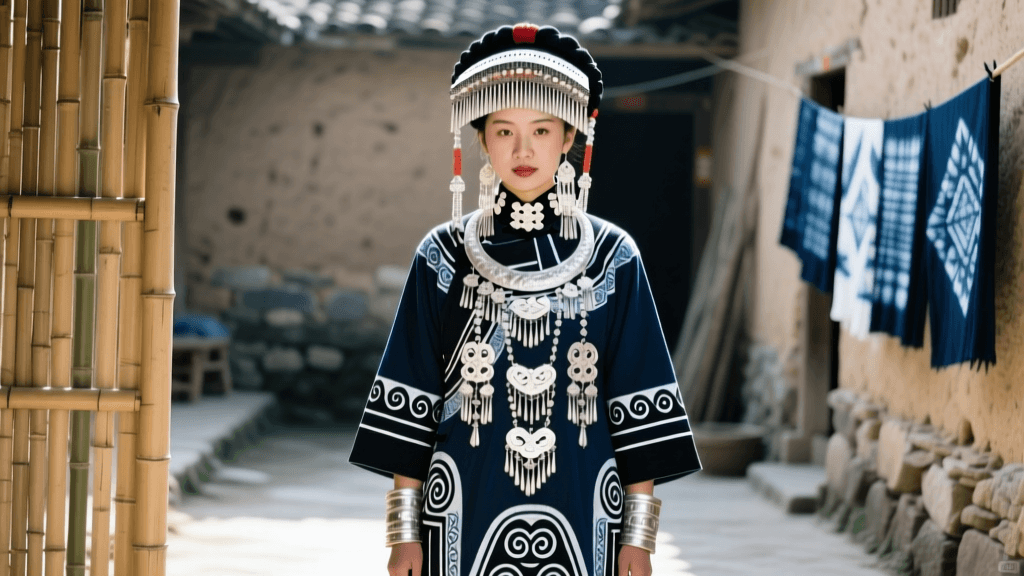
The Miao people, also widely known as the Hmong in Southeast Asian and Western contexts, possess one of the most visually striking and culturally profound sartorial traditions in Asia. According to Encyclopedia Britannica, the Miao are an ethnic group primarily residing in the mountainous regions of southern China, particularly in Guizhou, Yunnan, and Hunan provinces. Because the Miao historically lacked a formal written language, their textiles and garments serve as living history books. Every stitch, motif, and dye technique encodes ancestral migration routes, mythological beliefs, and clan identities. To wear a traditional Miao garment is to wear the history of a resilient people who have preserved their heritage through centuries of migration and adaptation.
The Art of Indigo Batik and Embroidery
The foundation of Miao clothing is deeply rooted in the natural environment of the subtropical mountains. The most iconic textile technique is laran, or beeswax batik, combined with natural indigo dyeing. The process is labor-intensive and requires profound chemical intuition. Artisans harvest Persicaria tinctoria (indigo plant), fermenting the leaves in large wooden vats with rice wine, ash, and sometimes medicinal herbs to maintain the precise alkaline pH required for the dye to bind to cotton fibers.
Using a specialized brass-tipped bamboo pen called a ladao, Miao women draw intricate geometric and floral patterns onto white cotton using melted beeswax. The fabric is then submerged repeatedly into the indigo vat over several weeks. The wax resists the dye, and the natural cracking of the wax creates the highly prized 'ice vein' patterns—delicate, web-like lines that prove the piece was handmade rather than factory-printed. After boiling off the wax, the fabric is often polished by rubbing it with egg whites and smooth river stones, giving the deep blue cloth a lustrous, metallic sheen.
Embroidery is equally vital, with the 'Butterfly Mother' (Mae Bang Feng) being the most sacred motif. According to Miao creation myths, the Butterfly Mother laid twelve eggs, which hatched into humans, dragons, and tigers. This motif is meticulously stitched using raised couching, flat satin stitch, and cross-stitch, often taking a master artisan over a year to complete a single festive jacket.
The Weight of Heritage: Miao Silver Jewelry
No Miao festive ensemble is complete without silver. In Miao cosmology, silver represents light, purity, and protection against malevolent spirits. It is also a traditional store of family wealth, passed down from mother to daughter. The British Museum Collection notes that the sheer volume and weight of Miao silver headdresses, neck rings, and breastplates are unparalleled in global ethnographic textiles and jewelry.
A full festive silver set can weigh between 5 to 10 kilograms (11 to 22 pounds). The silversmithing techniques employed by Miao artisans are highly advanced, utilizing filigree, repoussé, and chasing to create three-dimensional dragons, phoenixes, and blooming lotuses. The silver used is rarely 99.9% pure; it is typically alloyed with copper (usually 60% to 80% silver) to provide the structural rigidity needed to support the massive, intricate shapes of the headdresses and horns without bending under their own weight.
Practical Guide: Sourcing and Authenticating Miao Garments
For collectors, designers, and cultural enthusiasts, sourcing authentic Miao garments and silver requires knowledge, patience, and an understanding of local markets. Here is actionable advice for acquiring genuine pieces:
Where to Source
- Kaili Sunday Market (Guizhou): The best location for vintage textiles. Arrive by 7:00 AM to find local villagers selling heirloom pieces. Expect to negotiate.
- Taijiang and Shidong Towns: Renowned as the epicenters of Miao silver smithing. Here, you can commission bespoke pieces directly from master silversmiths.
- Xijiang Miao Village: Highly commercialized, but useful for finding contemporary, ready-to-wear adaptations of Miao batik for daily use.
Measurements and Fit
Traditional Miao jackets feature a distinct drop-shoulder cut with wide, straight sleeves. When sourcing or recreating a traditional top, look for a wingspan (sleeve to sleeve) of 65cm to 80cm, and a boxy torso width of 55cm to 65cm. The garments are designed to be worn open over a pleated indigo skirt or embroidered apron, relying on layering rather than tailored darts for silhouette.
Cost Expectations
- Vintage Embroidered Jackets: A genuine, fully embroidered vintage jacket from the mid-20th century will cost between $400 and $1,500 USD, depending on the density of the stitching and the rarity of the village style.
- New Indigo Batik: Hand-dyed, hand-drawn batik fabric costs approximately $15 to $35 USD per meter.
- Silver Jewelry: Miao silver is priced by weight plus a craftsmanship fee. Expect to pay the daily spot price of silver plus an artisan fee of 15 to 40 RMB ($2 to $6 USD) per gram. A standard 200-gram silver neck ring will cost roughly $250 to $350 USD.
Authentic vs. Commercial Miao Silver and Textiles
When shopping in tourist hubs or online, it is crucial to distinguish between authentic artisan work and mass-produced souvenirs. Use this comparison chart to guide your purchases:
| Feature | Authentic Artisan Miao | Mass-Produced Commercial |
|---|---|---|
| Silver Content | 60% - 80% pure silver alloy | Brass, nickel, or 'Tibetan silver' (0% pure silver) |
| Indigo Scent | Earthy, fermented, slightly sweet | Chemical, synthetic dye odor or odorless |
| Batik Lines | Irregular 'ice veins' from wax cracking | Perfectly uniform, printed patterns |
| Embroidery Back | Neat, with visible thread paths and knots | Machine-stitched, backed with paper or fusible web |
| Weight of Jacket | Heavy due to dense silk threads and thick cotton | Lightweight, using thin polyester blends |
Caring for Indigo and Silver
Preserving these organic and metallic materials requires specific care routines to maintain their integrity and historical value.
Indigo Textile Care
Natural indigo is notorious for 'crocking'—the transfer of dye to skin or other fabrics. This is normal and actually a hallmark of genuine plant-based indigo. To set the dye and clean the garment, hand wash it in cold water with a pH-neutral detergent. Never use bleach or hot water, as this will strip the indigo and leave the fabric a dull, uneven gray. Dry the garment in the shade; direct sunlight will rapidly fade the deep blue hues. Store indigo textiles wrapped in acid-free tissue paper inside camphor wood chests to deter moths and maintain the fabric's structural integrity.
Silver Maintenance
Miao silver alloys contain copper, making them highly susceptible to tarnishing when exposed to sulfur and humidity. To clean tarnished silver, avoid harsh chemical dips which can damage the delicate filigree work. Instead, use a soft-bristled toothbrush with a paste made of baking soda and water, gently working it into the crevices. Rinse with distilled water and dry immediately with a microfiber cloth. When not being worn, store silver pieces in airtight anti-tarnish bags with silica gel packets to control moisture.
Conclusion
The clothing traditions of the Miao people are a testament to human ingenuity and the desire to preserve cultural memory through material arts. As recognized by global heritage organizations like UNESCO, the preservation of such intangible cultural heritage is vital in a rapidly modernizing world. Whether you are a textile collector, a fashion historian, or a traveler seeking authentic cultural experiences, understanding the profound craftsmanship behind Miao indigo and silver allows you to appreciate these garments not merely as clothing, but as masterpieces of wearable art.