Miao Traditional Dress: Guizhou Silverwork and Pleated Skirts
The Historical Archive of Guizhou's Miao People
Nestled within the karst mountain ranges of southwestern China's Guizhou Province, the Miao people (internationally recognized as the Hmong) have cultivated one of the most visually striking and technically complex sartorial traditions in Asia. Historically lacking a widely used written language, the Miao encoded their genealogies, migration myths, and spiritual beliefs directly into their textiles and metalwork. Today, Miao traditional dress is not merely a festive costume; it is a wearable archive of provincial history. According to textile archives maintained by institutions like the Metropolitan Museum of Art's Asian Textile Collection, Miao garments represent a pinnacle of indigenous craftsmanship, blending structural ingenuity with profound symbolic meaning.
For textile enthusiasts, collectors, and cultural travelers, understanding the regional variations of Miao dress—specifically the iconic hundred-pleat skirts and heavy silverwork of the Qiandongnan Miao and Dong Autonomous Prefecture—offers a masterclass in traditional Asian provincial dress. This guide explores the anatomy of these garments, the meticulous craftsmanship required to create them, and actionable advice for sourcing authentic pieces today.
The Architecture of the Bai Zhe Qun (Hundred-Pleat Skirt)
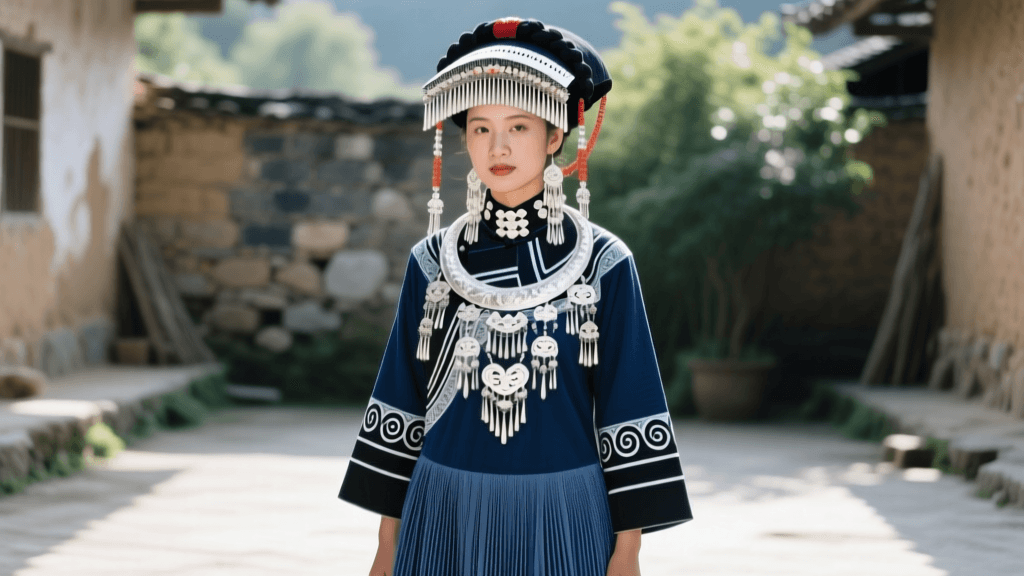
The most defining garment of the Guizhou Miao woman is the bai zhe qun, or "hundred-pleat skirt." Far from a simple gathered waistband, this skirt is a marvel of structural textile engineering. A single authentic skirt requires between 15 to 20 meters of hand-woven, indigo-dyed cotton, which is meticulously compressed into 500 to 1,000 micro-pleats.
The Pleating and Setting Process
Creating the bai zhe qun is a communal, multi-day endeavor. The artisan folds the damp, indigo-dyed fabric into uniform pleats, often using a bamboo mat and straw ropes to bind the fabric tightly. The bound skirt is then steamed and treated with a natural setting agent—traditionally a mixture of egg white, ox-hide glue, or pig's blood. This protein-based treatment permanently locks the pleats into place while giving the stiff cotton a distinct, paper-like sheen and water-resistant quality.
Measurements and Styling
- Length: Typically ranges from 35 cm to 50 cm (mid-thigh to just above the knee), worn over thick, embroidered leggings.
- Waistband: A 10 cm to 15 cm wide band of undyed white cotton or woven brocade, tied securely with a hand-woven sash.
- Pleat Depth: Authentic vintage skirts feature pleats as shallow as 2 mm to 3 mm, creating a dense, accordion-like structure that flares dramatically during the Lusheng (bamboo pipe) festival dances.
Guizhou Silverwork: The Weight of Ancestral Pride
In Miao culture, silver is believed to possess the power to ward off evil spirits, illuminate the path to the afterlife, and display a family's wealth and social standing. Unlike many other Asian traditions where jewelry is delicate and lightweight, Miao silverwork is intentionally massive and heavy. A full festival ensemble can weigh between 8 to 12 kilograms. The Victoria and Albert Museum's Asian Collections frequently highlights the extraordinary silversmithing techniques of Chinese ethnic minorities, noting that Miao silversmiths (who are traditionally male) employ complex repoussé, chasing, and filigree methods to craft intricate motifs like the "Butterfly Mother" and water buffalo horns.
Market Guide: Silver Jewelry Types and Costs
When sourcing Miao silverwork in Guizhou, it is crucial to understand the difference between pure silver, silver alloys, and mass-produced "Tibetan silver" (which often contains no silver at all). Below is a comparison chart of authentic, hand-forged Miao silver pieces sourced from master smiths in Kaili and Xijiang.
| Garment / Accessory | Traditional Motif | Average Weight | Estimated Cost (RMB / USD) |
|---|---|---|---|
| Silver Horn Headdress (Yin Jiao) | Water Buffalo Horns, Dragons | 1.5 kg - 3.5 kg | ¥4,500 - ¥12,000 ($630 - $1,680) |
| Multi-Tiered Neck Torc | Geometric twists, Fish | 0.5 kg - 1.2 kg | ¥1,500 - ¥3,500 ($210 - $490) |
| Butterfly Mother Pectoral | Butterfly Mother, Birds | 0.4 kg - 0.9 kg | ¥1,200 - ¥2,800 ($168 - $390) |
| Embroidered Cap with Silver Studs | Floral, Sun symbols | 0.2 kg - 0.4 kg | ¥600 - ¥1,500 ($85 - $210) |
Indigo Batik (Laran) and the Butterfly Mother
Beneath the heavy silver lies the foundation of Miao dress: indigo-dyed batik (laran) and embroidery. The Miao batik process utilizes beeswax applied with a specialized brass tool called a ladao. The artisan draws intricate, freehand geometric and floral patterns onto white cotton. The fabric is then submerged in a living indigo vat.
The Living Indigo Vat
An authentic Guizhou indigo vat is a fermented ecosystem. It consists of locally grown indigo leaves (Persicaria tinctoria), rice wine, wood ash lye, and sometimes medicinal herbs. The vat must be "fed" regularly with rice wine and kept at a specific temperature. When the wax-resist fabric is pulled from the vat and exposed to oxygen, it oxidizes from yellow-green to a deep, rich blue. The "ice crackle" effect—where the wax fractures in the cold dye, allowing blue veins to seep into the white pattern—is highly prized and impossible to replicate perfectly with modern synthetic resists.
The motifs embroidered over this batik are deeply symbolic. The "Butterfly Mother" (Mai Bang) is the most sacred, representing the ancestral mother who birthed the first humans and gods from a maple tree. Recognizing these motifs is essential for collectors seeking authentic, culturally significant pieces rather than generic tourist souvenirs.
Practical Guide: Sourcing, Authenticating, and Care
For collectors and fashion historians looking to acquire genuine Miao provincial dress, navigating the markets of Guizhou requires a trained eye. The rise of cultural tourism has flooded markets in Xijiang Miao Village with machine-embroidered, chemically dyed replicas. Here is how to source authentic garments and care for them properly.
How to Authenticate Handcrafted Miao Textiles
- Examine the Reverse Side: Hand-embroidered Miao jackets (particularly those using the seed stitch or couching techniques) will have a nearly identical pattern on the reverse side, with threads carried over meticulously. Machine embroidery will show a chaotic web of white bobbin thread on the back.
- Smell the Fabric: Authentic, naturally fermented indigo has a distinct, earthy, slightly alkaline scent. Synthetic indigo smells like petrochemicals or is entirely odorless.
- Check the Silver Hallmarks: Traditional village smiths may not use standardized stamps, but authentic silver will tarnish evenly and emit a dull thud when dropped on a wooden table. High-pitched ringing indicates brass or copper alloys.
Sourcing Hubs in Guizhou
- Kaili Ethnic Minority Museum Market: Best for vintage textiles, antique silver, and high-end collector pieces. Prices are higher, but provenance is more reliable.
- Shiqiao Village (Danzhai County): The premier destination for authentic laran (batik). You can commission custom yardage directly from the village's female cooperatives.
- Leishan County Silversmiths: Specifically the village of Kongbai, renowned for generations of master silversmiths who forge the heavy festival headdresses.
Garment Care and Maintenance
Preserving a bai zhe qun and its accompanying indigo jackets requires specialized care. Never machine wash or dry clean these garments. The harsh chemicals in dry cleaning will strip the natural indigo and dissolve the protein-based pleat setters.
- Cleaning: Spot clean only with a damp cloth and cold water. If the indigo rubs off (crocking), this is normal for natural dyes; simply air the garment out.
- Storage: Store pleated skirts tightly rolled or bound with cotton tape to maintain the pleat structure. Keep silverwork in anti-tarnish cloth bags, separated from the textiles to prevent silver sulfide from staining the cotton.
- Re-pleating: If the skirt loses its shape due to humidity, it can be lightly misted with water, re-bound with cotton string, and gently steamed to reactivate the natural glues.
Conclusion
The traditional dress of the Guizhou Miao is a profound testament to human resilience and artistic ingenuity. From the architectural brilliance of the hundred-pleat skirt to the spiritual weight of the silver horn headdress, these garments transcend mere fashion. They are the living, breathing history of a people who wove their world into the very fabric of their clothes. As recognized by global heritage organizations like UNESCO's Intangible Cultural Heritage lists, the preservation of these regional crafts is vital. By understanding the metrics, materials, and markets of Miao dress, collectors and enthusiasts can help support the village artisans keeping these extraordinary provincial traditions alive.