Guide To Miao Folk Dress: Guizhou Skirts & Silverwork
The Living Textiles of Guizhou: An Introduction to Miao Dress
In the mist-shrouded mountains of China's Guizhou province, the Miao (also known as Hmong) people have cultivated one of the most intricate and visually stunning textile traditions in Asia. Because the Miao historically lacked a formal written language, their garments serve as living historical records. Every stitch, dye bath, and silver ornament encodes stories of ancestral migration, mythological beliefs, and regional identity. Today, Miao folk dress remains a vibrant part of daily and festival life, representing a pinnacle of regional provincial craftsmanship that continues to captivate textile collectors and fashion historians worldwide.
The Anatomy of the Miao Pleated Skirt (Baiqun)
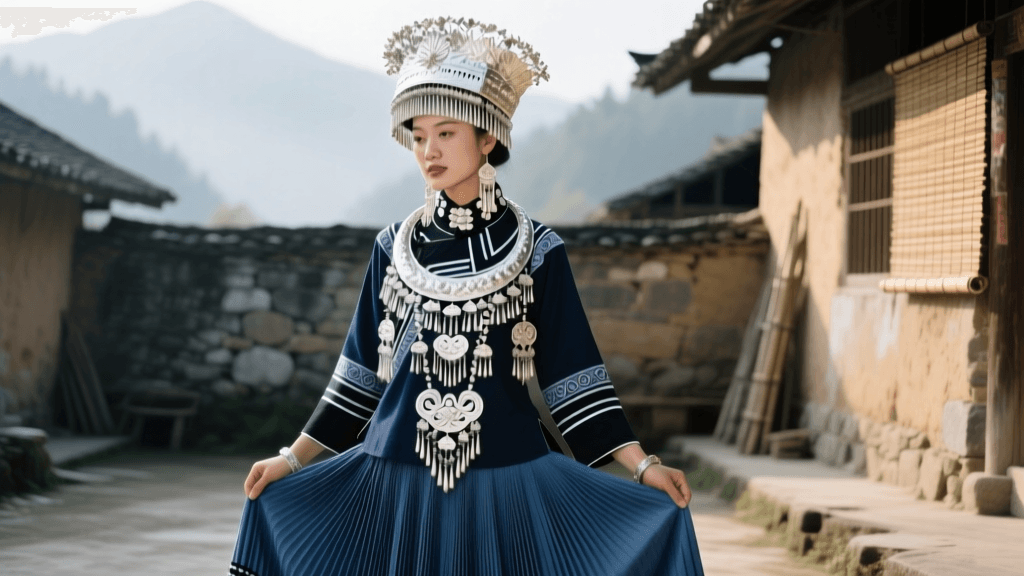
The centerpiece of traditional Miao women's attire is the baiqun, or hundred-pleat skirt. This garment is a marvel of structural textile engineering, requiring immense patience and precision. A single high-quality festival skirt can utilize up to 15 meters of hand-woven cotton and feature anywhere from 500 to over 1,000 individually hand-folded pleats.
The Indigo Dyeing and Pleating Process
The creation of a baiqun begins with the cultivation of the indigo plant (Strobilanthes cusia). The leaves are fermented in wooden vats with rice wine and ash water to create a rich, living dye vat. The cotton is dipped repeatedly over several weeks, oxidizing in the air between dips, until it achieves a deep, lustrous navy-blue or near-black hue. According to cultural records documented by institutions like the British Museum Asian Textile Collection, the subsequent pleating process is just as arduous. Artisans fold the damp, dyed fabric by hand, pinning each pleat with fine bamboo splints or binding them tightly with cotton thread. The bundled skirt is then steamed to permanently set the pleats, a technique that allows the skirt to flare out dramatically like a bell when worn.
Embroidery: The Butterfly Mother and Dragon Motifs
Miao embroidery is renowned for its complexity, utilizing techniques such as flat stitch, braid stitch, and the highly specialized "broken thread" method, where silk threads are twisted and couched onto the fabric to create a three-dimensional, textured surface. The motifs are deeply symbolic. The "Butterfly Mother" (Mai Bang) is a ubiquitous design, representing the mythical ancestor of the Miao people who hatched from a maple tree. Water dragons, buffalo horns, and stylized birds are also common, serving as protective talismans. A fully embroidered festival jacket can take a skilled artisan over a year to complete, working solely during the agricultural off-season.
Silverwork: The Weight of Ancestral Pride
No Miao festival ensemble is complete without elaborate silver adornments. Silversmithing is a revered male-dominated craft in Miao villages. The silverwork is not merely decorative; it is a display of familial wealth and spiritual protection. A full festival silver set includes a towering horned headdress, heavy multi-tiered neck rings, chest plates, and dangling hairpins.
For collectors and enthusiasts looking to acquire authentic pieces, it is crucial to understand the weight and material. Traditional festival sets can weigh between 5 to 10 kilograms. While historical pieces were made of pure silver, many modern commercial reproductions utilize silver-plated copper or aluminum to reduce weight and cost. When sourcing, always request a hallmark or perform a specific gravity test if purchasing high-value vintage items.
Regional Variations: Miao Subgroups of Guizhou
The Miao are not a monolith; they are divided into numerous subgroups, often categorized by outsiders based on their distinct regional clothing styles. Below is a comparison chart detailing the primary variations found across Guizhou:
| Subgroup Name | Skirt Length & Style | Dominant Colors | Key Silver / Accessory | Primary Region |
|---|---|---|---|---|
| Long Skirt Miao | Calf-length, heavily pleated, layered with aprons | Deep Indigo, Black, Bright Silk Accents | Silver Horn Headdress, Heavy Neck Torcs | Leishan, Xijiang |
| Short Skirt Miao | Mini-length (15-20 cm), worn over woven leggings | Indigo, Crimson, Emerald Green | Silver floral hairpins, Beaded sashes | Danling, Rongjiang |
| Black Miao | Long, wide, unpleated or minimally pleated wrap skirts | Stark Black, minimal embroidery | Thick silver collars, Turban wraps | Kaili, Majiang |
| White Miao | Pleated skirts with extensive white cross-stitch applique | White base, Red and Blue thread | Silver combs, Embroidered capes | Puding, Zhenning |
Practical Sourcing Guide: Where and How to Buy
For textile collectors, fashion designers, and cultural enthusiasts, sourcing authentic Miao garments requires navigating local markets and understanding regional commerce. As noted in travel and cultural guides like China Highlights' Xijiang Miao Village Guide, the commercialization of Miao areas has created a mix of mass-produced souvenirs and genuine artisanal crafts.
Market Locations and Timing
- Kaili Sunday Market: The premier destination for serious collectors. Villagers from surrounding mountains gather to trade vintage textiles, raw indigo cloth, and handmade silver. Arrive by 8:00 AM for the best selection.
- Xijiang Qianhu Miao Village: Highly commercialized but offers excellent access to contemporary silversmiths and custom embroidery studios. Ideal for commissioning new, bespoke pieces.
- Shiqiao Village: Famous for its traditional paper-making and indigo dyeing workshops. You can purchase directly from the dye masters here.
Pricing and Authentication
Understanding the cost structure is vital to avoid overpaying for factory-made replicas.
Vintage Indigo Pleated Skirts: Authentic, mid-20th-century skirts with natural wear and hand-spun cotton typically range from $150 to $400 USD (approx. 1,000 - 2,800 RMB). Look for the distinct, slightly uneven sheen of natural indigo and the smell of fermented dye, which synthetic fabrics lack.
Embroidered Festival Jackets: Vintage jackets featuring the "broken thread" technique and silk embroidery command premium prices, often between $500 and $1,200 USD. New, custom-commissioned jackets take 3 to 6 months to complete and cost roughly $300 to $600 USD, depending on the density of the stitch work.
Silver Adornments: Priced by weight plus craftsmanship. Expect to pay the daily spot price of silver plus a 20% to 40% artisan premium. A solid silver neck ring (weighing approx. 300 grams) will cost around $250 to $350 USD.
Garment Care and Maintenance
Preserving Miao textiles requires specific care protocols to maintain the integrity of the natural dyes and delicate threads.
- Washing Indigo: Never machine wash or use harsh alkaline detergents on natural indigo. Spot clean with cold water and a pH-neutral soap. The color will naturally crock (rub off) when new; this is a hallmark of organic dye.
- Storing Pleats: Store pleated skirts rolled tightly around a cardboard tube or bundled in their traditional circular fold. Hanging them for long periods will cause the bottom pleats to stretch and lose their structural memory.
- Silver Maintenance: Miao silver is often intentionally oxidized to highlight the intricate repousse patterns. Do not use chemical silver dips, which will strip the dark patina from the crevices. Instead, polish only the raised areas with a soft, dry jeweler's cloth.
Conclusion
The regional folk dress of the Guizhou Miao is far more than provincial attire; it is a wearable archive of a resilient people. From the architectural brilliance of the thousand-pleat indigo skirt to the mythological narratives woven into silk embroidery, these garments demand respect and careful preservation. Whether you are sourcing a vintage piece for a private collection or commissioning a modern interpretation, understanding the profound craftsmanship and regional nuances of Miao dress ensures that this extraordinary Asian tradition continues to be valued and protected for generations to come. For further reading on the broader context of Asian ethnic textiles, consult resources such as the Hmong Clothing Historical Archives.