Miao Silver and Silk: Guizhou's Traditional Folk Dress Guide
The Living Heritage of Guizhou's Miao Folk Dress
Nestled in the mist-shrouded mountains of southwestern China, Guizhou Province is home to one of the most visually striking and culturally profound sartorial traditions in Asia: the folk dress of the Miao people. Unlike the widely recognized Hanfu or the tailored Qipao, Miao provincial dress is a vibrant, heavy, and deeply symbolic ensemble that serves as a wearable archive of the community's history, mythology, and ancestral worship. For textile collectors, cultural historians, and fashion enthusiasts, understanding the anatomy of Miao regional dress offers a masterclass in indigenous craftsmanship.
The Miao (closely related to the Hmong diaspora) have a long history of migration and resilience. According to Britannica's ethnographic overview of the Hmong and Miao peoples, their textile traditions evolved not merely as decoration, but as a vital method of recording history and clan identity in the absence of a widely used written language. Every stitch, silver ornament, and indigo dye bath carries the weight of centuries. Today, the provincial dress of Guizhou's Miao communities remains a cornerstone of regional identity, worn during the Lusheng Festival, weddings, and ancestral rites.
Anatomy of the Miao Festive Ensemble
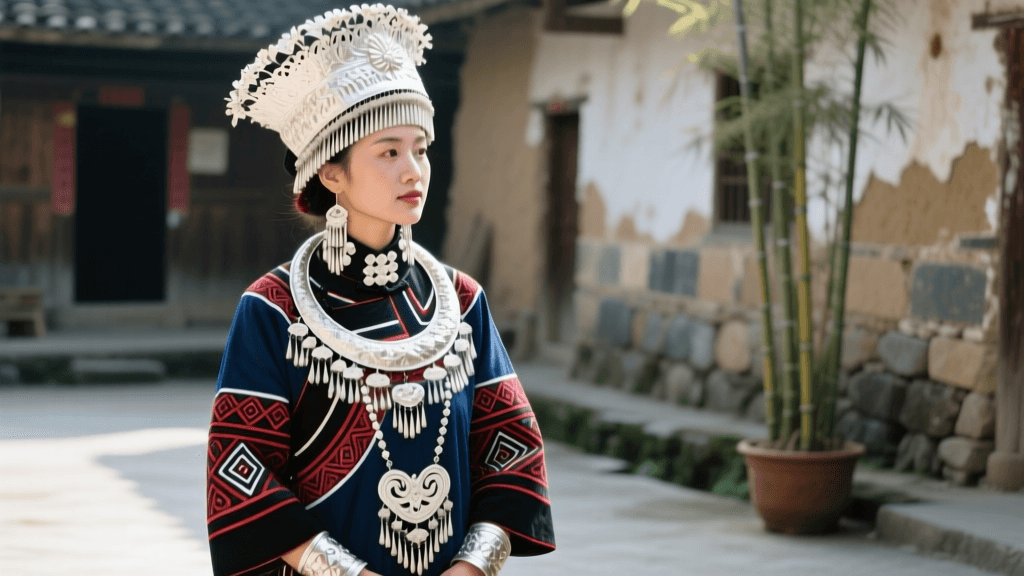
A complete festive Miao ensemble from the Qiandongnan (Southeast Guizhou) region is an engineering marvel of textiles and metallurgy. It is composed of three primary elements: the indigo-dyed pleated skirt, the heavily embroidered cross-collar jacket, and the monumental silver jewelry set.
The Indigo Batik and Pleated Skirt (Bai Zhe Qun)
The foundation of the female festive dress is the bai zhe qun, or hundred-pleat skirt. Creating this garment is an exercise in extreme patience and precise regional chemistry. Artisans cultivate indigenous indigo plants, fermenting them in wooden vats with rice wine and wood ash to create a rich, living dye bath. The cotton fabric is dyed repeatedly over several weeks, then beaten with wooden mallets to compress the fibers and create a subtle, metallic sheen.
The pleating process is entirely manual. A single skirt requires between 10 to 15 meters of wide cotton cloth. The artisan folds the fabric into hundreds of micro-pleats, binding them tightly with straw thread and treating the fabric with egg white and ox-hide glue to set the structure. The final measurement for a traditional drop is usually between 60cm and 75cm, but the circumference can expand to over 5 meters when the wearer twirls during the Lusheng dance. Commissioning a genuine hand-pleated indigo skirt today costs between $300 and $600 USD, and the fermentation and setting process dictates a lead time of 3 to 5 months.
The Crown of the Ancestors: Miao Silverwork
No discussion of Guizhou's provincial dress is complete without addressing the silver. The Miao believe that silver possesses the spiritual power to ward off evil spirits and illuminate the path to the ancestral realm. A full festive silver set for a young woman can weigh anywhere from 5 to 10 kilograms. The set typically includes a towering horned crown (yin jiao), multiple tiered neck rings, a large chest plate adorned with mythical beasts, and dozens of hairpins and bracelets.
Silversmithing in villages like Xijiang and Kongming is a hereditary trade. The silver is forged, filigreed, and repoussed using techniques that have remained unchanged for generations. When sourcing Miao silver, buyers must understand the pricing structure. While raw silver fluctuates around $0.80 to $1.00 per gram, traditional Miao silverwork is priced by the artistry. Expect to pay $2.50 to $5.00 per gram for a finished piece from a master artisan. A complete 5kg festive set can easily cost between $12,500 and $25,000 USD, making it a significant investment and a family heirloom passed down through matrilineal lines.
Storytelling in Thread: Miao Embroidery (Miao Xiu)
The jackets and aprons worn over the pleated skirt are canvases for Miao embroidery. Recognized by the UNESCO Intangible Cultural Heritage registry for China, these embroidery techniques encompass over a dozen distinct regional stitches, including couching, horsehair wrapping, and intricate cross-stitch. The motifs are deeply cosmological. The most prevalent is the 'Butterfly Mother' (Mai Bang), the mythical progenitor of the Miao people, often depicted alongside water buffaloes, dragons, and birds. The vibrant silk threads—historically dyed with local flora and minerals—contrast sharply against the dark indigo background, creating a visual depth that institutions like the Smithsonian National Museum of Asian Art frequently highlight in their textile conservation exhibitions.
Comparison Chart: Everyday vs. Festive Miao Dress
Understanding the distinction between daily provincial wear and festival attire is crucial for collectors and those looking to commission pieces. The table below outlines the practical differences.
| Feature | Everyday Provincial Dress | Festive / Ceremonial Dress |
|---|---|---|
| Skirt Pleats | 50 - 100 pleats | 500+ micro-pleats |
| Embroidery Density | Minimal (hems and cuffs only) | Full coverage (chest, back, sleeves) |
| Silver Weight | 0.5 kg (small earrings, single bangle) | 5.0 kg - 10.0 kg (full crown and chest plates) |
| Indigo Dye Baths | 5 - 10 dips (lighter blue) | 20+ dips (deep, near-black blue with sheen) |
| Creation Time | 1 - 2 months | 12 - 24 months |
| Estimated Cost (USD) | $150 - $300 | $2,500 - $15,000+ (excluding heavy silver) |
Actionable Sourcing and Commissioning Guide
For those seeking to acquire authentic Miao regional garments, whether for personal wear, theatrical costuming, or private textile collections, navigating the local markets requires specific knowledge and timing.
- Where to Go: The epicenter of Miao textile and silver trade is Kaili City, specifically the Sunday cattle and craft markets. For high-end, bespoke commissions, visit the silversmith alleys of Xijiang Qianhu Miao Village or the embroidery cooperatives in Taijiang County.
- Commissioning a Jacket: When ordering a custom embroidered jacket, provide your exact shoulder width, bust, and sleeve length. Traditional Miao jackets are cut flat with no darts, relying on the cross-collar (jiaoyi) and side ties for fit. Request a cotton-silk blend lining, as raw silk can be abrasive against the skin when paired with heavy silver neck rings.
- Verifying Silver Purity: While antique pieces may contain lower silver alloys or white copper to reduce weight and cost, modern master artisans use 990 or 999 purity silver. Always request a hallmark stamp and a handwritten receipt detailing the exact gram weight and purity. Bring a small neodymium magnet; silver is non-magnetic, and a magnet will easily expose iron or steel core beads.
- Timing Your Visit: To see the garments in their full, living context and to network with the best artisans, plan your trip to coincide with the Lusheng Festival (usually held in the 9th lunar month, around October) or the Sister's Meal Festival (spring). Artisans are most active and receptive to large commissions during these periods.
Care and Maintenance of Provincial Textiles
Maintaining the structural integrity of Miao folk dress requires specialized care. The indigo dye, while incredibly colorfast once set, can bleed if exposed to modern alkaline detergents. Never machine wash a Miao pleated skirt or embroidered jacket. Spot clean with cold water and a pH-neutral soap. To preserve the pleats of the bai zhe qun, the skirt must be stuffed with acid-free tissue paper and stored flat in a cool, dry environment; hanging the skirt will cause the heavy cotton to stretch and ruin the egg-white-set pleats.
Silver jewelry must be stored in airtight bags with anti-tarnish silica strips. The oils from human skin actually help maintain the shine of worn silver, but pieces kept in humid environments will develop a black sulfide layer. Clean tarnished silver gently with a soft polishing cloth, avoiding harsh chemical dips that can strip the intentional oxidized detailing in the filigree work.
"A Miao girl's silver and thread are not just her dowry; they are the map of her ancestors and the armor for her spirit." — Proverb from the Qiandongnan artisan cooperatives.
Preservation and Modern Revival
As urbanization pulls younger generations away from Guizhou's mountain villages, the painstaking skills required for traditional indigo fermentation and micro-pleating face the threat of attrition. However, a robust revival movement is underway. Local government initiatives and international textile NGOs are establishing cooperatives that pay fair-trade wages to village women, allowing them to monetize their embroidery skills without leaving their communities. Furthermore, contemporary Chinese fashion designers are increasingly integrating Miao motifs and indigo textiles into modern haute couture, bringing the provincial dress of Guizhou to global runways while ensuring the ancestral techniques survive for the next generation.