Miao Ethnic Clothing: A Guide to Silver & Embroidery
Introduction to Miao Clothing Traditions
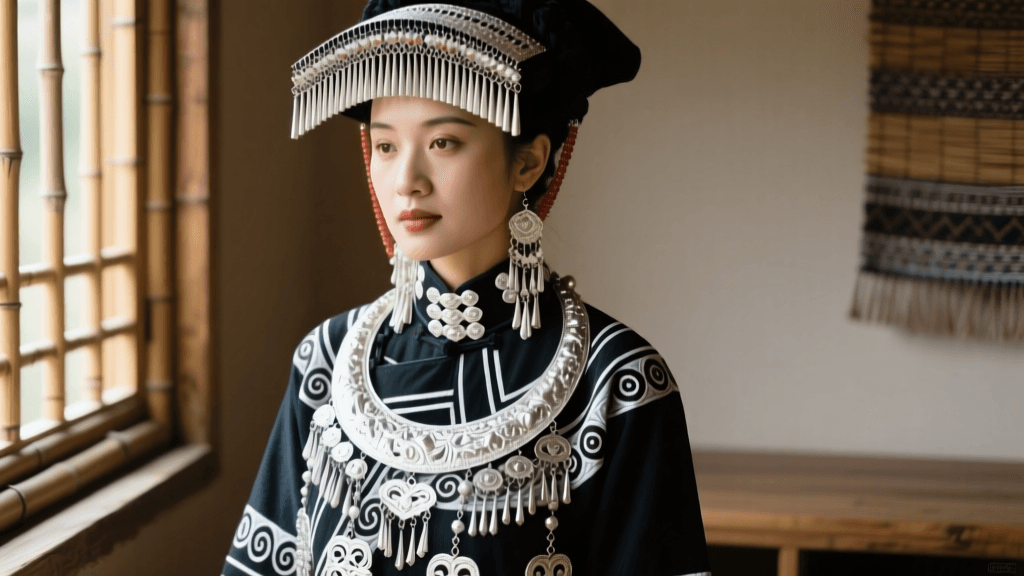
The Miao people, widely known internationally as the Hmong, possess one of the most visually striking and culturally profound sartorial traditions in Asia. Concentrated primarily in the mountainous regions of China’s Guizhou, Hunan, and Yunnan provinces, the Miao have historically utilized their clothing as a ‘wearable history book.’ Because the Miao did not possess a widely used written language until the mid-20th century, their history, mythology, and clan identities were meticulously encoded into the intricate embroidery patterns and heavy silver ornaments that adorn their traditional garments. Today, Miao clothing remains a vibrant symbol of ethnic pride, worn during major festivals such as the Lusheng Festival and the Miao New Year, as well as during weddings and coming-of-age ceremonies.
For textile collectors, cultural enthusiasts, and fashion historians, understanding the nuances of Miao ethnic clothing requires a deep dive into two primary elements: the masterful silversmithing that creates their iconic jewelry, and the painstaking embroidery techniques that transform simple hemp and cotton into museum-worthy art. According to cultural profiles documented by Encyclopedia Britannica, the Hmong and Miao peoples share deep ancestral roots, and their textile traditions serve as a vital link to their migratory history across Southeast Asia and Southern China.
The Significance of Miao Silver Jewelry
In Miao culture, silver is far more than a precious metal; it is a spiritual shield and a marker of social status. Traditional belief dictates that silver possesses the power to ward off evil spirits, dispel negative energy, and protect the wearer from illness. A Miao woman’s silver collection is often the culmination of generations of family wealth, with parents beginning to commission silver pieces for their daughters from the moment they are born, ensuring they have a complete, heavy set by the time they reach marriageable age.
The craftsmanship involved in Miao silversmithing is highly specialized, typically passed down from father to son within specific artisan villages like Shidong in Guizhou province. The silversmiths employ techniques such as filigree, repoussé, and intricate casting to create motifs of dragons, phoenixes, butterflies, and water buffalo.
Actionable Advice: Buying Authentic Miao Silver
If you are looking to purchase authentic Miao silver jewelry, whether as an investment or for cultural appreciation, you must understand the metallurgy and market dynamics:
- Purity Matters: Traditional Miao festival silver is crafted from 999 pure silver (often referred to as ‘fine silver’). This makes the metal highly malleable, allowing for the incredibly delicate filigree work seen in silver horn crowns. However, 999 silver is soft and easily bent. For everyday wear items like bracelets or rings, look for 925 sterling silver, which is alloyed with copper for durability.
- Weight Verification: Authentic festival sets are remarkably heavy. A complete bridal or festival silver set—including the horned crown, hairpins, multiple neck rings, and a chest plate—can weigh anywhere from 5 to 10 kilograms (11 to 22 lbs). When purchasing individual pieces, always request the exact gram weight. Authentic artisans price their work based on the daily spot price of silver plus a labor fee (usually calculated per gram of silver used).
- Magnet and Sound Tests: Pure silver is non-magnetic. Furthermore, when struck gently, 999 silver produces a dull, low-pitched thud rather than the high-pitched, prolonged ringing associated with steel or heavily alloyed metals.
Miao Embroidery: Techniques and Motifs
Miao embroidery, or Miao xiu, is globally recognized for its complexity, vibrant color palettes, and mythological depth. The tradition is so significant that various forms of Miao embroidery have been inscribed on the national and international registers of intangible cultural heritage, a testament to its value as noted by the UNESCO Intangible Cultural Heritage lists. The motifs are not merely decorative; they are narrative. The ‘Butterfly Mother’ (Mais Bangx Mais Lief) is a central figure in Miao creation mythology, believed to be the ancestor of all living things, including humans, dragons, and elephants. Consequently, butterfly motifs are ubiquitous on the backs of jackets and the hems of skirts.
The techniques vary by region. The Xijiang area is famous for its flat stitch and braid stitch, creating dense, raised textures. In contrast, the Shidong area is renowned for its ‘broken thread’ embroidery and intricate appliqué work using silk and metallic threads. The base fabric is traditionally hand-woven cotton or hemp, which is then repeatedly dyed in natural indigo vats and beaten with wooden mallets to create a stiff, glossy finish that serves as the perfect canvas for the vibrant silk threads.
Actionable Guide: Commissioning Custom Miao Embroidery
Commissioning a custom, hand-embroidered Miao jacket is a rewarding but time-intensive process. To ensure a proper fit and an authentic result, follow these guidelines when working with artisans in Guizhou or specialized cultural brokers:
- Select the Base Fabric: Opt for traditional indigo-dyed hemp or heavy cotton. If you prefer a lighter garment for modern wear, request a raw silk base, though this deviates from strict historical accuracy.
- Provide Exact Measurements: Miao jackets are typically cross-collared and loose-fitting, but precise measurements are required for the embroidered panels to align correctly. You must provide:
- Shoulder Width: Measured from the edge of one shoulder bone to the other.
- Bust/Chest: Measured around the fullest part.
- Sleeve Length: Measured from the shoulder seam to the wrist bone.
- Back Length: Measured from the base of the neck to the desired hemline (traditional jackets often end at the high hip to allow the pleated skirt to show).
- Hem Width: The total circumference of the bottom opening.
- Choose Your Motifs: Specify if you want traditional mythological scenes (like the Butterfly Mother or the battle between the dragon and the tiger) or geometric floral patterns. Note that geometric patterns are generally faster to complete than complex narrative scenes.
- Establish the Timeline: Authentic hand-embroidery cannot be rushed. A heavily embroidered festival jacket with raised braid stitching requires between 3 to 6 months of continuous labor by a master artisan. Simple daily-wear jackets with sparse applique may take 4 to 6 weeks.
Buyer’s Guide: Sourcing and Pricing
When sourcing Miao garments, buyers must navigate the difference between authentic, village-made pieces and mass-produced, machine-embroidered replicas designed for the tourist market. The Metropolitan Museum of Art’s textile archives highlight the structural integrity and natural dye processes of historical Chinese minority textiles, which are entirely absent in modern synthetic replicas. Below is a comparison chart to help you budget and set expectations for authentic Miao clothing and accessories.
| Item Description | Material & Technique | Estimated Cost (USD) | Lead Time | Best Use Case |
|---|---|---|---|---|
| Festival Silver Crown (Horns) | 999 Pure Silver, Filigree & Repoussé (approx. 1.2kg) | $900 - $1,500 | 4 - 8 Weeks | Display, Ceremonial Wear, Investment |
| Heavy Festival Chest Plate | 999 Silver with dangling bells and butterfly motifs | $600 - $1,000 | 4 - 6 Weeks | Full Festival Attire, Photography |
| Hand-Embroidered Festival Jacket | Indigo Hemp Base, Silk Braid & Flat Stitch | $500 - $1,200 | 3 - 6 Months | Collectors, Cultural Exhibitions, Heirloom |
| Traditional Pleated Skirt | Indigo-dyed Cotton, Hand-pleated and bound | $150 - $350 | 3 - 5 Weeks | Traditional Dress, Dance Performances |
| Machine-Embroidered Tourist Set | Polyester Blend, Synthetic Threads, Machine Stitch | $40 - $90 | Immediate | Costumes, Casual Souvenirs, Stage Props |
Caring for Miao Textiles and Silver
Preserving the integrity of Miao garments requires specialized care, as the materials are entirely natural and highly reactive to modern environmental factors.
Textile and Indigo Care
Warning: Never wash authentic indigo-dyed Miao textiles in water. Indigo is a surface-level vat dye that will bleed aggressively and strip the fabric of its deep, lustrous blue-black patina. Furthermore, the stiff, glossy finish achieved by beating the fabric with wooden mallets will be permanently destroyed by water and detergents.
To clean a Miao jacket, use a soft-bristled brush to gently remove dust. For odors, air the garment outside in a shaded, well-ventilated area. Never expose indigo-dyed textiles to direct sunlight, as UV rays will rapidly fade the natural dye to a dull, uneven gray. Store the garments flat in a cool, dry place, layered with acid-free tissue paper to prevent the embroidery threads from catching on the textured hemp base.
Silver Maintenance
Miao silver, particularly 999 pure silver, is highly susceptible to tarnishing when exposed to sulfur in the air and moisture. However, a slight, darkened patina in the crevices of filigree work is often desirable, as it highlights the three-dimensional depth of the craftsmanship.
- Do Not Use Chemical Dips: Avoid commercial silver cleaning dips or harsh polishes. These will strip the metal to a blinding, unnatural white and can damage any integrated enamel or beadwork.
- Gentle Polishing: Use a dry, untreated microfiber cloth or a specialized silver polishing cloth to gently buff only the raised, high-friction areas of the silver.
- Storage: Store silver pieces in individual anti-tarnish flannel bags. Include silica gel packets and 3M anti-tarnish strips in the storage container to absorb ambient moisture and neutralize sulfur compounds. Keep heavy silver neck rings laid flat; hanging them can cause the soft 999 silver to warp under its own weight over time.
Conclusion
The clothing traditions of the Miao ethnic minority represent a masterclass in wearable art, where every stitch and silver curve tells a story of survival, spirituality, and community. Whether you are a collector seeking a museum-grade embroidered jacket, a jeweler studying traditional filigree techniques, or a traveler looking to bring home an authentic piece of Guizhou’s heritage, approaching these garments with an understanding of their craftsmanship ensures their preservation for future generations. By supporting authentic village artisans and respecting the time-intensive nature of their work, we help keep the vibrant legacy of the Miao people alive in the modern world.