Miao Embroidery & Silver: A Guide to Hmong Traditional Dress
Introduction to Miao Sartorial Heritage
The Miao people, widely known in the West as the Hmong, represent one of China's most culturally vibrant and historically rich ethnic minority groups. Concentrated primarily in the mountainous provinces of Guizhou, Hunan, and Yunnan, the Miao have cultivated a sartorial tradition that serves as far more than mere adornment. According to cultural profiles documented by Encyclopedia Britannica, the Miao people have historically utilized their intricate textiles and heavy silver jewelry as a visual language, preserving their mythology, migration history, and clan identities through generations of meticulous craftsmanship.
Unlike many ancient cultures that relied on written texts to record their lineage and folklore, several Miao subgroups historically lacked a formalized written language. Consequently, their clothing became their history book. Every stitch, motif, and silver ornament carries profound symbolic weight, detailing epic tales of creation, ancestral migrations across treacherous landscapes, and a deep reverence for the natural world. Today, Miao traditional dress remains a cornerstone of Asian ethnic minority clothing traditions, celebrated globally for its breathtaking complexity and unparalleled artisanal value.
The Art of Miao Embroidery: Techniques and Motifs
Miao embroidery, or Miao xiu, is renowned as one of the most sophisticated needlework traditions in Asia. Recognized for its cultural significance, elements of this craftsmanship are tracked and protected under national heritage frameworks aligned with the UNESCO Intangible Cultural Heritage registry. The embroidery is characterized by its bold color palettes, striking geometric patterns, and mythological motifs.
Key Motifs and Symbolism
- The Butterfly Mother (Hudie Mama): The most sacred motif in Miao mythology, representing the ancestral mother of all living things. She is frequently depicted with elaborate, multi-colored wings.
- The Water Buffalo: A symbol of agricultural wealth, strength, and masculine energy, often stylized with exaggerated, sweeping horns.
- The Dragon: Unlike the fearsome imperial dragons of Han Chinese tradition, Miao dragons are often depicted as benevolent, sometimes resembling caterpillars, fish, or oxen, reflecting their connection to water and the earth.
Authenticating Hand-Stitched Miao Textiles
For collectors and enthusiasts, distinguishing between authentic hand-embroidered Miao garments and modern machine-made replicas is crucial. Authentic hand-stitched pieces, such as the highly coveted bei shan (traditional baby carriers), exhibit slight, natural irregularities on the reverse side of the fabric. The threads used are often hand-spun silk or cotton, dyed with natural botanical pigments like indigo and madder root. Machine-made replicas will show perfectly uniform stitching on both sides and utilize synthetic, high-sheen polyester threads. A genuine, vintage bei shan typically costs between $300 and $1,200 USD, depending on the density of the silk threadwork and the garment's age.
Miao Silver Jewelry: Weight, Craftsmanship, and Cost
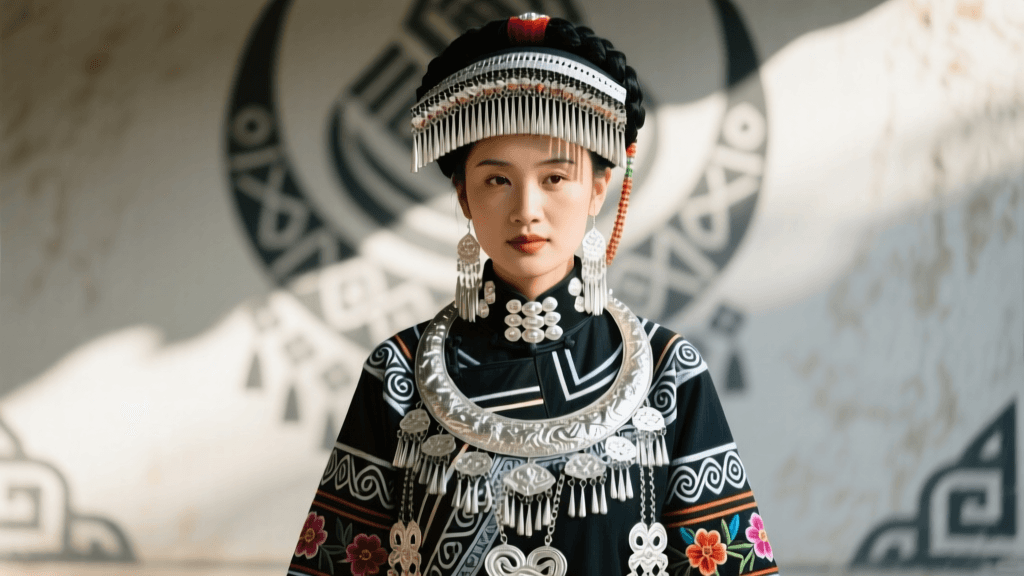
No Miao festival or bridal ensemble is complete without an astonishing display of silver jewelry. For the Miao, silver represents light, purity, and the warding off of evil spirits. It is also a vital store of family wealth, passed down from mother to daughter. As highlighted in a cultural preservation feature by Sixth Tone, the economic shift in rural Guizhou has seen a revival in traditional silversmithing, with young artisans returning to their villages to meet the growing demand for authentic heritage pieces.
The creation of Miao silver jewelry involves over 30 distinct metallurgical techniques, including wire-drawing, filigree, embossing, and granulation. A full bridal silver set is an immense undertaking, both in terms of artisanal labor and physical weight.
Miao Silver Jewelry Components and Market Guide
| Garment Component | Average Weight | Estimated Cost (USD) | Symbolic Meaning |
|---|---|---|---|
| Yin Jiao (Silver Horn Comb) | 300g - 600g | $400 - $900 | Represents the water buffalo; signifies wealth and agricultural prosperity. |
| Xiang Quan (Neck Rings) | 500g - 1.5kg | $800 - $2,200 | Multiple concentric rings denote the wearer's marital status and family standing. |
| Xiong Pai (Chest Plate) | 1kg - 3kg | $1,500 - $4,500 | Often engraved with dragons and birds; acts as spiritual armor against malevolent forces. |
| Full Bridal Set (Complete) | 5kg - 12kg | $4,000 - $15,000+ | Encompasses all pieces; a display of the family's total accumulated generational wealth. |
Note: Costs are highly dependent on the daily market price of raw silver and the reputation of the village silversmith. Custom commissions require a lead time of 3 to 6 months.
Regional Variations in Miao Dress
The term 'Miao' is an umbrella designation for a highly diverse group of sub-clans, each with distinct dialects and sartorial codes. The Chinese government classifies them broadly, but sartorial anthropologists recognize dozens of distinct dress styles based on skirt length, hair styling, and dominant colors.
Comparison of Major Miao Subgroup Garments
| Subgroup Name | Key Garment Feature | Primary Color Palette | Skirt Style & Measurement |
|---|---|---|---|
| Long Horn Miao | Massive wooden horn headdress wrapped with generations of ancestral hair and white linen. | Black, White, Red | Short, pleated wrap skirt (approx. 40cm length). |
| Black Miao | Indigo-dyed cotton jackets with subtle, dark-toned cross-stitch embroidery. | Deep Indigo, Black | Long, flowing pleated skirt (approx. 80cm length). |
| Short Skirt Miao | Bright Pink, Green, Yellow | Micro-pleated skirt (often only 15-20cm in length). | |
| Hundred-Pleat Miao | Skirts made from exceptionally long, continuous strips of hand-woven cotton. | Indigo, Blue, White | The bai zhe qun requires 15 to 20 meters of fabric, pleated down to a 60cm waistband. |
Practical Guide to Purchasing and Caring for Miao Garments
For those looking to acquire authentic Miao textiles or silver, understanding the logistics of purchasing and preservation is essential. The best places to source authentic pieces are the weekly rural markets in Guizhou province, particularly around the cities of Kaili and Leishan, or directly from artisan cooperatives in Xijiang Miao Village.
Custom Orders and Timing
If you are commissioning a custom embroidered jacket or a pleated skirt, patience is mandatory. A fully hand-embroidered festival jacket, utilizing traditional flat-stitch and braid-stitch techniques, takes an experienced artisan anywhere from 6 to 14 months to complete. The pleating process for a traditional bai zhe qun (hundred-pleat skirt) alone requires weeks of meticulous folding, binding, and steaming over an indigo dye vat to ensure the pleats set permanently into the heavy cotton.
Care and Maintenance
- Textile Preservation: Vintage Miao indigo-dyed cotton should never be washed with modern chemical detergents, which will strip the natural oils and botanical dyes. Spot clean only, and store in a cool, dry environment away from direct sunlight to prevent the silk threads from becoming brittle.
- Silver Maintenance: Miao silver is typically an alloy (often 70-90% silver mixed with copper for structural integrity, as pure silver is too soft to support the heavy filigree work). It will oxidize and tarnish over time. Store silver pieces in anti-tarnish cloth bags. To clean, use a soft polishing cloth; avoid harsh chemical dips that can damage the intricate granulation and loosen the solder joints.
When purchasing vintage Miao textiles, always examine the 'story cloth' panels. Older pieces from the mid-20th century often feature motifs that map specific migration routes across rivers and mountains, making them invaluable artifacts of Asian ethnic history.
Conclusion
The clothing traditions of the Miao people represent a pinnacle of Asian textile and metallurgical artistry. Far from being static museum relics, Miao embroidery and silver jewelry are living traditions, continuously adapted and worn with immense pride during festivals like the Lusheng Festival and the Sisters' Meal Festival. Whether you are a textile collector, a jewelry enthusiast, or a student of Asian cultural heritage, understanding the profound symbolism, immense labor, and regional diversity of Miao dress offers a deeply rewarding window into one of the continent's most resilient and creative cultures.