Authentic Miao Clothing: A Buyer's Guide to Batik and Silver
The Living History of Miao Textiles
The Miao people, widely recognized in Southeast Asia and the West as the Hmong, represent one of China's most culturally vibrant ethnic minorities. With a population exceeding nine million, primarily concentrated in the mountainous regions of Guizhou, Yunnan, and Hunan provinces, the Miao have cultivated a breathtaking sartorial heritage. Lacking a traditional written language for much of their history, the Miao encoded their mythology, migration routes, and clan identities into their clothing. Today, Miao traditional clothing remains a highly sought-after category for textile collectors, fashion historians, and cultural enthusiasts. According to Encyclopædia Britannica, the intricate needlework and metalwork of the Miao are not merely decorative; they are vital markers of social status, marital availability, and spiritual protection. This guide provides actionable insights into sourcing, authenticating, and preserving Miao batik textiles and silver jewelry.
Mastering Miao Batik (Laba): Identification and Sourcing
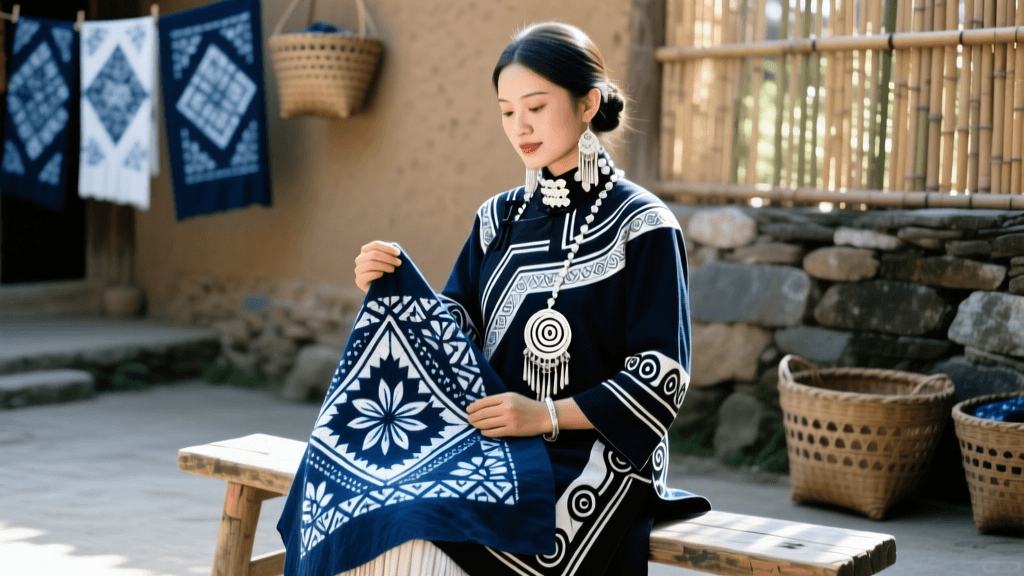
Miao batik, known locally as 'Laba', is a resist-dyeing technique that utilizes beeswax and natural indigo. The process is painstakingly slow, requiring a deep understanding of chemistry and temperature control. Artisans use a specialized brass-tipped bamboo pen (la dao) to draw intricate geometric and floral patterns onto hemp or cotton cloth using melted beeswax.
How to Identify Authentic Miao Batik
When shopping in markets across Kaili or Xijiang, you will encounter both authentic, hand-drawn batik and mass-printed synthetic imitations. Use these actionable metrics to verify authenticity:
- The 'Ice Crack' Pattern: Authentic batik features fine, web-like lines of indigo seeping into the wax as it naturally cracks during the dyeing process. Printed fabrics have uniform, repetitive 'cracks' that lack organic randomness.
- Scent Test: Real indigo is fermented using wood ash and rice wine, giving it a distinct, earthy, slightly alkaline smell. Synthetic indigo smells sharply of chemicals or petroleum.
- Wax Residue: Even after boiling the fabric to remove the wax, authentic pieces will retain a faint stiffness and a subtle beeswax aroma in the thickest parts of the pattern.
- Temperature Precision: Genuine artisans keep their beeswax pots precisely between 60°C and 65°C. If the wax is too hot, it bleeds into the fibers; if too cold, it flakes off. Hand-drawn lines will show slight, natural variations in thickness reflecting this manual temperature management.
The Weight of Wealth: Miao Silver Jewelry
No Miao festival outfit is complete without elaborate silver jewelry. For the Miao, silver represents light, purity, and a ward against evil spirits. As noted by The Metropolitan Museum of Art in their archives on Chinese ethnic textiles, the sheer volume of silver worn by Miao women during festivals is a direct reflection of a family's wealth and social standing. In regions like Xijiang, it is common for a woman to wear up to 3 kilograms of silver during major celebrations.
Buyer's Data Table: Miao Silver Pieces and Market Costs
When purchasing Miao silver, it is crucial to understand the pricing structure. Silver is typically sold by weight (grams) plus a craftsmanship premium. Below is a market guide based on current rates in Guizhou province (prices in USD).
| Garment / Accessory | Average Weight | Estimated Base Cost (USD) | Craftsmanship Premium | Primary Occasion |
|---|---|---|---|---|
| Silver Horn Headdress | 1,000g - 2,500g | $800 - $2,000 | +30% to 50% | Weddings, Lusheng Festival |
| Multi-Layer Neck Rings | 400g - 800g | $320 - $640 | +20% | Daily Festival Wear |
| Embroidered Cape with Silver Studs | 200g (silver only) | $160 + textile cost | +40% | Sister's Meal Festival |
| Hairpins and Combs | 30g - 80g | $25 - $65 | +15% | Everyday / Market Days |
Note: Always verify the silver purity. Authentic Miao silversmiths generally use 990 or 999 pure silver, which is softer and highly malleable, allowing for the intricate repoussé and filigree techniques characteristic of the region. Avoid 'Tibetan Silver' or 'Miao Silver' sold in Western tourist shops, as these are often copper-nickel alloys containing no actual silver.
Decoding Embroidery Motifs
Miao embroidery is a visual language. The UNESCO Intangible Cultural Heritage frameworks frequently highlight the narrative complexity of these textiles. When evaluating a vintage or newly embroidered jacket, look for these foundational motifs:
- The Butterfly Mother (Mai Bang): According to Miao creation myths, the Butterfly Mother laid twelve eggs, which hatched into humans, gods, and animals. This motif is a symbol of fertility and ancestral protection, often placed over the heart or on the back of a child's carrier.
- The Buffalo Horn: Representing agricultural wealth and strength, the buffalo is deeply revered. Stylized horn motifs are frequently embroidered onto the shoulders of men's jackets or integrated into the silver headdresses.
- The Dragon (Long): Unlike the imperial Chinese dragon, the Miao dragon is a benevolent, water-bringing spirit that can take the form of a fish, a bird, or a silkworm. It is depicted with softer, more fluid lines.
A Practical Buyer's Guide: Timing, Locations, and Costs
To source authentic Miao garments, you must go beyond the commercialized storefronts of major cities. Here is your logistical guide to acquiring genuine pieces.
Where to Go
Kaili City: The capital of the Qiandongnan Miao and Dong Autonomous Prefecture. The Kaili Ethnic Minority Museum is an excellent place to study authentic reference pieces before hitting the local Sunday markets.
Danjiang and Taijiang Counties: These rural hubs are where the most skilled embroiderers live. You can commission custom pieces directly from artisan cooperatives here, ensuring fair trade practices and authentic craftsmanship.
Xijiang Thousand Household Miao Village: While highly commercialized, the upper, less-accessed alleys of the village still house master silversmiths who forge pieces on-site.
When to Go
Time your visit to coincide with major agricultural and spiritual festivals. The Sister's Meal Festival (usually falling in April or early May) is the premier event for viewing and purchasing courtship garments. The Lusheng Festival (often in September or October, post-harvest) is the best time to see heavy silver headdresses and pleated skirts in motion. During these times, local pop-up markets feature rural women selling their own hand-woven textiles.
Cost Expectations for Textiles
- Vintage Jackets (Pre-1980s): $300 to $1,500+. Prices depend on the complexity of the embroidery, the use of silk vs. cotton thread, and the condition of the indigo dye.
- Contemporary Hand-Embroidered Jackets: $150 to $400. Commissioning a piece directly from a village artisan can take 3 to 6 months to complete due to the dense stitch count (often exceeding 10,000 stitches per square inch).
- Pleated Indigo Skirts: $80 to $250. Authentic skirts require up to 20 meters of fabric, pleated by hand and set with egg white and ox-hide glue to maintain their rigid, accordion-like structure.
Care and Maintenance of Miao Garments
Preserving these textiles requires specific care protocols. Never machine-wash authentic indigo batik or heavily embroidered silk. Hand-wash batik garments in cold water with a pH-neutral detergent. The indigo dye will continue to bleed slightly for the first few washes; this is normal and part of the living nature of the dye. Dry the garments in deep shade, as direct UV sunlight will rapidly degrade the natural indigo, turning it a dusty gray.
For silver jewelry, the high humidity of southern China means tarnish is inevitable. Store silver pieces in anti-tarnish cloth bags with silica gel packets. To clean, use a soft-bristled brush and a mild baking soda paste, avoiding harsh chemical dips that can strip the intentional dark oxidation (patina) left by the silversmith to highlight the intricate repoussé details. By understanding the profound cultural weight and technical mastery behind Miao clothing, collectors and enthusiasts can ethically source and preserve these wearable masterpieces for generations to come.