Preserving Vintage Silk Kimonos and Obis: 2026 Guide
The Fragility of Heritage: Silk Shattering and Metallic Tarnish
As of 2026, the global market for antique Meiji (1868-1912) and Taisho (1912-1926) era kimonos has reached unprecedented heights, driven by a renewed appreciation for historical Asian textiles and sustainable fashion archives. However, owning a century-old silk garment comes with immense conservation responsibilities. The two most pervasive threats to these historical garments are silk shattering and the tarnishing of metallic threads found in Nishijin-ori obi belts.
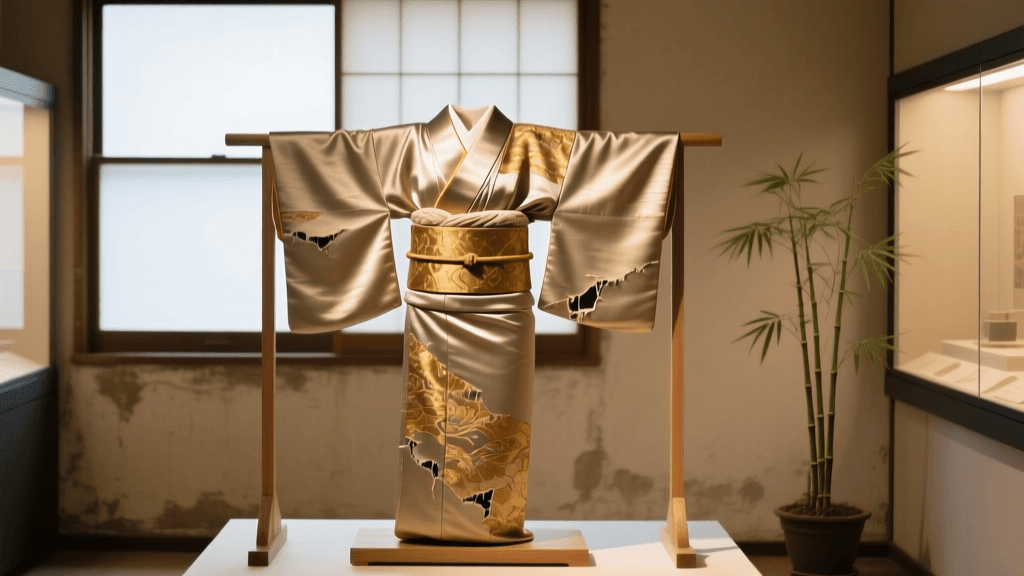
Silk shattering is a catastrophic form of degradation where the fabric splits, cracks, and eventually turns to dust. This is primarily caused by 'weighted silk,' a historical manufacturing practice where metallic salts (like tin and iron) were used to increase the drape and weight of the silk. Over decades, these salts oxidize and become highly acidic, essentially burning the silk fibers from the inside out. Once shattering begins, it cannot be reversed; it can only be stabilized through meticulous environmental control and archival storage.
Simultaneously, the breathtaking gold and silver threads of vintage obi belts face severe oxidation. Understanding the material science behind these garments is the first step in implementing a modern, 2026-compliant preservation strategy that ensures these cultural artifacts survive for future generations.
2026 Climate Control and Archival Storage Standards
The cornerstone of textile preservation is strict environmental regulation. According to current conservation standards, antique silk must be stored in an environment with a stable relative humidity (RH) of 45% to 55% and a temperature of 65°F to 70°F (18°C to 21°C). Fluctuations in humidity cause silk fibers to expand and contract, accelerating mechanical stress and shattering.
In 2026, smart home integration makes climate monitoring easier than ever. Devices like the Govee H5179 Wi-Fi Thermometer Hygrometer allow collectors to set automated alerts if storage areas deviate from the safe RH zone. However, the physical storage materials are just as critical as the ambient climate.
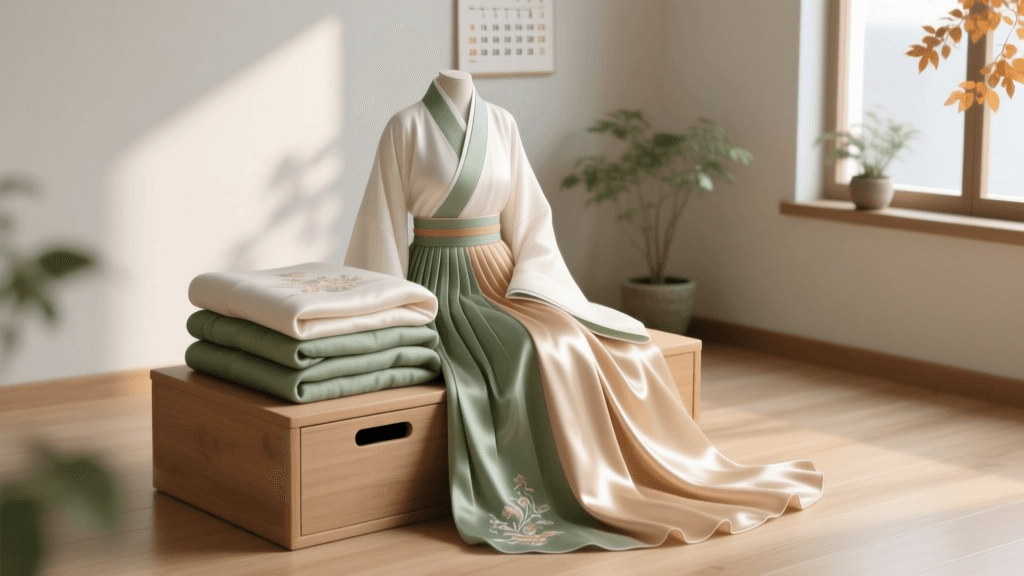
Historically, many collectors stored kimonos in traditional cedar chests (tansu). Modern conservation science strongly advises against this for antique silks. Cedar wood emits natural acidic oils and volatile organic compounds (VOCs) that accelerate yellowing and fiber degradation. Instead, garments should be folded using the traditional tatami method, interleaved with acid-free, unbuffered tissue paper, and placed in inert plastic bins.
Archival Storage Material Comparison (2026 Standards)
| Material | Best Use Case | Pros | Cons | 2026 Avg Cost |
|---|---|---|---|---|
| Unbuffered Acid-Free Tissue | Interleaving folds, stuffing sleeves | Prevents hard creases; pH neutral; safe for protein fibers (silk) | Requires replacement every 2-3 years as it absorbs ambient acids | $15 per 10-sheet pack |
| Unbleached Cotton Muslin | Outer wrapping before bin storage | Breathable; protects from dust and light; washable | Can retain ambient moisture if not washed with textile-safe detergents | $12 per yard |
| Polypropylene (PP) Bins | Primary storage container | Chemically inert; blocks pests; prevents water damage | Traps internal moisture if sealed before acclimating to room temp | $25 per 18-gallon bin |
| Washed Linen Covers | Display or short-term wardrobe storage | Aesthetically pleasing; historically appropriate for short-term | Linen can harbor pests if not meticulously maintained | $45 per custom cover |
Professional Cleaning: Shiminuki and Maruarai Techniques
One of the most common mistakes collectors make is attempting to clean vintage kimonos at home or taking them to standard commercial dry cleaners. The harsh chemicals used in modern dry cleaning, particularly perc (perchloroethylene), can strip historical dyes and accelerate the embrittlement of weighted silk.
For localized stains, foxing (brown age spots), or collar soiling, the traditional Japanese art of Shiminuki (spot cleaning) is the gold standard. Master artisans use specialized solvents, steam, and gentle tamping to lift stains without agitating the fragile weave. For garments requiring a full refresh, Maruarai is a specialized immersion washing technique using soft water and mild, natural soap, followed by careful stretching and drying on wooden frames (shinshi) to restore the fabric's tension.
The Canadian Conservation Institute explicitly warns against the use of commercial laundering and dry cleaning for historical textiles, noting that mechanical agitation and aggressive solvents cause irreversible structural damage. Always seek out certified textile conservators or specialized kimono care facilities in Kyoto or Tokyo that still practice traditional Maruarai.
Caring for Nishijin-ori Obi: Gold Thread Preservation
The Nishijin-ori obi is a masterpiece of Japanese weaving, often featuring kinran (gold brocade). What many collectors do not realize is that the 'gold' thread is rarely solid metal. Historically, it was created by applying urushi (lacquer) to thin sheets of washi paper, adhering gold or silver leaf, and then cutting it into microscopic strips to wrap around a silk core.
When an obi 'tarnishes,' it is usually the silver leaf underneath the gold lacquer oxidizing and turning black, or the lacquer itself flaking away due to low humidity. Never use commercial silver polishes, jewelry wipes, or abrasive cloths on an obi. Doing so will instantly strip the delicate lacquer and destroy the historical integrity of the piece.
According to the American Institute for Conservation (AIC) Wiki on Textiles, metallic yarns require specialized, non-invasive cleaning methods. Dust should be removed using a soft hake (traditional goat-hair brush) with gentle, unidirectional strokes. If the lacquer is actively flaking, the obi requires consolidation by a professional conservator using reversible adhesives like Klucel-G or specialized cellulose ethers, applied under a microscope.
2026 Restoration and Conservation Cost Guide
Budgeting for the preservation of Asian heritage garments requires an understanding of current artisan rates. As specialized artisans retire, the cost for authentic, traditional restoration has increased. Below is a breakdown of estimated costs for professional services in 2026.
Estimated Professional Conservation Costs (2026)
| Service | Description | Estimated Cost (USD) | Turnaround Time |
|---|---|---|---|
| Shiminuki (Spot Cleaning) | Targeted removal of collar stains, foxing, and localized spills. | $80 - $250 | 2 - 4 Weeks |
| Maruarai (Full Wash) | Complete immersion washing, re-stretching, and tensioning. | $350 - $600 | 1 - 2 Months |
| Obi Metallic Consolidation | Microscopic re-adhesion of flaking gold/silver lacquer threads. | $400 - $900 | 2 - 3 Months |
| Silk Shattering Stabilization | Mounting fragile panels onto archival crepeline silk supports. | $500 - $1,500+ | 3 - 6 Months |
| Custom Archival Boxing | Museum-grade, acid-free drop-front boxes with Ethafoam inserts. | $150 - $300 | 1 - 2 Weeks |
Displaying Your Collection Safely
If you choose to display your vintage kimonos rather than store them, strict light management is non-negotiable. Silk is highly susceptible to photo-oxidation; exposure to ultraviolet (UV) and even high-intensity visible light will cause irreversible fading and fiber weakening.
In 2026, museum-grade display cases utilize Tru Vue Optium Museum Acrylic, which blocks 99% of UV rays while remaining anti-static and anti-reflective. Lighting should be restricted to LED sources with zero UV emission, and illumination levels should be kept strictly below 50 lux. Furthermore, garments should never be displayed on wire hangers or standard wooden racks. Use custom-padded, wide-shoulder hangers wrapped in washed cotton muslin to distribute the weight of the heavy silk and prevent shoulder tearing.
Conclusion
Preserving Meiji and Taisho era kimonos and Nishijin-ori obi belts is an act of cultural stewardship. By abandoning outdated storage methods, embracing 2026 climate-monitoring technology, and relying on traditional Japanese cleaning arts like Shiminuki and Maruarai, collectors can halt the ravages of time. Treat these garments not merely as fashion, but as fragile historical documents that demand respect, specialized care, and an unwavering commitment to conservation science.