2026 Hanfu Storage Rotation and Seasonal Maintenance Guide
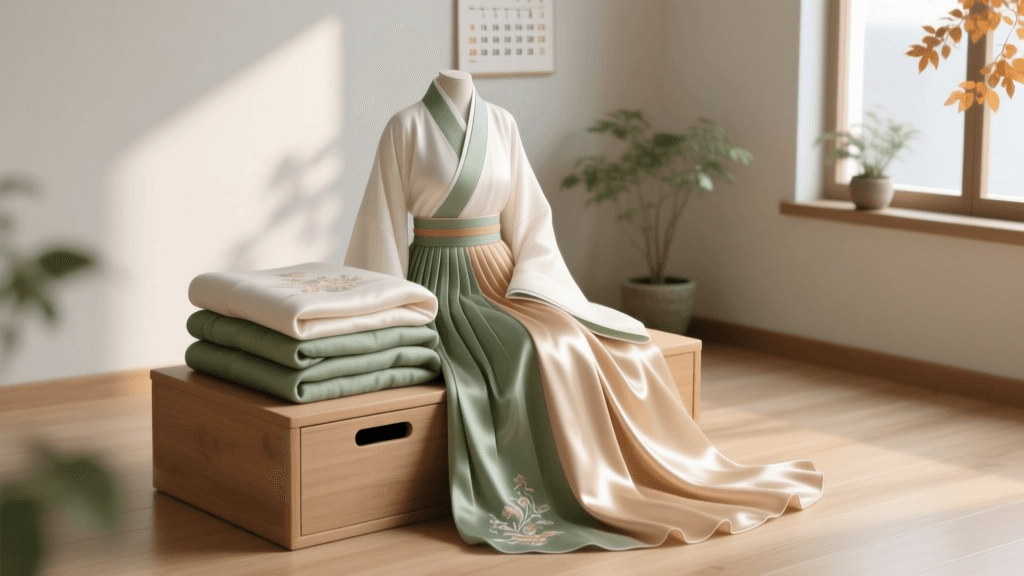
The Evolution of Hanfu Wardrobes in 2026
As the Xin Zhongshi (new Chinese style) movement continues to redefine modern fashion in 2026, the traditional Hanfu wardrobe has evolved from a niche collection of ceremonial garments into a robust, year-round sartorial staple. With enthusiasts now owning dozens of pieces ranging from lightweight summer ramie to heavy winter brocades, proper storage rotation and seasonal maintenance have never been more critical. Unlike fast fashion, traditional Asian garments require meticulous care to preserve their structural integrity, vibrant natural dyes, and intricate weaving patterns.
Improper storage can lead to permanent creasing on delicate pleats, protein fiber degradation in silks, and irreversible mold damage. This comprehensive 2026 guide provides actionable, museum-grade strategies for rotating, cleaning, and preserving your Hanfu collection, ensuring your garments remain pristine for generations.
Understanding Your Hanfu Textiles
Before implementing a rotation schedule, it is vital to categorize your garments by fiber content. Different materials react uniquely to environmental stressors, and a one-size-fits-all approach to storage will yield disastrous results.
Mulberry Silk and Xiangyunsha (Gambiered Silk)
Protein-based fibers like mulberry silk are highly susceptible to acidity, moisture, and protein-eating pests. Xiangyunsha, a luxurious heritage silk dyed with yam juice and river mud, possesses a unique coated texture that can crack if folded sharply or stored in overly dry conditions. In 2026, conservationists emphasize that these silks must be stored in pH-neutral environments with strict humidity control to prevent the mud-coating from becoming brittle.
Linen, Ramie, and Hemp
Cellulose fibers such as ramie and linen, commonly used for summer Hanfu like the Beizi (lightweight jacket) and Songku (trousers), are highly breathable but prone to hard creasing. While they are more resistant to pests than silk, they are vulnerable to silverfish and mold if stored in damp, unventilated spaces.
Song Brocade and Zhuanghua (Metallic Threads)
Winter garments often feature heavy brocades woven with metallic threads. These textiles are incredibly heavy and structurally rigid. Hanging them for long periods can cause the warp threads to stretch and snap under the garment's own weight, making flat, padded storage the only viable option for 2026 archival care.
The 2026 Seasonal Rotation Schedule
Transitioning your wardrobe between seasons requires more than simply moving boxes. It demands a systematic inspection and cleaning protocol.
- Spring Transition (March to April): Move heavy winter brocades and lined Ao (jackets) into deep storage. Bring out lightweight linens and single-layer Shan (shirts). Inspect winter garments for any hidden stains before sealing them away, as body oils oxidize and yellow over the summer months.
- Autumn Transition (September to October): Retire summer ramie and thin silks. This is the ideal time to air out your autumn Mamianqun (horse-face skirts) and medium-weight weaves. Check your climate control devices and replace desiccants before the humid winter sets in.
Essential Archival Storage Materials
The market for textile preservation has advanced significantly. In 2026, collectors are moving away from generic plastic bins, which trap off-gassing chemicals and moisture, toward specialized archival solutions. Below is a comparison of the most effective storage materials currently available for Hanfu preservation.
| Product Category | Material Composition | Best Used For | 2026 Avg. Cost (USD) |
|---|---|---|---|
| Lineco Archival Drop-Front Boxes | Acid-free, buffered board | Heavy brocades, Xiangyunsha, heavily embroidered pieces | $38.00 - $45.00 |
| Unbleached Cotton Canvas Bags | 100% natural, undyed cotton | Daily wear Hanfu, linen, and ramie summer garments | $15.00 - $22.00 |
| Eva-Dry Renewable Silica Canisters | Indicating silica gel beads | Enclosed closet spaces, archival boxes, humidity control | $24.00 - $30.00 |
| CedarSense Natural Blocks | Untreated, aromatic red cedar | Pest deterrence in drawers and outer storage bins | $12.00 - $18.00 |
| Acid-Free Unbuffered Tissue Paper | Neutral pH wood pulp | Padding folds, stuffing sleeves, separating pleats | $18.00 per ream |
Mastering the Fold: Preserving Structural Integrity
The way you fold your Hanfu directly impacts its lifespan. Sharp creases break fibers over time, leading to permanent tearing along the fold lines.
The Mamianqun (Horse-Face Skirt) Protocol
The Mamianqun is defined by its intricate, knife-pleated sides and flat front/back panels. Never fold a Mamianqun in half. Doing so will crush the pleats and create horizontal creases across the flat panels. Instead, utilize the rolling method: lay the skirt flat, align the pleats carefully with your fingers, and roll the garment loosely from the hem up to the waistband. Place the rolled skirt inside a cotton bag or an archival box lined with acid-free tissue. Alternatively, if closet space permits, use wide, velvet-padded hangers with clip suspensions, ensuring the clips are padded with foam to prevent rust marks or fabric pinching.
Cross-Collar Tops (Jiaoling Youren)
For cross-collar garments, fold the sleeves inward parallel to the body, then roll the garment from the bottom hem upward. Insert crumpled, acid-free unbuffered tissue paper into the collar and armpit areas to maintain the garment's three-dimensional shape and prevent hard creases at the joints.
Climate Control and Pest Management
Maintaining a stable microclimate is the cornerstone of textile preservation. According to the Northeast Document Conservation Center, fluctuations in temperature and relative humidity (RH) cause fibers to expand and contract, leading to mechanical stress and eventual deterioration.
Optimal Environmental Parameters
For a mixed-fiber Hanfu wardrobe, aim for a stable temperature of 65°F to 70°F (18°C to 21°C) and a relative humidity level between 45% and 55%. In 2026, many collectors utilize smart closet dehumidifiers integrated with home automation systems to maintain these exact parameters, triggering alerts via smartphone if the RH deviates by more than 3%.
Natural Pest Deterrence
Silk is a prime target for clothes moths and carpet beetles. The Canadian Conservation Institute strongly advises against the use of chemical mothballs (naphthalene or paradichlorobenzene), as these toxins degrade protein fibers and leave a pervasive, noxious odor that is nearly impossible to extract from porous silks. Instead, rely on natural deterrents like untreated cedarwood blocks and dried lavender sachets. Remember that cedarwood loses its aromatic oils over time; sand the blocks lightly every six months to refresh the pest-repelling scent, and replace them entirely every two years.
Pre-Storage Cleaning Protocols
Never store a garment that has been worn without cleaning it first. Invisible perspiration, dead skin cells, and environmental pollutants act as a magnet for pests and accelerate fiber oxidation. However, aggressive cleaning can be just as damaging as neglect.
'Textiles should be cleaned before storage to remove soils that can attract pests or cause permanent staining over time. However, the method of cleaning must be appropriate for the fiber and the dyes used, as improper washing can cause irreversible shrinkage or color bleeding.' — Victoria and Albert Museum
Washing vs. Dry Cleaning
- Mulberry Silk and Xiangyunsha: Avoid traditional dry cleaning whenever possible, as the harsh solvents strip the silk of its natural sericin coating, leaving it brittle. For Xiangyunsha, simply air the garment in a shaded, well-ventilated area. For standard mulberry silk, hand wash gently in cold water using a pH-neutral, enzyme-free detergent specifically formulated for protein fibers. Never wring the fabric; instead, roll it in a clean, dry cotton towel to absorb excess moisture before laying it flat to dry away from direct sunlight.
- Linen and Ramie: These robust cellulose fibers can withstand gentle machine washing on a delicate cycle with cold water, provided the garment does not feature metallic embroidery or delicate silk trims.
- Brocades and Embroidered Pieces: These should only be spot-cleaned or professionally treated by a conservator who specializes in traditional Asian textiles. Submerging heavy brocades can cause the metallic threads to tarnish and the embroidery threads to bleed.
Conclusion: Preserving the Legacy
As we navigate the fashion landscape of 2026, the integration of traditional Hanfu into daily life is a beautiful testament to cultural continuity. However, this revival brings the responsibility of stewardship. By implementing a disciplined seasonal rotation schedule, investing in proper archival materials, and adhering to strict climate and cleaning protocols, you ensure that your garments remain vibrant and structurally sound. Treating your Hanfu collection with the same reverence as a museum archive guarantees that these exquisite textiles will continue to tell their stories for decades to come.