The Ultimate Guide to Zori, Obi Accessories, and Kimono Essentials
The Unsung Heroes of Kitsuke: Beyond the Kimono and Obi
When exploring the rich tapestry of Japanese traditional dress, the kimono and the obi naturally command the most attention. However, the art of kitsuke (kimono dressing) relies heavily on a complex ecosystem of accessories that provide structural support, aesthetic balance, and cultural significance. According to Encyclopedia Britannica, the kimono evolved over centuries from simple T-shaped robes into highly codified garments that reflect seasonality, social status, and occasion. Yet, without the proper footwear, sash cords, and hidden ties, even the most exquisite silk kimono cannot be worn correctly. This comprehensive guide delves into the practicalities of selecting, sizing, and styling zori, obi accessories, and the hidden essentials that make traditional Japanese dress functional and beautiful.
Footwear Fundamentals: Zori and Tabi
No kimono ensemble is complete without the proper footwear. Unlike Western shoes, traditional Japanese footwear is designed to complement the straight lines and flowing hem of the kimono while protecting the delicate fabric from the ground.
Tabi: The Split-Toe Sock
Tabi are the iconic split-toe socks worn with all traditional sandals. As noted in Britannica's historical overview of Tabi, these garments originated as practical leather footwear for samurai and hunters before evolving into the cotton and silk socks worn today. Tabi are sized in centimeters, typically ranging from 22.0 cm to 25.0 cm for women. When purchasing tabi, it is crucial to choose a size that matches your exact foot length; unlike Western socks, tabi should not have excess fabric at the toe, as this creates unsightly bunching that disrupts the clean line of the instep.
- Cotton Tabi: The standard choice for everyday wear, semi-formal occasions, and yukata. They are washable, durable, and feature metal clasps called kohaze (usually 4 or 5 clasps high).
- Silk Tabi: Reserved for the most formal occasions, such as weddings or tea ceremonies. They are typically white, feature a seamless toe, and require professional dry cleaning.
Zori: Sizing, Fit, and Materials
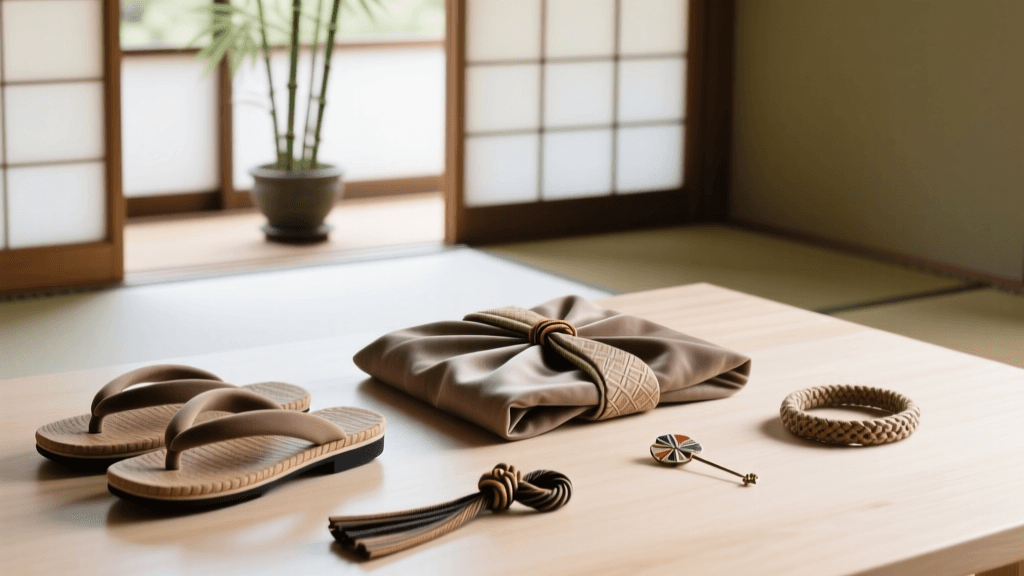
Zori are flat, thonged sandals made from various materials, including vinyl, leather, brocade, and woven rush. The most critical mistake modern wearers make is buying zori that are too large. In Western footwear, a slight gap at the heel is normal. In kitsuke, the heel of your foot should overhang the back of the zori by 1 to 2 centimeters. This intentional sizing ensures that the hem of your kimono does not catch on the back of the sandal or drag on the ground, which can cause severe damage to the silk and soil the garment.
The hanao (the V-shaped thong) should fit snugly between the toes without causing friction. For formal wear, women typically choose zori with a raised heel (often 5 to 10 cm high) covered in metallic brocade or vinyl, paired with a matching clutch bag. Vintage zori can be sourced for $20 to $50, but beware of degraded polyurethane soles that may crumble. New, high-quality formal zori range from $120 to over $300.
The Obi Ecosystem: Obi-jime and Obi-dome
Once the obi is tied, it must be secured. The obi-jime is a decorative braided cord tied over the center of the obi knot. Beyond its aesthetic role, the obi-jime provides vital structural tension, keeping heavy brocade obi from slipping or loosening throughout the day.
Types of Obi-jime
Obi-jime cords are generally categorized by their shape and thickness. The standard thickness is around 5 to 6 millimeters. Choosing the right type depends on the formality of your kimono and the stiffness of your obi.
| Type | Shape & Structure | Best Used For | Formality Level |
|---|---|---|---|
| Marugumi | Round, tightly braided cord | Heavy brocade obi, formal furisode | High / Formal |
| Hiragumi | Flat, woven ribbon-like cord | Softer obi, everyday kimono, vintage styles | Semi-Formal / Casual |
| Sanbuhimo | Very thin (approx. 3mm) round cord | Use with Obi-dome clasps, lightweight obi | Versatile (Depends on clasp) |
| Kumihimo | Artisanal hand-braided silk cord | Heirloom pieces, high-end formal wear | Highest Formal |
Obi-dome: The Decorative Clasp
An obi-dome is a decorative bead, jewel, or carved clasp that slides onto a thin sanbuhimo cord. Instead of tying a complex knot at the front of the obi, the sanbuhimo is threaded through the obi-dome and tied in a simple, hidden slipknot at the back. Obi-dome can feature intricate metalwork, cloisonné, carved coral, or lacquer. When wearing an obi-dome, ensure the clasp sits perfectly centered over the navel, and use a small piece of double-sided fabric tape on the back of the clasp to prevent it from drooping or spinning upside down.
Hidden Essentials: Koshi-himo and Date-jime
While the obi and obi-jime are visible to the world, the true structural integrity of a kimono relies on the hidden ties worn underneath. A standard kitsuke routine requires between three and five koshi-himo (long, thin waist ties) and one or two date-jime (wide, stiffening ties).
Koshi-himo (Waist Ties)
Koshi-himo are used to secure the kimono at the waist, hold the obi in place while tying, and adjust the length of the hem (the ohashori fold). Traditional koshi-himo are made of silk (often dyed a vibrant moss green or red, which is considered auspicious) or soft cotton. Cotton is preferred by beginners because it grips the fabric better and is less likely to slip than smooth silk. Modern innovations have introduced the Korin Belt, an elasticized, adjustable koshi-himo with metal clips that eliminates the need for complex tying and provides consistent tension, making it a favorite among modern practitioners and rental shops.
Date-jime (Stiffening Ties)
After the koshi-himo secure the garment, the date-jime is wrapped over the ties to flatten the waist area. This creates a smooth, cylindrical foundation, which is absolutely essential for the obi to sit flat and look elegant. Date-jime are typically made of stiff silk, velvet, or modern polyurethane mesh. Mesh date-jime are highly recommended for summer wear or long events, as they provide excellent grip and breathability.
Seasonality and Color Coordination
In Japanese traditional dress, accessories are not merely functional; they are deeply tied to the seasons. The concept of kasane-iro (layering colors) extends to the obi-jime and obi-age (the silk scarf peeking out from the top of the obi). In spring, pastel pinks and soft greens mimic cherry blossoms and new leaves. Summer calls for cool blues, transparent glass obi-dome, and lightweight mesh date-jime. Autumn introduces deep russets, golds, and motifs of maple leaves or chrysanthemums, while winter embraces rich purples, whites, and pine motifs. Coordinating your obi-jime and obi-dome with the subtle seasonal motifs of your kimono elevates the entire ensemble from a simple outfit to a curated work of art.
Sourcing, Budgeting, and Care
Building a collection of kimono accessories can be an affordable and rewarding pursuit if you know where to look. As highlighted by the Japan National Tourism Organization, engaging with traditional culture often involves visiting local artisans and antique markets. In Tokyo, the Oedo Antique Market is a treasure trove for vintage obi-jime, silk koshi-himo, and unique obi-dome at a fraction of retail prices.
When shopping online, verify the condition of vintage zori by asking for close-up photos of the sole and the base of the hanao, as these are the first areas to degrade. For care, always wipe down vinyl or leather zori with a damp cloth after wearing, and allow cotton tabi to air dry before washing to prevent the metal kohaze clasps from rusting. Obi-jime should be stored unknotted or loosely coiled in a dry, dark place to prevent the silk fibers from creasing or fading. By understanding and respecting these essential accessories, you ensure that the legacy of kitsuke continues to thrive in the modern wardrobe.