Kabuki, Noh & Bunraku Theater Kimono Guide for 2026
The Living Textiles of Japanese Theater
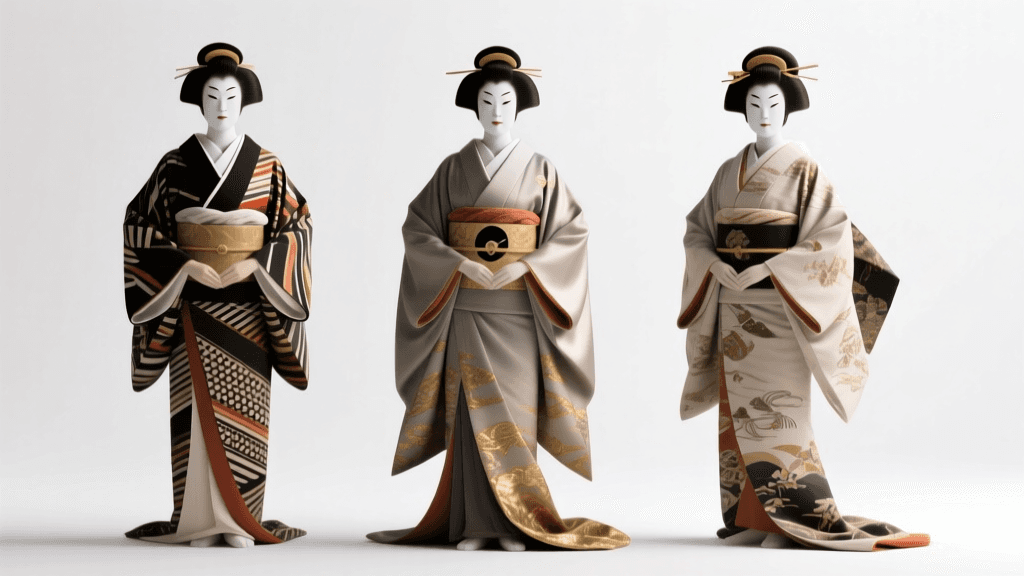
When exploring the rich tapestry of Asian traditions, few elements are as visually arresting and structurally complex as the traditional theater costumes of Japan. Known collectively as shozoku, the garments worn in Kabuki, Noh, and Bunraku are not merely clothing; they are vital storytelling devices, engineering marvels, and masterpieces of textile art. As we navigate the cultural landscape in 2026, the preservation, study, and collection of these extraordinary kimono have reached new heights, supported by advanced conservation technologies and renewed global interest in traditional performing arts.
Unlike standard everyday kimono, theater costumes are designed to convey a character's social status, emotional state, and supernatural abilities to audiences seated far from the stage. According to the Japan Foundation's traditional culture archives, the distinct visual languages of Kabuki, Noh, and Bunraku require entirely different approaches to weaving, dyeing, and garment construction. For collectors, costume historians, and textile enthusiasts in 2026, understanding the nuanced differences between these three theatrical forms is essential for authentic identification and proper preservation.
Kabuki Isho: Spectacle and Quick-Change Mastery
Kabuki theater is synonymous with visual extravagance, dynamic movement, and larger-than-life characters. The costumes, or isho, are designed to maximize dramatic impact. The most iconic garment in the Kabuki wardrobe is the hikizuri, a trailing kimono worn by high-ranking female characters (often played by male onnagata actors). Unlike a standard kimono that is folded at the waist with an ohashori tuck, the hikizuri features an exceptionally long hem that trails elegantly across the stage. In 2026, authentic vintage Kabuki hikizuri remain highly sought after by collectors, though their sheer weight—often exceeding 12 to 15 kilograms due to heavy silk brocades and dense metallic embroidery—requires specialized display mannequins.
The Hikinuki Technique
One of the most thrilling aspects of Kabuki costuming is the hikinuki (pulling out) technique, which allows for instantaneous costume changes on stage. The outer kimono is stitched together with loose, strategically placed threads. At a dramatic climax, stage assistants (kuroko) pull these threads, causing the outer garment to instantly fall away and reveal a completely different kimono underneath. The structural engineering of a hikinuki garment is entirely unique to Kabuki; the shoulders and sleeves are basted rather than permanently sewn, and the lining is often a contrasting color that becomes the new outer layer. Recognizing these specific basting stitches and reinforced stress points is a primary method for authenticating true Kabuki stage garments versus standard ceremonial kimono.
Noh Shozoku: Subtlety, Weight, and Symbolism
In stark contrast to the explosive visual spectacle of Kabuki, Noh theater relies on profound subtlety, slow, deliberate movements, and deep spiritual symbolism. Recognized on the UNESCO Intangible Cultural Heritage list for Nogaku theater, the art form demands costumes that interact with the actor's body to create an illusion of otherworldly grace. Noh costumes are heavily layered, and the outermost garments are intentionally woven to be remarkably stiff.
Karaori and Surihaku in 2026
The quintessential Noh garment is the karaori (Chinese-style brocade), typically worn by female characters. Woven in the Nishijin district of Kyoto, the karaori is created using a complex floating weft technique that results in a fabric so stiff it can almost stand on its own. This stiffness is not a flaw; it is a deliberate design choice. When the Noh actor moves, the rigid fabric catches the light and shifts in block-like planes, giving the character a ghostly, floating appearance. Another critical Noh textile is the surihaku, a garment decorated with gold or silver foil pressed directly into the silk using a specialized adhesive paste. In 2026, the preservation of surihaku is a major focus for Kyoto conservators, as the metallic foil is highly susceptible to flaking in fluctuating humidity. Modern collectors must store surihaku garments in climate-controlled, ozone-free environments to prevent the oxidation and detachment of the precious metals.
Bunraku Costumes: Engineering for the Puppet Stage
Bunraku, the classical puppet theater of Japan, presents a unique set of challenges for textile artisans. The puppets, which are roughly one-half to two-thirds the size of a human, are operated by three puppeteers working in unison. The costumes must be scaled perfectly to the puppet's wooden frame while maintaining the realistic drape and flow of full-sized human clothing.
To accommodate the main puppeteer, who operates the head and right arm from behind, Bunraku kimono are constructed with a specialized split-back design known as se-ware. The back of the kimono is left entirely open or loosely overlapping, allowing the puppeteer's arm to pass through without disrupting the silhouette of the garment from the audience's perspective. Furthermore, the textiles used in Bunraku must be lightweight enough for the puppeteers to manipulate for hours, yet heavy enough at the hems to swing with realistic momentum during dramatic scenes. The motifs on Bunraku costumes are often slightly enlarged compared to everyday kimono, ensuring that the intricate patterns remain visible to the audience across the theater.
Comparative Analysis: Kabuki vs. Noh vs. Bunraku
For textile collectors and theater historians, distinguishing between these three forms requires an understanding of their structural and aesthetic priorities. The following table outlines the core differences in their costume design.
| Theater Form | Primary Garment | Textile Weight & Drape | Motif Scale | Unique Structural Feature |
|---|---|---|---|---|
| Kabuki | Hikizuri / Isho | Extremely Heavy (up to 15kg), flowing hem | Large, bold, highly visible from balconies | Hikinuki quick-change basting threads |
| Noh | Karaori / Surihaku | Stiff, rigid, block-like drape | Subtle, symbolic, woven into the brocade | Exceptional fabric stiffness for ghostly movement |
| Bunraku | Scaled Shozoku | Lightweight but weighted hems for momentum | Slightly enlarged for puppet scale visibility | Se-ware (split-back) for puppeteer access |
Sourcing and Preserving Theater Kimono in 2026
The market for authentic shozoku has evolved significantly by 2026. While major theaters like the Kabukiza in Tokyo maintain their own extensive, closely guarded archives, retired or damaged stage garments occasionally enter the secondary market through specialized antique dealers in Kyoto and Tokyo. When sourcing these pieces, provenance is paramount. Authentic stage garments will often bear the crest (mon) of the acting house or the specific theater, and the interior linings will show unique wear patterns consistent with stage movement and quick-change mechanics.
Climate Control and Artisan Care
Preserving these monumental textiles requires expertise that goes far beyond standard kimono care. The heavy metallic threads (kinran and ginran) used in Kabuki and Noh costumes can tarnish or snap if folded improperly. In 2026, leading conservationists recommend the use of custom-carved, acid-free paulownia wood storage boxes, lined with unbleached cotton, to allow the heavy brocades to breathe while protecting them from pests and moisture. Furthermore, cleaning must only be undertaken by specialized Kyoto dry cleaners who utilize non-aqueous, low-temperature solvent treatments designed specifically for historic stage textiles. According to the UNESCO Intangible Cultural Heritage list for Kabuki, the transmission of these costume-making and preservation techniques is just as vital as the performances themselves, ensuring that the living textiles of Japanese theater continue to captivate audiences for generations to come.