2026 Kimono Auction Guide: Appraising Vintage Silk Value

The 2026 Landscape of Secondhand Kimono Auctions
The global appetite for archival Japanese textiles has reached unprecedented heights in 2026. Driven by a collective shift toward sustainable luxury and a profound appreciation for slow fashion, the secondhand kimono market has transformed from a niche collector’s circle into a highly competitive global auction arena. For collectors, fashion historians, and vintage dealers, navigating Japanese online auctions offers direct access to centuries of textile mastery. However, the sheer volume of listings on platforms like Yahoo! Auctions Japan, Mercari, and specialized estate auction houses requires a discerning eye and a rigorous appraisal methodology.
As of early 2026, international proxy bidding services have streamlined the acquisition process, eliminating the historical barriers of language and domestic shipping restrictions. Yet, this accessibility means that premium pieces—particularly those from the Meiji and Taisho eras—are being snapped up within minutes of listing. Understanding how to accurately appraise vintage silk value, authenticate traditional techniques, and identify hidden condition flaws is no longer optional; it is essential for anyone looking to build a meaningful and financially sound textile collection.
Core Metrics for Kimono Value Appraisal
Appraising a kimono requires looking far beyond its visual appeal. The true value of a garment is dictated by a matrix of material quality, artisanal technique, historical provenance, and structural condition. According to the Victoria and Albert Museum's extensive research on Japanese dress, the construction and decoration of a kimono serve as a direct reflection of the socio-economic status and aesthetic philosophies of its era.
1. Material Composition
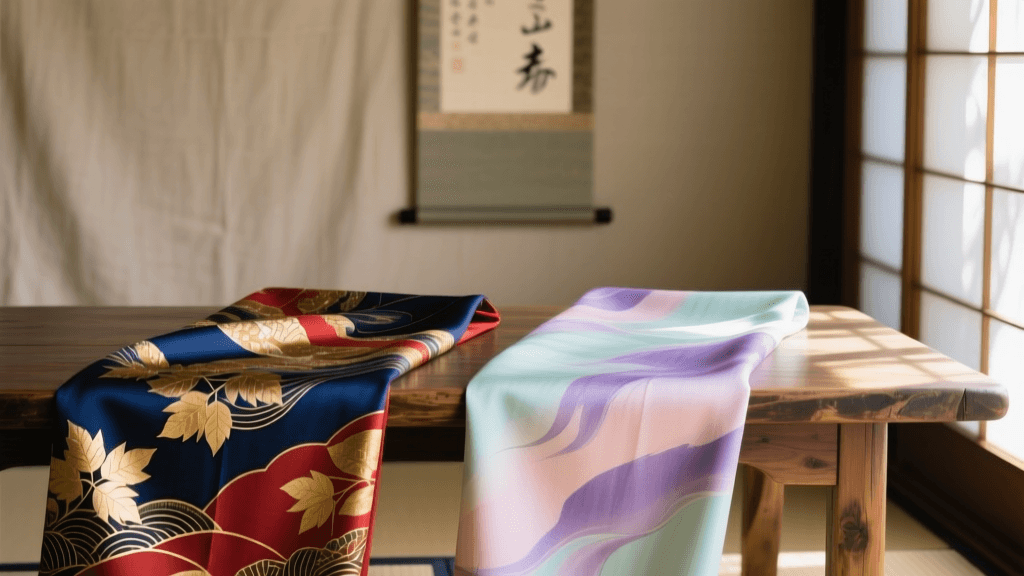
The foundation of any high-value kimono is its fabric. In auction listings, the term shouken (正絹) is the golden keyword, denoting 100% pure silk. While vintage meisen (ikat-woven silk) has seen a massive resurgence in the 2026 vintage streetwear market, formal and highly collectible pieces are typically crafted from tsumugi (slubbed pongee silk) or chirimen (crepe silk). Synthetic blends or rayons, commonly produced in the mid-20th century, hold significantly lower auction value unless they possess rare, avant-garde Taisho-era motifs.
2. Artisanal Techniques
Hand-crafted techniques exponentially increase a garment's appraisal value. Look for evidence of Yuzen (resist-dyeing). Hand-painted Kyoto Yuzen or the highly naturalistic Kaga Yuzen are among the most sought-after techniques. The Japanese Ministry of Economy, Trade and Industry (METI) maintains strict definitions for these designated traditional crafts, and pieces bearing original artisan certification papers (shoushi) command premium prices at auction. Additionally, intricate shibori (tie-dye) and gold-leaf application (surihaku) are critical value multipliers.
3. Condition and Flaws
Condition is the most volatile variable in secondhand appraisal. Japanese sellers are notoriously meticulous about disclosing flaws, but international buyers must know what to look for in low-resolution photos:
- Shimi (Age Spots): Yellow or brown oxidation spots, usually found near the hem or collar.
- Kabi (Mold): Tiny black or white specks that indicate improper storage; mold odor is nearly impossible to remove from vintage silk.
- Iro-yake (Fading): Sun damage that alters the chemical dyes, often visible on the shoulders or back.
- Snags and Pulls: Particularly damaging in brocade weaves like Nishijin-ori.
Era Identification and Market Value Table
Dating a kimono correctly is paramount for accurate appraisal. The aesthetic shifts between Japanese eras are distinct, and the 2026 auction market heavily favors specific periods. The Metropolitan Museum of Art's timeline of Japanese textiles highlights how shifting trade routes and domestic sumptuary laws dictated textile evolution.
| Era | Years | Defining Characteristics | 2026 Auction Value Range (USD) |
|---|---|---|---|
| Edo | 1603–1867 | Subdued elegance (iki), hidden luxury in linings, kosode silhouettes, natural dyes. | $800 – $5,000+ (Museum quality) |
| Meiji | 1868–1912 | Introduction of synthetic aniline dyes (deep reds/purples), Yuzen pictorial motifs, export-driven craftsmanship. | $400 – $2,500 |
| Taisho | 1912–1926 | 'Taisho Roman' aesthetic, Art Deco influences, bold geometric patterns, vibrant meisen silk. | $300 – $1,800 |
| Early Showa | 1926–1950s | Militaristic motifs (pre-war), followed by post-war recovery patterns, widespread use of rayon. | $100 – $600 |
Mastering Japanese Online Auction Platforms
To succeed in the 2026 auction environment, you must master the search algorithms of Japanese domestic platforms. Relying on English proxy translations often results in missed opportunities due to poor keyword mapping. Learning a few critical Kanji search terms will grant you access to the 'hidden' inventory that international buyers overlook.
Essential Search Keywords:
- 正絹 (Shouken): Pure silk. Always pair this with your garment type to filter out synthetics.
- 手描き (Tegaki): Hand-painted. Crucial for finding genuine Yuzen rather than machine-printed stencils.
- アンティーク (Antique): Generally used for pre-1930s garments.
- ビンテージ (Vintage): Typically denotes mid-century Showa pieces.
- 仕立て上がり (Shitate-agari): Ready-to-wear / fully tailored. Essential if you do not have a tailor to reconstruct an unsewn bolt of fabric (tanmono).
When bidding, always calculate the proxy service fees, domestic Japanese shipping, and international freight. In 2026, lightweight silk garments can often be shipped via consolidated economy air mail, keeping overhead costs manageable and preserving your profit margins if you intend to resell.
Authentication: Spotting Modern Reproductions
As the value of vintage kimono has risen, so has the sophistication of modern reproductions. To protect your investments, you must know how to authenticate a piece using structural clues that are difficult for modern manufacturers to replicate.
First, examine the eri (collar). Authentic vintage kimono feature a bachi-eri (a standard, slightly tapered collar), whereas many modern mass-produced garments use a wide, uniform collar. Second, inspect the dougi (inner lining). Vintage linings are often made of distinct materials, such as patterned silk for the upper back and plain cotton or wool for the lower half, reflecting historical resource management. Finally, check the sleeve attachments. Hand-sewn garments will show slight irregularities in stitch length and tension, particularly around the curved underarm panels (okumi), which machine-stitching cannot perfectly mimic.
Preservation and Resale Strategies
Winning an auction is only the first step. Proper preservation is vital to maintaining the appraised value of your acquisition. Vintage silk is highly susceptible to environmental damage. Upon receiving your piece, inspect it for hidden mold odors. If present, air the garment in a shaded, well-ventilated area for 48 hours—never expose vintage silk to direct sunlight, as UV rays will shatter the fragile protein fibers.
For long-term storage, abandon plastic bins entirely. Plastic traps moisture and off-gasses chemicals that accelerate silk degradation. Instead, wrap the kimono in acid-free washi (Japanese mulberry paper) or unbleached cotton, and store it in a traditional tansu (paulownia wood box). Paulownia wood naturally regulates humidity and repels insects. Include natural camphor or dried tobacco leaves as a moth deterrent, avoiding modern chemical mothballs which can cause irreversible chemical burns to the silk dyes.
When the time comes to resell, the 2026 market favors specialized consignment platforms and curated vintage textile fairs over general marketplaces. Providing detailed provenance, high-resolution macro photography of the weave and dye lines, and accurate era identification will ensure your vintage silk kimono achieves its maximum appraisal value in the secondary market.