Kimono Mindfulness: Slow Fashion & Wellbeing Guide 2026
The Intersection of Traditional Garments and Modern Wellness
In the hyper-connected, fast-paced digital landscape of 2026, a growing number of individuals are seeking refuge in tactile, historical practices to ground their mental health. Among the most profound of these practices is the engagement with traditional Japanese clothing. The kimono is no longer viewed merely as a ceremonial artifact or a relic of the past; it has emerged as a powerful tool for mindfulness, intentional living, and the ultimate expression of slow fashion. As the global wellness economy continues to prioritize holistic, sustainable lifestyles, the act of wearing, caring for, and understanding the kimono offers a unique pathway to psychological wellbeing.
Unlike modern western clothing, which is often designed for rapid consumption and immediate utility, the kimono demands presence. It requires the wearer to slow down, engage their senses, and participate in a ritual that has been refined over centuries. This article explores how the meditative art of kitsuke (the method of dressing in a kimono), the sustainable ethos of kimono circularity, and the psychological benefits of intentional dressing can transform your daily wellness routine in 2026.
Kitsuke: The Meditative Art of Dressing
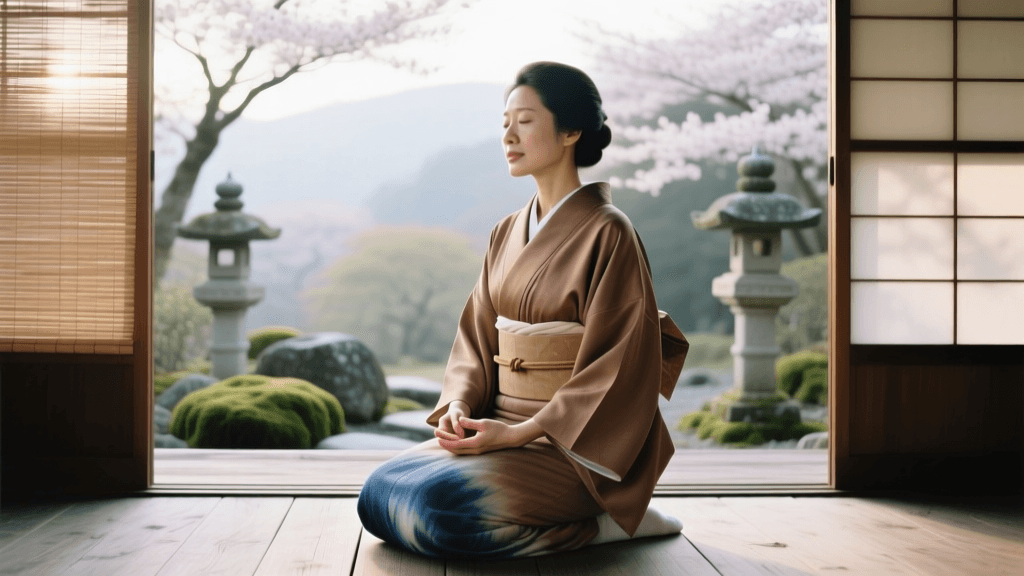
The process of putting on a kimono, known as kitsuke, is inherently meditative. It cannot be rushed. Attempting to speed through the process inevitably leads to misaligned collars, uneven hems, and a poorly tied obi (sash). Therefore, kitsuke forces the practitioner into a state of active mindfulness, anchoring the mind to the physical sensations of the present moment.
Sensory Grounding Through Silk and Cotton
Mindfulness often relies on sensory grounding techniques to pull the brain away from anxious loops and into the physical body. Kitsuke provides a multi-sensory experience. The ritual begins with the hadajuban (undergarment), typically made of breathable cotton or hemp, which immediately signals to the skin that a transition is occurring. As you layer the nagajuban and the main kimono, the distinct sound of silk gliding against silk creates a soothing, rhythmic auditory feedback loop.
When tying the datejime (the under-belt used to secure the kimono before the obi), practitioners are taught to focus on their breath. You exhale as you pull the cotton tie snug against your diaphragm, creating a gentle, supportive pressure that encourages deep, diaphragmatic breathing throughout the day. This physical restriction is not meant to be uncomfortable; rather, it serves as a constant, gentle physical reminder to maintain posture, breathe deeply, and remain present.
Posture and the Flow of Energy
The architecture of the kimono naturally corrects posture. The straight, unstructured seams of the garment require the wearer to keep their spine aligned and their shoulders relaxed. When your posture is aligned, the physical tension that often accompanies stress and desk-work is alleviated. In 2026, somatic therapists increasingly recognize the link between physical posture and emotional regulation. By adopting the graceful, deliberate movements required to navigate the world in a kimono—such as taking smaller steps, sitting with a straight back, and moving the arms with intention—you actively signal to your nervous system that you are in a state of calm and control.
The Kimono as the Ultimate Slow Fashion Statement
As the environmental impact of the apparel industry becomes impossible to ignore, the slow fashion movement has gained immense momentum. According to the Ellen MacArthur Foundation, the traditional linear fashion model is responsible for massive carbon emissions and textile waste. In stark contrast, the kimono ecosystem operates on principles of extreme longevity, circularity, and zero-waste design.
Zero-Waste Architecture and Multi-Generational Lifespans
A traditional kimono is constructed from a single bolt of fabric, known as a tanmono, which is cut into straight rectangles and sewn together. Because there are no curved cuts or discarded scraps, the creation of a kimono generates virtually zero textile waste. Furthermore, the seams are designed to be easily unpicked. When a kimono becomes soiled or damaged, it can be entirely disassembled, washed, re-dyed, and sewn back together. This means a single, high-quality silk kimono can easily outlive its original owner, being passed down through three or four generations.
In 2026, the vintage kimono market is thriving, offering a sustainable alternative to purchasing new garments. Buying a pre-loved kimono is not considered 'second-best'; it is highly respected. The concept of wabi-sabi—finding beauty in imperfection and the passage of time—means that a vintage kimono with a faded shoulder or a meticulously repaired tear is often valued more highly than a pristine, mass-produced modern equivalent.
Comparing Fast Fashion to the Kimono Ethos
To understand the profound sustainability of traditional Japanese garments, consider the following comparison between the prevailing fast fashion model and the kimono slow fashion ethos:
| Metric | Fast Fashion (2026 Standard) | Kimono Slow Fashion Ethos |
|---|---|---|
| Garment Lifespan | 10 to 15 wears before disposal | Multiple generations (50 to 100+ years) |
| Pattern Cutting | Curved cuts generating 15-20% fabric waste | Straight cuts from a single bolt (Zero waste) |
| End of Life | Landfill or incineration | Upcycled into zabuton (cushions), sakiori (rag weaving), or children's garments |
| Mindfulness Factor | Low (automated, thoughtless consumption) | High (requires intentional dressing and care) |
Organizations like Fashion Revolution advocate for transparency and longevity in our wardrobes, principles that have been embedded in Japanese textile culture for centuries. By adopting a kimono into your wardrobe, you are actively participating in a circular economy that values craftsmanship over mass production.
The Psychology of Intentional Dressing
The psychological phenomenon known as 'enclothed cognition' describes the systematic influence that clothes have on the wearer's psychological processes. Research highlighted by the American Psychological Association demonstrates that the symbolic meaning of clothing, combined with the physical experience of wearing it, can significantly alter our cognitive state, focus, and emotional resilience.
When you wear a kimono, you are donning centuries of cultural symbolism associated with grace, respect, and seasonal awareness. This symbolic weight triggers a shift in behavior. You are less likely to slouch, rush, or engage in frantic, stressed behaviors when encased in layers of carefully arranged silk. The garment acts as a physical boundary against the chaos of the outside world, creating a portable sanctuary of calm. For individuals dealing with anxiety or sensory overload in 2026, the predictable, structured weight of the kimono and obi can provide a deeply comforting, grounding effect similar to a weighted blanket, but integrated into daily life.
Seasonal Mindfulness: The Ritual of Koromogae
One of the most profound wellness practices associated with the kimono is koromogae, the traditional seasonal changing of the wardrobe. Historically occurring on June 1st (transitioning to summer garments) and October 1st (transitioning to winter garments), koromogae is much more than a chore; it is a ritual of renewal and environmental attunement.
In our modern, climate-controlled homes, we often lose touch with the natural shifting of the seasons, which can lead to a sense of temporal disorientation. Koromogae forces you to reconnect with the natural world. During this ritual, you carefully inspect every garment, air them out in the shade (mushiboshi), and gently brush the silk. This act of caring for your possessions fosters a deep sense of gratitude and stewardship. It is a day dedicated to acknowledging the passage of time, appreciating the changing weather, and preparing your physical environment for the months ahead. Engaging in koromogae provides a structured, bi-annual mindfulness retreat within your own home.
Building Your Mindful Kimono Wardrobe in 2026
If you are looking to integrate the wellness benefits of the kimono into your life, it is important to start with a sustainable, mindful approach. You do not need to invest thousands of dollars in formal silk garments to experience the benefits of kitsuke.
Actionable Steps for Beginners
- Start with a Yukata or Komon: For daily mindfulness practice, a cotton yukata or a casual silk komon (everyday kimono with a repeating pattern) is ideal. These are more forgiving to wash and maintain, reducing the anxiety of damaging a precious garment.
- Source Vintage: Explore online recycle shops or local vintage markets. Purchasing a pre-loved kimono from the Showa era not only saves a garment from the landfill but also connects you to the history of the previous owner.
- Invest in Natural Care Products: Avoid synthetic mothballs. Instead, use traditional shounou (natural camphor) or hinoki wood blocks to protect your silk from insects. The subtle, woody aroma of natural camphor is known to have mild aromatherapeutic properties, promoting relaxation when you open your wardrobe.
- Practice the 'Ten-Minute Tie': Dedicate just ten minutes every Sunday morning to practicing your obi knot. Focus entirely on the friction of the silk, the alignment of the fabric, and the rhythm of your breath. Treat it not as a task to complete, but as a moving meditation to start your week.
Conclusion
As we navigate the complexities of 2026, the kimono offers a profound antidote to the disposability and digital fatigue of modern life. It is a garment that asks you to slow down, to breathe deeply, and to honor the materials that clothe you. By embracing the meditative art of kitsuke and the sustainable principles of slow fashion, you transform the simple act of getting dressed into a daily practice of mental wellbeing, cultural appreciation, and environmental stewardship. The kimono is not just a piece of clothing; it is a wearable philosophy for a more mindful life.