Mamianqun Horse-Face Skirt: 2026 Modern Wardrobe Guide
The Renaissance of the Mamianqun in 2026
The integration of traditional Asian garments into contemporary fashion has reached a sophisticated zenith in 2026. Leading this sartorial revolution is the Mamianqun, widely known in English as the horse-face skirt. Once relegated to historical reenactments and niche Hanfu enthusiast circles, the Mamianqun has firmly established itself as a versatile cornerstone of the modern capsule wardrobe. Driven by a global appreciation for heritage textiles and the 'quiet luxury' movement, today's fashion-forward individuals are pairing Ming and Qing dynasty silhouettes with tailored blazers, cashmere knits, and modern streetwear. This guide explores how to seamlessly style, size, and care for the Mamianqun in 2026, transforming a piece of living history into a daily wardrobe staple.
Understanding the Anatomy of the Horse-Face Skirt
To style the Mamianqun effectively, one must first understand its unique architectural construction. According to historical textile archives, the skirt is defined by its distinctive front and back flat panels, known as the 'horse faces' (mamian), which are flanked by deeply pleated side sections. This ingenious design originated during the Ming Dynasty to facilitate ease of movement, particularly for horseback riding, while maintaining a modest and elegant drape when standing still. Unlike fully pleated skirts that can add unwanted volume to the hips, the flat front and back panels of the Mamianqun create a slimming, column-like silhouette. The side pleats only expand dynamically during movement, offering a dramatic yet highly controlled volumetric effect that is perfectly suited for the modern, active lifestyle.
Integrating the Mamianqun into a Modern Capsule Wardrobe
The true brilliance of the Mamianqun in 2026 lies in its chameleon-like ability to adapt to various dress codes. By manipulating fabric weight, pattern scale, and accompanying garments, you can transition this traditional piece from the boardroom to the streets.
1. The 'Quiet Luxury' Office Integration
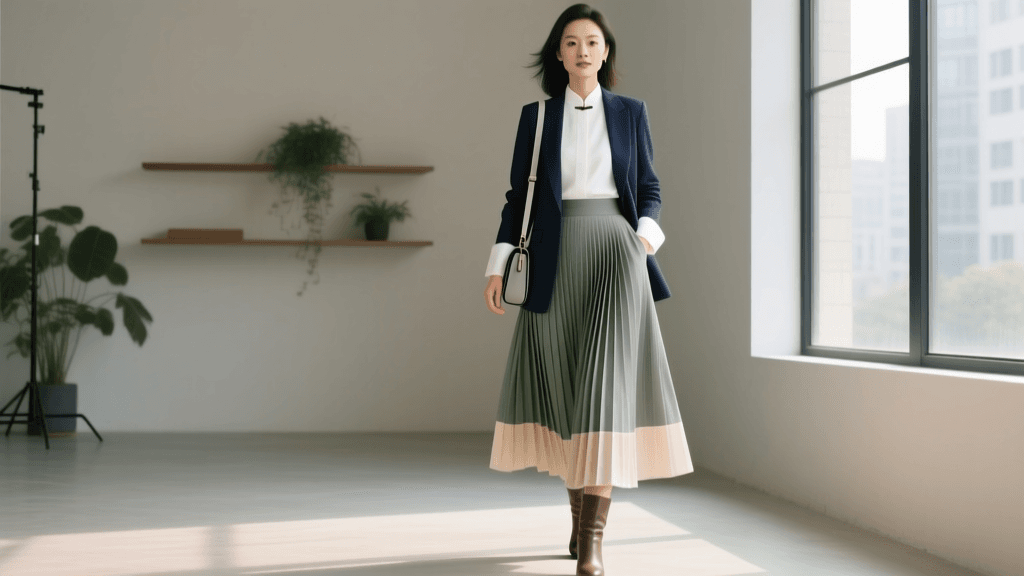
For professional environments, the key is subtlety and premium textiles. Opt for a midi-length Mamianqun (typically 80 to 85 centimeters in length) crafted from matte jacquard weaves or fine wool-blend fabrics. Avoid overly shiny brocades or loud, contrasting metallic threads. Instead, select deep, muted tones such as charcoal, navy, forest green, or oxblood, featuring tone-on-tone woven motifs like subtle lotus or cloud patterns. Pair the skirt with a crisp, oversized poplin button-down shirt tucked neatly into the waistband, or a fine-gauge merino wool turtleneck. Finish the look with a structured, single-breasted wool blazer and pointed-toe leather ankle boots. The flat front panel of the skirt mimics the clean lines of a tailored pencil skirt, while the hidden side pleats offer unparalleled comfort during long hours at a desk.
2. Elevated Streetwear and Weekend Casual
The juxtaposition of ancient tailoring with modern tech-wear and casual staples is a defining trend of 2026. For a weekend streetwear look, choose a Mamianqun made from durable, easy-care polyester-viscose blends in bolder colors or graphic, modernized prints. The skirt's volume pairs exceptionally well with cropped silhouettes on top. Try a cropped leather moto jacket over a simple white ribbed tank top, allowing the high waistband of the skirt to define your proportions. Footwear is where the streetwear aesthetic truly shines; chunky sneakers like the New Balance 990v6 or rugged trail shoes like the Salomon XT-6 ground the ethereal pleats with a utilitarian edge. This high-low styling approach creates a dynamic, fashion-forward silhouette that commands attention.
3. Evening Formalwear and Galas
When the dress code demands elegance, the Mamianqun rivals any Western evening gown. For formal events, invest in a maxi-length skirt (100 to 105 centimeters) crafted from heavy silk brocade or real metallic-thread zari weaves. The intricate motifs—ranging from soaring cranes to winding dragons—catch the light beautifully in evening settings. To modernize the formal look and avoid looking like a historical costume, pair the skirt with a contemporary velvet corset top, a structured tuxedo blazer worn over a silk camisole, or a sleek, asymmetrical halter neck bodysuit. The preservation of traditional Asian textiles in formal settings is heavily supported by institutions like The Metropolitan Museum of Art's Asian Art department, which highlights the enduring legacy and complexity of these woven masterpieces.
2026 Fabric, Weight, and Occasion Matrix
Selecting the correct fabric is paramount to ensuring your Mamianqun suits the season and the occasion. The table below outlines the optimal fabric choices for 2026.
| Fabric Type | Weight & Drape | Best Occasion | Seasonality |
|---|---|---|---|
| Matte Jacquard Poly-Blend | Medium weight, structured pleats | Office, Daily Wear, Travel | Spring, Autumn |
| Heavy Silk Brocade | Heavy, stiff drape, luxurious sheen | Weddings, Galas, Formal Dinners | Autumn, Winter |
| Wool-Blend Tweed | Heavy, warm, matte texture | Winter Office, Outdoor Events | Winter |
| Silk Organza / Chiffon | Lightweight, ethereal, sheer | Summer Festivals, Resort Wear | Summer |
| Viscose / Rayon Twill | Fluid, soft drape, breathable | Casual Outings, Weekend Brunch | Spring, Summer |
Color Theory and Pattern Matching
Traditional Mamianqun skirts are renowned for their intricate, multi-colored woven patterns. When integrating these into a modern wardrobe, the golden rule of pattern mixing applies: let the skirt be the focal point. If your skirt features a complex, multi-hued design (such as a vibrant peony and pheasant motif), anchor the outfit with solid-colored tops that pull from the secondary or background colors of the skirt's weave, rather than the dominant bright hues. For example, if the skirt is primarily crimson with subtle gold and navy accents, a navy silk blouse will create a cohesive, sophisticated look without clashing. In 2026, monochromatic styling with traditional garments is also highly favored; pairing a navy jacquard skirt with a slightly lighter or darker navy top creates a tonal, high-fashion aesthetic that feels incredibly modern.
Sizing, Proportions, and Modern Closures
Historically, Mamianqun skirts were secured with long, ties that required intricate wrapping and knotting. While traditional tie-closures are still available for purists, the 2026 market has widely adopted modernized closures for everyday convenience. Look for skirts featuring hidden side zippers, hook-and-bar waistbands, or discreet elasticized back panels. These innovations ensure the waistband sits flush against the body without the bulk of tied fabric, which is crucial when wearing fitted tops or blazers. Regarding length, proportion is everything. Petite individuals (under 160 cm) should opt for a 75 to 80 cm length to ensure the pleats do not overwhelm their frame, while taller individuals (over 170 cm) can carry off a 95 to 105 cm maxi length that grazes the ankle, maximizing the dramatic flow of the side pleats.
Garment Care and Pleat Preservation
The sharp, knife-edge pleats of the Mamianqun are its defining feature, and maintaining them requires specific care protocols. Never machine wash a high-quality Mamianqun, as the agitation will permanently destroy the pleat structure. For spot cleaning or light wear, use a handheld garment steamer. Steam not only removes wrinkles from the flat 'horse face' panels but also revitalizes the side pleats. If the pleats begin to lose their sharpness, lay the skirt flat on an ironing board, align the pleats carefully using sewing pins or specialized pleat clips, and press with a steam iron using a protective pressing cloth to avoid scorching the fabric. When storing the garment, never fold it. Always use a skirt hanger with wide, padded clips to grip the waistband, allowing the skirt to hang freely in a breathable garment bag. This prevents the pleats from becoming crushed and protects delicate metallic threads from tarnishing due to humidity.
Conclusion
The Mamianqun is a testament to the enduring brilliance of Asian sartorial engineering. By understanding its historical construction and applying modern styling principles, you can seamlessly weave this magnificent garment into your 2026 wardrobe. Whether you are commanding a boardroom in a muted wool-blend skirt or navigating city streets in a bold jacquard piece paired with chunky sneakers, the horse-face skirt offers a unique synthesis of heritage and contemporary flair. Embrace the pleats, respect the craftsmanship, and let this traditional masterpiece redefine your personal style.